How to Improve Your Radio Voice: Tips to Sound Clear and Natural on Air
Your radio voice is the first thing listeners notice when they tune in, and the good news is that nobody is born with one. A great radio voice is a set of habits you can learn, from how you breathe to how close you sit to the microphone. This guide gives hosts of small stations (community, church, school and home studio shows) practical tips to sound clear, relaxed and natural on air, plus a simple routine you can practice every week.
What makes a good radio voice?
Forget the idea that you need a deep, booming announcer voice. Listeners stay with hosts who sound like real people talking to them. A good radio voice usually has four qualities:
- Clarity. Every word lands, even when someone is listening in a noisy car or through a phone speaker.
- Warmth. You sound friendly and relaxed, not stiff or rushed.
- Energy. There is life in your voice, matched to the mood of the show.
- Authenticity. You sound like yourself on your best day, not like an imitation of someone else.
Pitch and tone matter less than most new hosts think. What makes a voice work on the radio is control: steady breathing, clean pronunciation and a pace your audience can follow. All three can be trained.
Warm up your voice before every show
Your voice depends on muscles, and like any muscle it works better after a warm-up. Five minutes before you go live or start recording is enough. Try this routine:
- Breathe slowly. Inhale through your nose for four counts, then exhale on a long “sss” sound. Repeat five times.
- Hum. Hum a comfortable note, then slide it up and down your range. You should feel a light buzz around your lips and nose.
- Do lip trills. Blow air through loosely closed lips so they flutter like a motorboat, while you slide your pitch up and down.
- Stretch your face. Open your mouth wide, then scrunch your face tight, a few times. Gently massage your jaw to release tension.
- Read a tongue twister. Say “red leather, yellow leather” or “unique New York” slowly, then faster, without losing clarity.
Finish by reading your first lines out loud, so your voice is already in on-air mode when the mic opens.
Breathe from your diaphragm and watch your posture
Shallow breaths from the chest make your voice sound thin and force you to gasp mid-sentence. Breathing from the diaphragm, the muscle just below your lungs, gives you a steadier flow of air and a fuller sound.
To find it, place a hand on your stomach and breathe in. Your hand should move out while your shoulders stay still. That is the breath you want when you speak on air.
Posture helps too. Sit up straight with both feet on the floor, or stand if your studio allows it. Keep your chin level instead of tucked down toward your notes, and raise paper or a tablet closer to eye level.
Microphone technique: get close and stay consistent
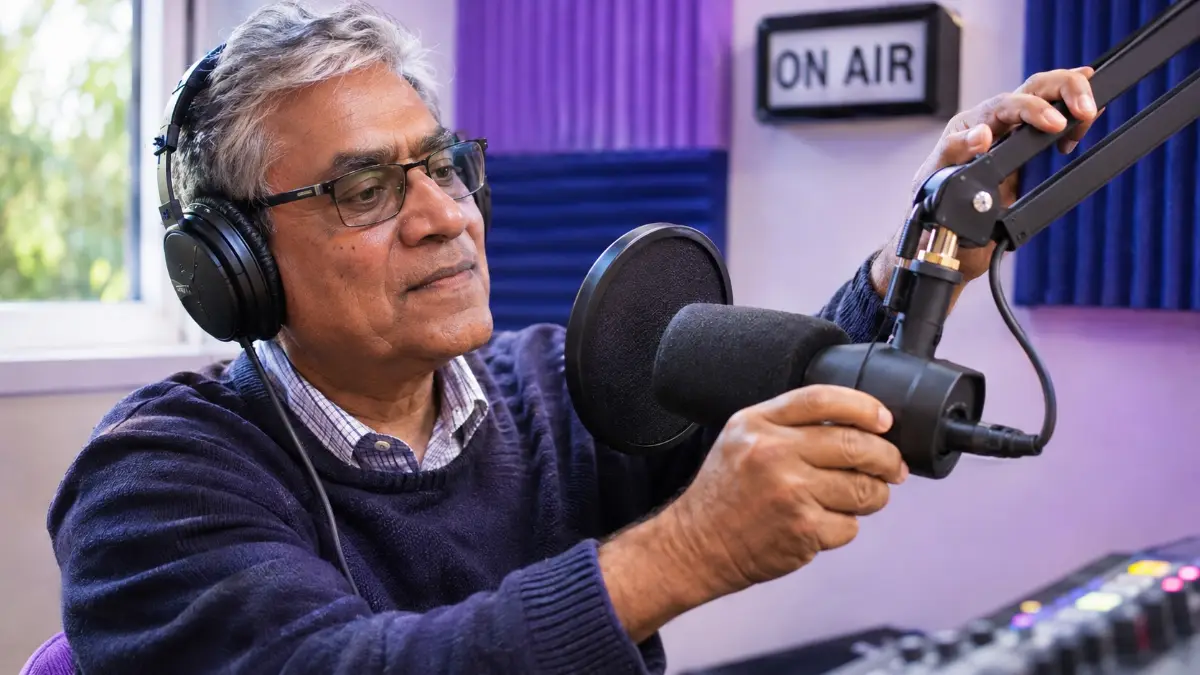
Even a great voice sounds weak if the microphone is in the wrong place. Good microphone technique is the fastest way to improve how you come across, and it costs nothing.
- Keep a steady distance. With most broadcast dynamic mics, about a hand’s width between your mouth and the mic works well. Then stay there: leaning back and forth makes your volume rise and fall.
- Speak slightly across the mic. Angling the mic a little to the side of your mouth, instead of straight in front of it, reduces the bursts of air on “p” and “b” sounds, known as plosives. A pop filter or foam windscreen helps too.
- Use the proximity effect on purpose. Many directional mics add bass as you move closer. A little closer sounds warm and intimate; too close sounds muddy.
- Always wear headphones. Hearing yourself the way listeners do lets you catch pops, mouth noise and volume jumps as they happen.
- Check your levels. Do a sound check at your normal show volume. If the meter hits the red, lower the gain instead of speaking more softly.
The room matters as much as the mic. Curtains, rugs and a full bookshelf absorb echo; bare walls bounce it back into the mic. If you are still building your setup, our guide to running a DJ radio show on a budget covers affordable gear.

Delivery: talk to one listener
Radio feels personal because most people listen on their own: in the car, at work, through earbuds. Picture one specific listener and talk to that person, not to “everyone out there”. Your tone becomes more conversational right away.
A few delivery habits make a big difference:
- Smile while you talk. Listeners can hear it. A smile lifts your tone and adds warmth, especially in show intros and station IDs.
- Slow down a little. Nerves speed most people up. Aim for a relaxed pace, and let a short pause sit before an important point.
- Stress the key word. In each sentence, decide which word matters most and lean on it. That variation in pitch and emphasis is what keeps a voice from sounding flat.
- Use notes instead of a full script when you can. Reading word for word often sounds stiff. Bullet points let you stay on track and still sound natural. When you do need a script, write it to be spoken out loud. Our guide on how to write a radio script shows how.
- Match the energy to the moment. A morning show, a late-night music program and a church broadcast each call for a different energy level. Staying consistent within a show matters more than being loud.
The same habits carry over when other voices join you. If you interview guests or take live calls, a calm, conversational delivery helps the people on the other end relax too.
Record yourself and review an aircheck
Almost everyone dislikes hearing their own voice at first, but listening back is the fastest way to improve. In radio, a recording of your show that you use for review is called an aircheck.
Once a week, pick ten minutes from a recent show and listen with headphones. Ask yourself:
- Did I sound like I was talking to one person?
- Where did I rush, mumble or trail off at the end of a sentence?
- How many filler words (“um”, “you know”, “like”) slipped in?
- Did my energy drop as the show went on?
Choose one thing to fix for the next week, not five. If a co-host or a trusted listener can give you honest feedback, even better. Pre-recording your breaks with voice tracking is also great practice, because you can redo a link until it sounds right.

Common habits and quick fixes
| Habit | What listeners hear | Quick fix |
|---|---|---|
| Reading too fast | A rushed host who is hard to follow | Mark pauses in your notes and take a breath at each one |
| Monotone delivery | Flat, uninterested tone | Stress one key word in every sentence |
| Popping “p” and “b” | Thumps and bursts of air | Angle the mic slightly and use a pop filter |
| Trailing off | Lost endings of sentences | Keep some air in reserve until the last word |
| Filler words | Hesitation, lack of preparation | Pause in silence instead of saying “um” |
| Moving around the mic | Volume that jumps up and down | Keep a hand’s width away and stay still |
Take care of your voice
Your voice is your main tool on air, so treat it like one:
- Drink water throughout the day, not only right before the show. Room-temperature water is gentler than ice-cold drinks.
- Avoid long stretches of shouting or whispering. Both put extra strain on your vocal cords.
- Swallow or sip water instead of clearing your throat hard and often.
- Listen to your body. If hoarseness or pain doesn’t go away, see a doctor or a voice specialist instead of pushing through.
Frequently asked questions about radio voice
Can you train a radio voice?
Yes. Clarity, pace, breathing and microphone technique are all skills. Most hosts hear a real difference after a few weeks of regular warm-ups and weekly airchecks.
Do you need a deep voice to be on the radio?
No. Listeners connect with hosts who sound natural and confident. A clear, warm voice at your natural pitch works better than forcing it lower, which can also strain your throat.
What kind of microphone is best for a radio voice?
Most broadcasters use a dynamic microphone, because it focuses on your voice and picks up less of the room around you. Pair it with closed-back headphones and a quiet, soft-surfaced room for the best results.
A great radio voice comes from small habits repeated every show: a quick warm-up, steady breathing, consistent mic technique and an honest weekly aircheck. Pick one tip from this guide for your next broadcast and build from there. When you’re ready to share that voice with listeners around the world, start your station on Zeno.FM.
November 2, 2026