Visual Radio: Why Your Radio Station Needs Video in 2026
Radio was invented in the early 20th century as a purely audio medium. For most of its history, that was enough. But online radio has expanded access globally, and the competition for attention has never been sharper. The boundaries between radio, television, podcasts, and social media have become blurred, and the result has a name: visual radio.
Visual radio means adding a visible layer to your station. It is not a luxury project or a vanity move. It is a strategic advantage that most radio stations can build with the resources they already have. Audiences no longer separate “audio” and “video” in their minds. They follow shows and hosts across devices, feeds, and formats, switching between headphones on a commute, a screen in the kitchen, and a computer at home throughout the same day.
This article is for independent online radio station owners, small AM/FM operators moving online, community and faith-based broadcasters, school and campus stations, and solo DJs. If you run a lean operation and wonder whether video is worth your time in 2026, it is. What follows is a strategic roadmap, not a step-by-step tutorial for any specific video platform.
Here is why visual radio matters now:
- Audiences expect to see the shows they hear, not just listen to them.
- Stations that remain invisible outside a raw audio stream risk losing discovery and social reach.
- Video clips from existing radio programs travel farther than plain audio links.
- Sponsors and donors increasingly want visual proof of their investment.
What Visual Radio Actually Means
Visual radio is simply what people see when they listen to your station, and what they see about your station when they are not listening. It integrates synchronized visual elements into traditional or digital radio broadcasts without turning your operation into a television network.
It is not a full studio build. It is not a multi-camera crew. It is not a 24/7 simulcast mandate. Visual radio does not necessarily replace traditional radio signals, which can still deliver audio independently. Think of it as three layers you can adopt at your own pace.
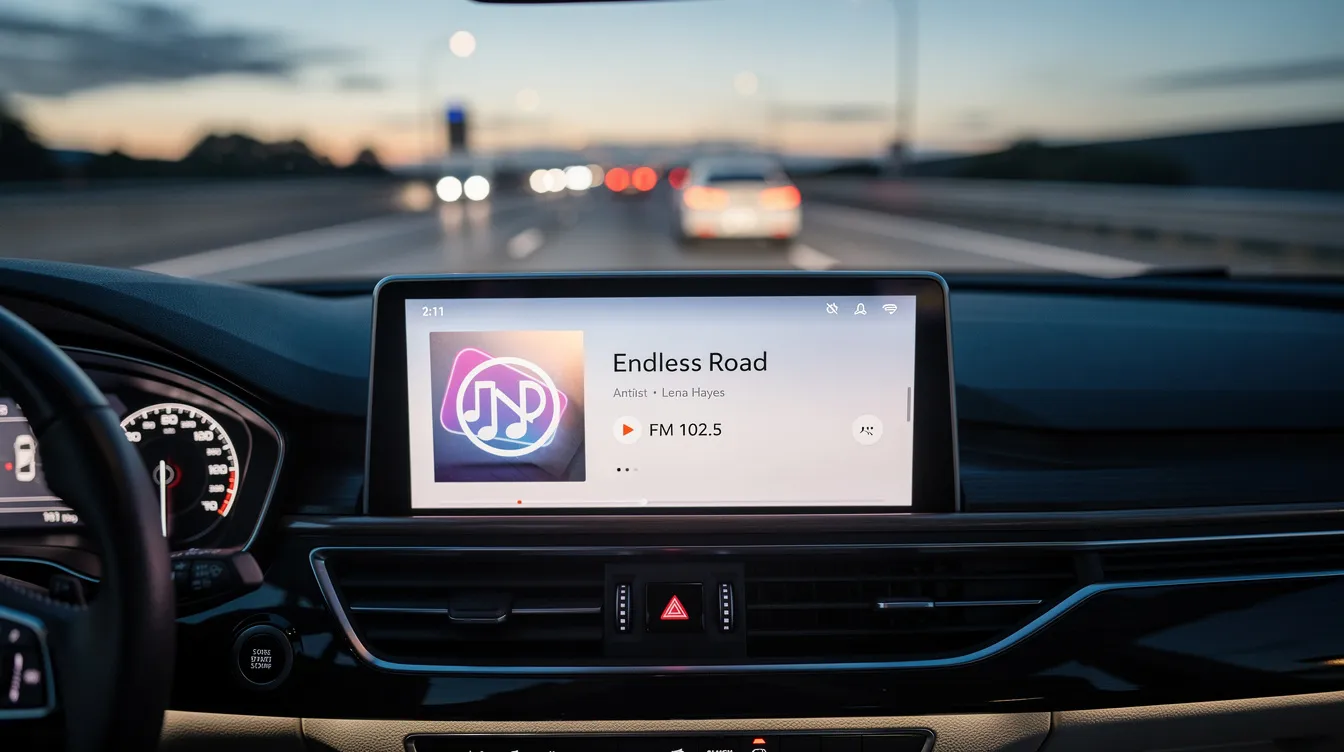
Layer one: what appears on screens while audio plays. This includes your station logo, show artwork, and now-playing song information. Visual radio includes automated text and graphics displaying song titles and artist names across web players, mobile apps, and car dashboards. If someone is streaming your station on any device, this layer is already present, whether you designed it or not.
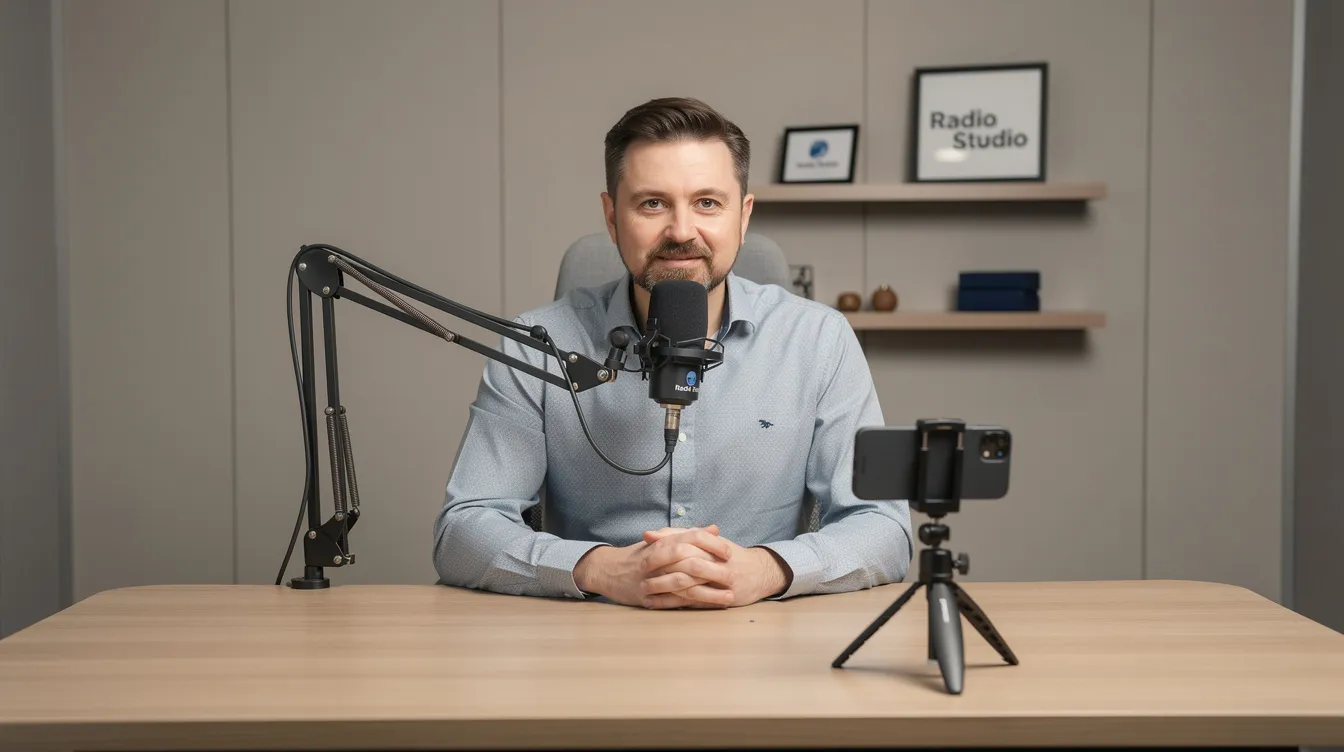
Layer two: occasional live or recorded views of your studio or hosts. Visual radio allows audiences to watch live studio cameras and see album art. Even if your “studio” is a spare room, a church office, or a corner of your home, a phone or basic webcam with stable lighting lets you put a face on your voice. Visual radio allows broadcasters to create more immersive audio experiences for listeners this way.
Layer three: short video clips created from existing shows. One compelling segment, a caller moment, a sermon highlight, or a DJ break repurposed as vertical or square clips. Visual radio integrates real-time social media feeds and interactive elements, and these clips are what travel through those feeds.
Visual radio changes audience interaction from passive listening to a multimedia experience. It enhances audience engagement through interactive digital features. But most radio stations should focus on a few strong, repeatable visual moments rather than continuous video. Think “designed moments,” not “always-on camera.”
Why Audiences Now Expect a Visual Layer
Listening and watching now describe the same audience in different moments of their day, not separate groups fighting over attention.
According to Edison Research at SSRS’s The Podcast Consumer 2026, video podcast consumption overtook audio-only consumption for the first time in Q3 2025: 82% of weekly podcast consumers actively watch video, compared to 78% who listen to audio only. In 2023, the pattern was reversed, with 89% listening to audio only and just 73% watching video. The shift happened fast.
Among Americans age 12 and older who have ever consumed a podcast, 57% now both listen and watch, 21% consume audio only, and 2% watch only, according to the same study. People move fluidly between formats depending on context. They might watch a talk segment on a lunch break and listen to the same show through headphones on a walk. Younger listeners split time across multiple audio platforms throughout their day.
If audiences expect to see the shows they follow, then stations that stay audio-only everywhere outside the raw stream risk disappearing from feeds, recommendations, and social discovery. Radio stations compete with podcasts and streaming services for the same ears and eyes. Edison Research shows online audio listeners continue to grow: 81% of Americans age 12 and older listened to online audio in the past month, according to Edison Research at SSRS’s The Infinite Dial 2026. Among Americans 55 and older, monthly online audio listening rose from 52% in 2024 to 70% in 2026. This is not just a young person’s trend.
Meanwhile, Jacobs Media’s Techsurvey 2026, based on nearly 31,000 respondents from more than 500 U.S. radio stations, found that more than four in five respondents own vehicles with dashboards that display artist and title information, and a majority of those say they pay attention to the display. AM/FM radio remains the top in-car audio source overall, but the car dashboard is now a visual surface too. Your metadata and artwork are already a basic visual layer, whether you optimized them or not.
Online radio offers a wider variety of stations than AM/FM, and listeners can access radio stations globally via the internet. Internet radio requires an internet connection for streaming, of course, but that connection now reaches screens everywhere, from phones to connected TVs. The world is moving toward digital delivery, and digital delivery comes with screens.
“Visual” does not always mean faces on camera. It also covers better artwork, consistent branding, and readable now-playing information across your station website, app, and players.
What Video Solves for a Small Radio Station
For a lean station or single-person operation, video is not about fancy production. It is about solving four specific business problems.
Credibility and authenticity. According to Edison Research at SSRS’s The Podcast Consumer 2026, 62% of weekly podcast consumers view AI as at least somewhat of a threat to podcast credibility. Radio remains a widely used news source compared to podcasts, and that trust matters. A visible human host, pastor, or community leader becomes proof of authenticity. A simple recurring visual, the same face, same backdrop, same lower-third text, reassures listeners and sponsors that there is a real person behind the microphone, not an AI script. Engaging content like this helps build a loyal radio audience.
Discoverability. Short, intentional video clips from your existing shows travel farther and faster across social feeds than plain audio links. If you run a niche format, a diaspora station, or a local community talk show, a clip is how new listeners discover you. Community outreach fosters a sense of connection with listeners, and video clips are outreach that works while you sleep. Visual radio relies on digital platforms for distribution, including video and live-streaming services, giving your content reach that a raw audio stream alone cannot match.
Advertiser and donor value. Radio stations can monetize through advertising and sponsorships, and sponsors increasingly want visual deliverables. A branded frame, a visible logo, or an in-studio product mention that viewers can see and share is easier to sell and prove than a traditional audio-only spot. Even simple ads or lower-third overlays present tangible value.
Content reuse and longevity. One live show can become a recorded podcast episode, a few short clips, and a quote graphic, all without re-recording anything. Podcast Automation inside Zeno Tools can turn live broadcasts into on-demand podcast episodes automatically. From there, pulling a visual highlight takes minutes, not hours. When your station already uses streaming and podcasting infrastructure, these benefits compound over time.
The Objections Broadcasters Raise
Three objections come up again and again: “I do not have a studio,” “I do not have time,” and “my format is not visual.” All three deserve honest answers.
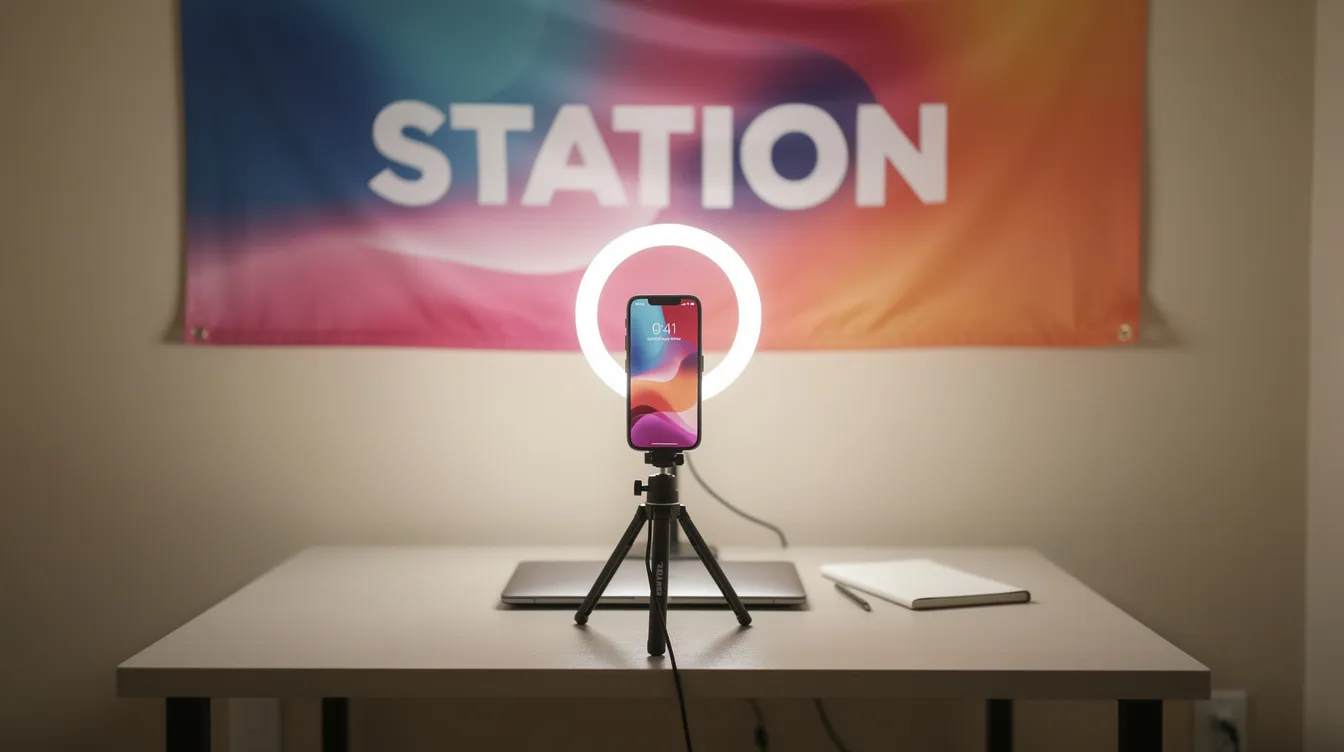
No studio. You do not need one. A consistent corner works: a wall, a small banner, a shelf with station merchandise or a few books. A phone on a tripod with stable, even lighting is enough to start. Audiences forgive simple production but notice care. Stable framing, readable text overlays, and consistent station branding matter more than expensive equipment. Your sonic identity and visual identity should match, and neither requires a professional set.
No time. Do not attempt a full-show simulcast. Design one visual segment per week: a weekly “caller highlight,” a “sermon takeaway,” or a “DJ’s three new tracks” recorded in a single 10–15 minute block. Build that segment into an existing show so it is part of your workflow, not an addition to it. Of course, making one segment watchable often sharpens the whole show’s structure. Surveys and social media can gather audience feedback on which moments resonate, and surveys and focus groups help gather audience data for monetization planning.
Format is not visual. Every genre has visual moments already happening off-camera:
- Religious stations: A short weekly message from the pastor, a scripture reflection, or a behind-the-scenes look at choir rehearsal. Many of these moments already exist. You just need to record them.
- News and talk: A quick explainer segment, a host reaction clip, or a recap of the top three local stories recorded right after the show. Even NPR-style topics like true crime recaps or community affairs work as short clips across various genres.
- Music and DJ-focused stations: Track previews, a “what is in my crate this week” segment, or short clips of the DJ explaining why certain songs matter to the community or culture.
Radio stations need programming strategies for both terrestrial and digital distribution. Visual moments are part of that digital strategy. Streaming servers limit simultaneous listeners based on capacity, but a video clip posted to social feeds has no such ceiling.
How to Prepare Your Station for Video Now
Successful visual radio comes from preparation and consistency, not from buying more equipment or launching everywhere at once.
Audit your assets. Gather your current logos, show artwork (especially square versions), host photos, existing recorded shows, jingles, and any recent promotional images into one folder. You likely have more than you think. These are the raw materials for your visual layer.
Fix your identity. Check that your station name, slogan, and URL are written the same way on your website, player, mobile app listings, and social bios. Inconsistency is an error that makes you look less professional on every screen. For deeper guidance, learn how to strengthen your station’s brand identity.
Clarify your home base. Every station needs a stable, easy-to-find online hub where audio, schedule, and basic visuals live. This is where listeners go to find you and where you send people from every clip and post.
Design one watchable segment each week. Choose a recurring show slot and plan a 5–10 minute segment with a clear visual hook: an in-person guest, an object on screen, or an on-screen list of key points. One segment, done well, is worth more than a dozen unfocused attempts.
Decide what you will measure. Pick two simple metrics: total plays of clip highlights, new followers on your main social channels, newsletter sign-ups, or advertiser interest mentions. Track them weekly. Data tells you what works.
Connect with your wider strategy. Visual clips support your community-building efforts and your existing social media plan. They are not a separate project.
Plan for distribution, not platforms. Create clips once, then adapt them to whatever channels your station already uses. A square clip can go almost anywhere. A vertical clip can go almost anywhere else. Do not spread yourself thin chasing every new service. Focus on the one or two channels where your audience already spends time, and do those well. Listeners who enjoy a clip will find their way back to your live stream or your app in their car.
Video Is Coming to Zeno.FM
Zeno.FM is actively developing integrated video capabilities so stations can manage audio and visual experiences in one place, without stitching together separate tools. The goal is to let broadcasters extend their existing streams, podcasts, and apps with a visual layer while keeping workflows simple and familiar. Details on timelines, features, and pricing are not being announced yet. But if you start building your visual strategy now, using the steps above, you will be ready to take advantage of these options the day they arrive, with your identity, assets, and content plan already in place.
FAQ About Visual Radio for Small Stations
Here are answers to the most common questions small and mid-size broadcasters ask about adding video to their station.
Do I need professional cameras and lights to start visual radio? No. Consistency, clarity, and stability matter more than gear. A phone or basic webcam with decent, even lighting is enough to test and refine a visual concept. What your audience notices is whether your framing is steady, your branding is readable, and you show up regularly. Start with what you have and upgrade only when you find a specific limitation holding you back.
Will adding video distract from improving my audio programming? It should not, if you scope it correctly. Planning a visual segment can actually sharpen show structure and host preparation, because you are thinking about what the audience will see, not just hear. Start with one designed visual segment per week rather than a full video rollout. Keep audio quality foundational. Sound is still the core of every radio station, and the visual layer complements it.
How can a music-only or automated station use visuals? Even fully automated stations offer a visual layer through track artwork, rotating station branding, schedule teasers, and occasional host-recorded segments. If you use automation tools like AutoDJ, your stream already carries metadata. Make sure that metadata is accurate, your artwork is sharp, and your station logo looks clean at every size. A short, pre-recorded weekly segment from a host adds a human face with minimal time investment and gives your premium content a personal touch.
What if my audience listens mainly in cars and smart speakers? That audience is already seeing your visuals, whether you planned them or not. Jacobs Media’s Techsurvey 2026 found that more than four in five respondents drive vehicles with dashboards that display artist and title information, and most pay attention. Clean metadata, sharp artwork, and accurate show information are visual radio at its most basic. For strategies on reaching listeners across mobile apps and CarPlay or Android Auto, make sure your station’s digital presence is set up to deliver the right visuals to every screen in every car.
August 9, 2026