Social Media Plan for Radio Station: Turn Followers Into Listeners
Most radio stations have social accounts. Fewer have a plan. You post a show flyer on Monday, share a meme on Thursday, go quiet for a week, and wonder why followers never click through to your stream. A practical social media plan for radio station teams changes that pattern. This guide walks you through a seven-step framework built for internet radio station owners and community broadcasters who are busy, budget-conscious, and tired of posting into the void. Every step points listeners back to assets your station controls: your Zeno.FM microsite, website player, live streams, and podcast feed. A successful social media plan for a radio station engages listeners online-and by the end of this article, you’ll have a weekly plan you can implement in under two hours of planning time. The approach is cost effective and built for small teams.
Why Your Radio Station Needs a Social Media Plan (Not Just Accounts)
Picture a station with pages on Facebook, Instagram, X, and TikTok. Posts go up only when someone “has time.” One week there are five posts; the next, silence. Followers stall. Stream clicks barely register. Sound familiar?
A real content strategy integrates on-air moments, social media, and owned assets into one system instead of treating each post as a one-off. Social media for radio should feel like an extension of the studio microphone-connected to everything happening on air and leading people somewhere meaningful. A social media plan for radio station teams helps prioritize limited time and avoid burnout by deciding in advance what matters. Zeno.FM acts as the central hub that makes this connection easier.
Your first action: write down the three places you most want listeners to land after seeing any social media post.
The Difference Between Posting and Planning
“Posting” looks like last-minute graphics, random content, or one-off show promos that don’t link back anywhere. “Planning” means choosing clear recurring themes, setting a realistic weekly rhythm, and pairing every post with a specific call to action.
A diversified content mix keeps social media engaging and fresh-but it only works when the mix is intentional. Planning does not require fancy tools. A simple shared spreadsheet or notebook that mirrors your programming grid is enough.
Task: schedule one 30-minute block every week dedicated to planning next week’s social content.
Social Platforms Are Rented Space; Your Station Is Not
Social media platforms are rented space. Algorithms, layouts, and rules change without warning. Your owned assets-Zeno.FM microsite, official website with an embedded web player, podcast feed, and mobile app presence-stay under your control.
The goal of your social media plan is to use that rented space to send people to those owned assets, not to keep them scrolling. Think of concrete destinations: your “listen live” page, your latest show recordings, your donation section. Social media platforms can act as a living archive that funnels attention back to your station.
To-do: choose one primary “home base” link you will feature in every bio, post, and call to action this month.
Step 1: Define Your Goal and Your Audience
Every strong strategy starts by deciding who you’re talking to and what you want them to do. Write a simple one-sentence goal for the next 90 days: “Get more nighttime listeners from local students” or “Drive more people to weekend specialty shows.”
Describe your target audience in concrete terms: age range, city or region, language, typical listening times, and favorite social media channels. For deeper guidance on audience growth, read this guide to growing your online radio station audience.
Exercise: write one paragraph starting “Our ideal listener is…” and another starting “Over the next 3 months, our main social goal is…”
Pick One Primary Goal Per Quarter
Trying to chase more followers, more donations, more requests, and more sponsors all at once dilutes results. Pick one primary goal per quarter. Examples: increase average concurrent listeners during the morning show, grow your WhatsApp request line, or get more people listening via the mobile app.
A clear goal makes content choices easier. If the goal is live listening, focus CTAs on “Listen now” instead of “Follow us.” Monitor metrics like follower growth and engagement rates to refine your strategy over time. Keep secondary benefits (brand awareness, comments) in mind, but don’t optimize every post for all of them.
Task: write your primary goal on a sticky note near your console so every host sees it daily.
Know Where Your Listeners Already Are
Ask listeners directly which social platforms they use: quick on-air questions, WhatsApp messages, or instagram stories polls. Different audiences prefer different social media platforms for engagement. Instagram and TikTok attract younger audiences for radio content, while Facebook is favored by local community and older listeners.
Focus on two platforms-one primary, one supporting-where your target audience is already active. Check who is already tagging your station or sharing your radio content and lean into those channels first.
Action: choose your primary and supporting platform for the next three months.
Step 2: Build Your Content Pillars
Content pillars are four or five repeatable themes that make planning simple and keep your station’s social content consistent. Each pillar maps to common kinds of radio content: live shows, music discovery, community news, and behind-the-scenes moments.
Every post should fall under a pillar and carry a clear CTA that points to your stream, podcast, or microsite. Social media should tell stories, not just promote the station. A strong content strategy uses these pillars across both on-air and social channels, reinforcing your brand identity everywhere.
Task: choose at least three pillars you can realistically support every week.
Behind the Mic
This pillar humanizes your station. Use behind-the-scenes footage to engage listeners and humanize on-air talent. Post a short video of a host prepping a playlist, a photo of a guest arriving, or a quick clip of a DJ reacting to a track live. Hosts can share clips and moments online to engage audiences directly.
Use casual captions and first-person language so posts feel like a direct conversation online from host to listener.
Action: plan one “behind the mic” post for your next flagship show.
Now Playing and Music Discovery
Bring your playlist to life visually. Post now-playing graphics, “track of the day” features, or mini-reviews of new music played on air. Real-time audio and visual teasers attract listener interaction. A mix of real-time audio engagement and visual content is needed for effective radio promotion.
Use consistent templates with your station logo and colors so even quick posts reinforce your brand. Pair each music post with a link to “Listen live for more” on your microsite.
Homework: list seven songs or segments from this week that would make strong music discovery posts.
Community and Listener Voices
Feature listeners, local partners, and community stories. Repost listener shout-outs (with permission), share short video clips answering Q&A prompts, or highlight local events. User-generated content builds community and provides authentic material. Social media should promote community-building through audience interactions.
Collaborating with influencers or local small businesses can expand your audience reach. Tie these posts back to shows that discuss local issues, and link to the relevant recording or podcast episode.
Action: choose one recurring listener-driven feature you can run weekly.
Show Announcements and Schedule Reminders
This is your “utility” pillar-what’s on, when, and why listeners should care. Post daily “Today on the station” updates, countdowns to interviews, or morning reminders for evening shows. Post real-time updates while shows are airing to enhance engagement. The average radio listener catches only a fraction of your live content each day, so reminders genuinely help.
Sync these posts with your programming schedule. For help structuring that schedule, see this guide to building a 24/7 programming grid.
Task: create one template graphic you can update with show names and times daily.
Station Story and Milestones
Share your origin story, mission, and wins. Celebrate your anniversary, a new show launch, adding a new language, or any milestone that shows your station is a living, growing project. Digital revenue across radio continues to grow, and stations that tell their story well attract both new listeners and potential sponsored content partnerships.
Use carousels or short video clips to tell longer stories, always ending with a CTA like “Celebrate with us by tuning in tonight.” Offer exclusive content tied to milestones to reward loyal listeners.
Action: outline three milestones you can turn into posts this quarter.
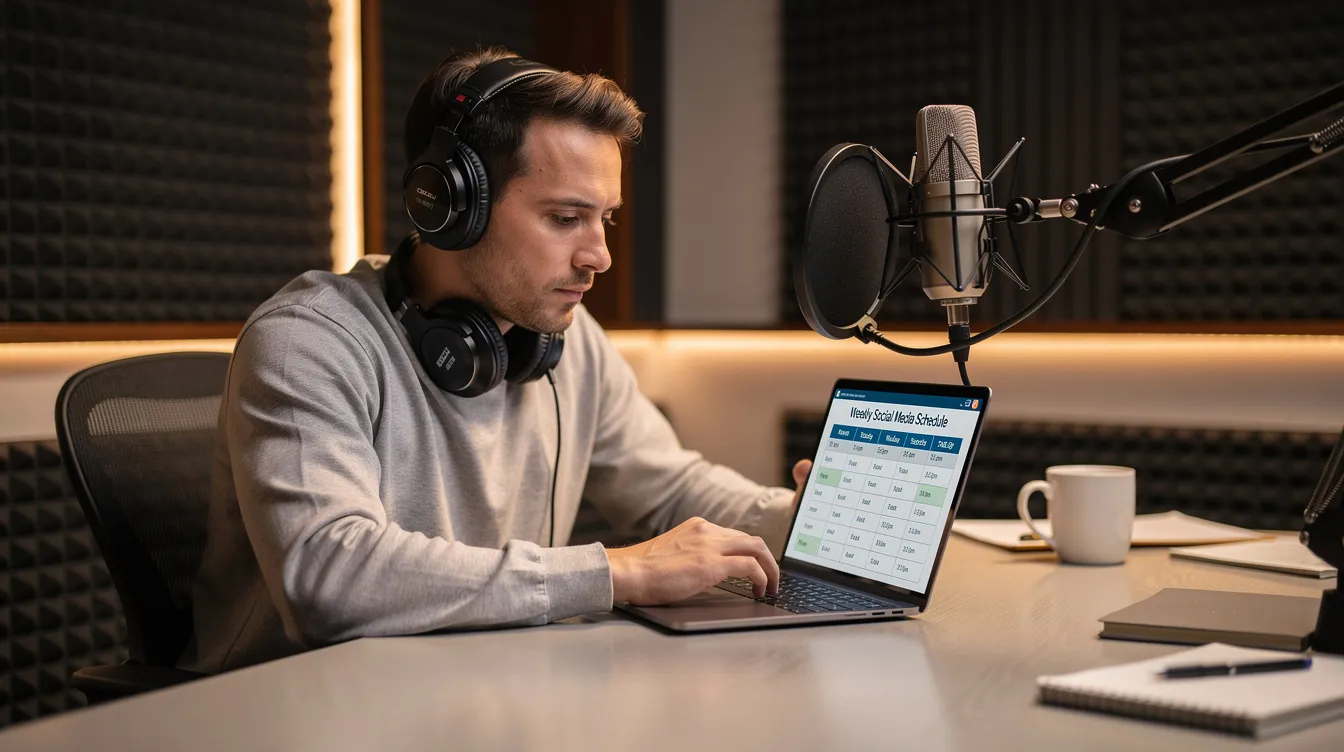
Step 3: Turn Your Broadcast Schedule Into a Content Calendar
Your station already has a programming grid. Your social media plan should mirror it-not exist as a separate, overwhelming project. Each show or regular segment can produce at least one post before, during, or after it airs.
Write your shows in a weekly view and assign one social media post to each slot. AutoDJ and built-in scheduling features free up time so you can focus on this mapping work.
Task: draw your weekly schedule and mark where at least seven social posts fit naturally.
Mirror Your Programming Grid
For every flagship show, plan three social posts: one teaser, one “live now,” and one recap. For example, a Saturday night mix show generates a Friday teaser reel, a Saturday instagram stories “on air now” post, and a Monday highlight clip.
Mirroring helps listeners form habits. Use consistent hashtags like #MorningDrive or #SundayService to build recognition.
Action: pick your strongest show and design this three-post pattern around its next episode.
A Simple Weekly Posting Rhythm
Three to five pieces of content per week is a reasonable baseline for a small team. Spread pillars across the week: Mondays for station story, midweek for community voices, weekends for best-of highlights. Live streaming is essential for real-time listener engagement, so add instagram stories or short videos during live shows whenever possible.
Consistency matters more than volume for maximum impact. Experiment with posting times based on when your audience interacts most with your radio content.
Task: draft a one-week calendar where each day has a specific post type mapped to a real show.
Batch Your Content in One Session
Batching means creating several pieces of content creation in one focused session-drafting captions, editing clips, designing graphics for the entire week. This reduces the stress of last-minute posting.
Reserve one evening or off-air block, pull clips from the past week, create simple templates, and schedule posts. AI-assisted tools can help transcribe and trim segments, especially when converting shows into podcasts.
Action: block 60 minutes on the same day each week to batch at least five upcoming posts.
Step 4: Repurpose What You Already Broadcast
Most internet radio stations generate more audio content than they realize. The key is to recycle it across social media effectively. One strong segment can become a podcast episode, a clip for Instagram, a quote graphic, and a blog post summary. Edit past radio shows into standalone podcast episodes, and compile weekly highlights into a “Best Of” show.
Zeno.FM can record shows and save them as podcasts. For automation ideas, read this guide to podcast automation workflows.
To-do: choose one recent show and list three different posts you could create from it.
Clips From Live Shows
Mark standout moments while on air-write down timestamps to revisit later. Create 30-60 second audio snippets for social media. Video content performs well on social media for radio stations, so pair clips with captions and simple waveforms. Short video clips on TikTok can act as teasers for podcasts, and instagram reels work well for music highlights.
Share clips with guests to expand audience reach and drive engagement. Always add a strong CTA linking to the full show on your microsite.
Action: identify one upcoming show where you will intentionally record video for highlight clips.
Podcast Episodes as Social Content
Once shows are saved as episodes, they become a flexible content library. Post episode trailers, “Start here” recommendations for new listeners, or themed playlists. Transform interviews into blog posts for search engines and SEO benefits.
Share direct podcast links hosted on your microsite so listeners stay within your ecosystem. On-demand content can support sponsorships and other revenue-learn more in this guide to monetizing an internet radio station.
Task: pick your three strongest episodes and plan one promotional post for each.
Audiograms, Quotes, and Now-Playing Cards
Use audiograms to turn audio segments into animated videos-short clips with a static image and waveform that catch attention in silent autoplay feeds. Pull a guest’s surprising quote or a host’s catchphrase, set it on your station colors, and add your logo.
Keep templates in one folder so even volunteers can quickly produce on-brand visual assets. Now-playing cards can be reused for specialty shows or trending topics.
To-do: create one reusable template each for audiograms, quotes, and now-playing posts.
Step 5: Connect Everything With Your Zeno.FM Microsite
Your microsite is your station’s central digital home. It brings together your stream, podcast recordings, website link, and social links in one place. By using it as the main destination in your plan, you avoid spreading listeners across too many uncoordinated pages.
Your microsite and your own website support each other: the microsite points visitors to your site, and your site embeds the Zeno.FM web player. All stations are also reachable through the Zeno Radio app, and your microsite helps new listeners discover you through the Zeno.FM explore directory.
Action: open your microsite, list what’s missing, and plan one update session this week.
What Your Microsite Can Hold
Your microsite can display your station name, logo, background image, description, schedule, and official website link. It supports live streams, past show recordings as podcasts, announcements, and a listener donation link.
Placing your social media links on the microsite creates a loop: social sends people to the microsite, and the microsite connects them to your socials and website. Think of it as the page you can confidently share in every bio, story, and caption.
To-do: write a short, listener-focused station description for the top of your microsite.
Customize Your Landing Page URL
Your Zeno.FM microsite URL can be customized to match your station name, making it easier to say on air and print on posters. Choose a short, memorable slug-your call letters plus city or genre works well.
A clean URL helps with word-of-mouth. Update any old graphics that still show outdated links.
Action: check whether your current URL is easy to say out loud in a five-second talk break.
Use It as Your Link in Bio
Set your microsite as the main “link in bio” on Instagram, X, TikTok, and Facebook so every profile points to the same hub. One link guides listeners to your stream, schedule, podcasts, donation page, and social links.
Add consistent CTAs in captions: “Link in bio to listen live and see show times.” Mention that listeners can also find your station inside the Zeno Radio app.
Task: update at least two social profiles today so they both point to your microsite.
Step 6: Build Real Connection, Not Just Reach
Listener loyalty comes from feeling known and included, not from seeing endless promo graphics. Connection on social media mirrors what you do on air: greet people, respond to feedback, and invite participation. Small internet radio station teams have an advantage here-you can connect and interact more personally than big brands.
Engaging with listeners through Q&A sessions builds community. Interactive content like creating polls and Q&As enhances listener engagement across every channel.
Action: pick one show this week where you actively encourage social interaction and follow up with replies.
Reply to Comments Like You Reply On Air
Hosts should bring their on-air voice into comments, using conversational language. Sign replies with first names so listeners feel they are talking to a real person. Answer questions publicly-one helpful reply serves many loyal listeners who had the same question.
Take great comments back on air for a shout-out, closing the loop between platforms and the conversation online.
Action: ask your hosts to each reply to at least five comments after their next show.
Invite Listeners Into the Programming
Social media can be a source of ideas for shows: questions, song requests, and topic suggestions. Use instagram stories Q&A for interviews, X polls to choose themes, or WhatsApp voice notes to play on air. Running contests on social media boosts listener engagement and helps you engage audiences you haven’t reached yet.
Thank contributors by name and point people to the specific show where their input appeared.
Task: post one invitation this week asking followers to help build a playlist or Q&A segment.
Give Your Hosts a Face
Putting faces to voices helps listeners connect more deeply. Record short introduction videos, “day in the life” stories, or carousel posts with personal facts and show times. Videos and visual posts consistently drive engagement.
Use consistent styling so host profiles look like part of the same station identity.
Action: schedule a session where each host records a 15-second “Hi, I’m…” clip.
Step 7: Track What Matters
Don’t get lost in vanity metrics. Followers alone don’t guarantee new listeners for your stream. Social reach shows how many people saw your content, but the actions that predict listening-profile taps, link clicks, saves, shares, and comment volume-are the metrics that matter. Time Spent Listening (TSL) is crucial for on-air content metrics as well.
A healthy engagement rate signals your content is resonating. Media email open rates also remain meaningful when compared to social reach, so consider an email newsletter alongside your social plan.
Task: choose three social metrics you will track at the end of every month.
Metrics That Predict Listening
Focus on these metric types:
- Link clicks to your microsite
- Bio link taps
- Replies and comments
- Saves on informational posts
- Shares of music or clip content
Each indicates people are moving closer to tuning in-a measurable action-not just scrolling past. Label posts in your calendar with their goal so you know which metric to judge them by. This helps you make informed decisions about what to post next.
Action: pick one metric to improve next month, such as link clicks from show promotion posts.
Review Monthly, Adjust Quarterly
Social behavior fluctuates week to week, so monthly reviews are more reliable. Export core stats, list your top five posts, and note what they had in common-format, topic, time of day. These are your key takeaways for the month.
Make bigger changes to your strategy-new pillars, a new posting rhythm-only every quarter, giving experiments time to run.
To-do: set calendar reminders for a 30-minute review on the last Friday of each month.
A Sample One-Week Social Media Plan for Radio Station Teams
Here is a practical example for a small station using Instagram as the main channel and Facebook as secondary. The ideas can be adapted to any mix of social media platforms. The important part is the rhythm and consistent CTAs.
This sample assumes you have at least one daily show and a weekly flagship program. Copy and adjust it to match your programming grid and available time.
| Day | Channel type | Content idea | Call to action |
|---|---|---|---|
| Monday | Instagram feed | Behind-the-mic photo of morning host with this week’s theme | “Tap our microsite in bio to listen to the morning show live.” |
| Tuesday | Instagram Story | Poll asking which topic should lead tonight’s talk segment | “Swipe to our microsite to see show times and tune in.” |
| Wednesday | Facebook post | 45-second clip from last weekend’s interview | “Click through to our microsite to play the full conversation.” |
| Thursday | Instagram Reels | Now-playing highlight of a new artist introduced on air | “Visit our microsite to listen live and discover more tracks.” |
| Friday | Instagram feed | Weekend schedule graphic with specialty shows listed | “Use the link in bio (microsite) to check exact show times.” |
| Saturday | Instagram Story | “Live now” video from the studio during your flagship mix show | “Tap the microsite link to open the stream and keep listening.” |
| Sunday | Facebook post | Carousel of quote graphics from the week’s best moments | “Head to our microsite to catch replays and new episodes.” |
Common Mistakes to Avoid
- Posting only flyers and show posters without any human presence → mix in faces, short video clips, and questions.
- Sending people to a different link in every post → choose one primary microsite URL and use it consistently.
- Trying to be on every platform at once → focus on one or two where your target audience is active.
- Ignoring comments and DMs for days → set a small daily window to respond, just like you would to callers.
- Never updating your station description, branding, or pinned posts → review profiles at least once a quarter to keep new content fresh and your page current.
- Posting random content with no CTA → every post should promote a clear next step: listen, subscribe, or share content.
Start Building Your Plan Today
An effective social media plan for radio station teams does not require big budgets-just clear goals, content pillars, and consistent calls to action. Start small: choose one content pillar and one platform for the next month, plus a single home-base link.
Review or complete your Zeno.FM microsite, and consider expanding distribution with Zeno.FM mobile apps and integrations so social followers can find you anywhere. Set aside 45 minutes this week to draft your first one-week plan mapped to your real programming grid. That single session can build a loyal listener base that grows with every broadcast.
Frequently Asked Questions
These questions address common concerns small station teams face when starting a social media strategy. Each answer is designed for practical action, not theory. Treat this as a quick reference you can revisit when refining your plan every quarter.
How often should a radio station post on social media?
Most small stations do well starting with one meaningful post per day on their main platform, plus extra stories during live shows. Consistency matters more than volume-it is better to maintain a steady pace than to post heavily one week and go silent the next. Increase frequency only when your team can handle it without sacrificing audio quality or listener interaction.
Which social platform is best for a radio station?
The best platform is the one your target audience already uses and where your content format feels natural. Instagram and TikTok work well for short video and behind-the-scenes clips. Facebook suits community updates and older audiences. X fits real-time conversation. Start where you already see organic listener interaction, then expand once your system is stable.
Do I need a website if I have a microsite?
You can operate with just your Zeno.FM microsite, but a separate website gives you more control over design, blog posts, and features like sponsor pages. The ideal setup has both working together: the website hosts articles and deeper content while the microsite connects listeners quickly to your stream and shows. Starting with only the microsite is perfectly fine.
How do I get listeners to follow my station?
You earn follows by making social content that feels useful, entertaining, and connected to what happens on air. Invite follows during your broadcast, run occasional low-effort contests, and consistently share standout clips that make people want more. Cross-promoting your social profiles on your microsite, stream player, and newsletter reinforces growth over time.
Additional Reading and Next Steps
If you are still setting up your online presence, review this step-by-step guide to launching an online radio station before scaling your social plan. For those focused on live show quality, this article on running an engaging online radio show on a budget will strengthen the content you later repurpose.
Stations expanding into cars and mobile listening should explore this resource on CarPlay and Android Auto radio apps to support listeners who find you through social media. As you grow, aligning on-air content, digital strategy, and social media will make every piece of work go further-turning followers into loyal listeners, one post at a time.
August 5, 2026