Instore Radio: Build a Legal, Scalable Branded Radio Station for Your Business
If you run a chain of stores, restaurants, or gyms, chances are at least some of your locations are still using Spotify or YouTube as background music. It feels easy. It feels cheap. But in 2026, it is both a legal liability and an operational dead end. Here is why in store radio is the smarter path – and how to set it up without a big budget or a tech team.
Why Your Business Should Move From Spotify to In‑Store Radio First
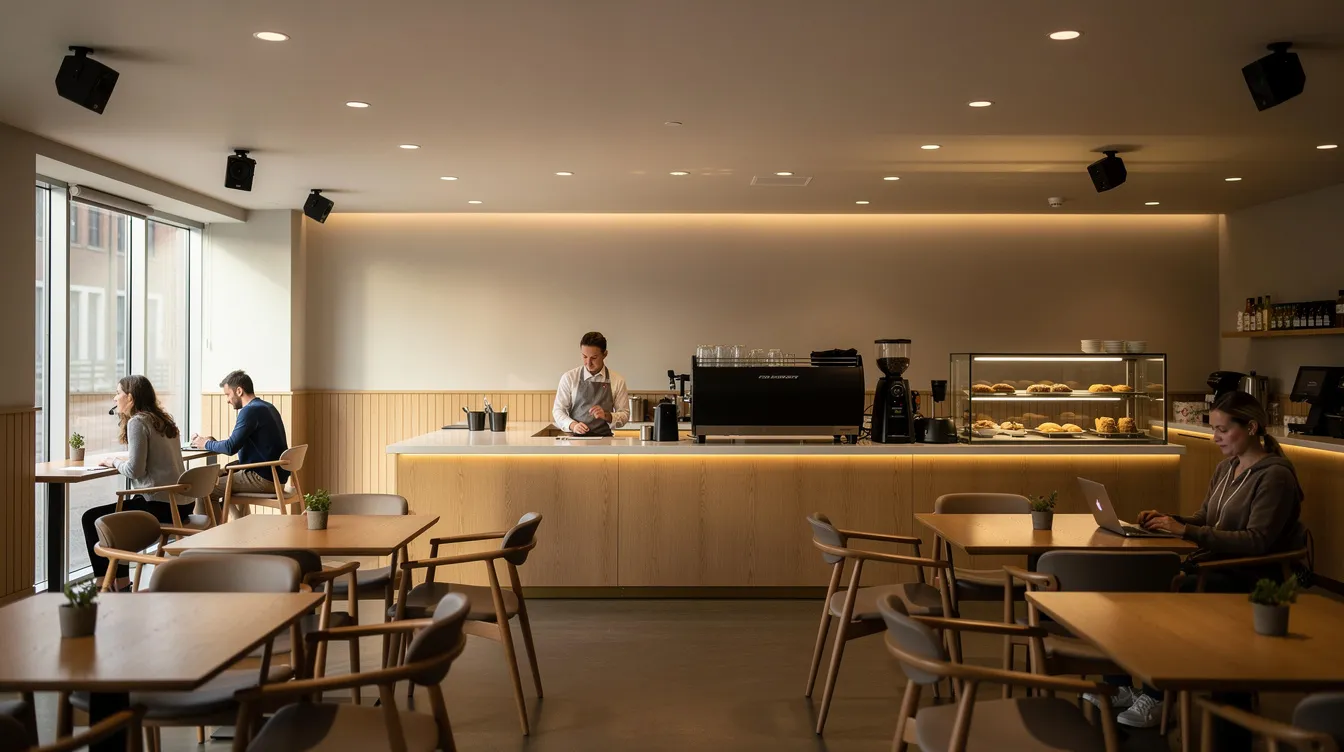
Many multi-location businesses – cafés, fitness franchises, fashion retailers – treat consumer streaming apps as their store sound system. The problem is twofold.
First, it is illegal. Spotify, Apple Music, and YouTube are licensed for personal, non-commercial use only. Playing music through them in a place where customers or staff can hear it counts as a public performance under copyright law, and that requires separate licensing. You need a music license to play music publicly – a consumer subscription does not cover it.
Second, it does not scale. Imagine a 20-location café chain where every manager builds their own playlist. One store plays mellow acoustic, another plays loud EDM, a third has explicit lyrics in the wrong language. Now picture a 150-club fitness brand trying to push a consistent high-energy mix during peak hours, or a fashion retailer across multiple shopping centres attempting to coordinate Black Friday promotions. Without central control, the result is a fractured brand and missed sales opportunities.
Background music can boost sales in retail environments – but only when it is intentional. A branded in store radio station, hosted on a platform like Zeno.fm, gives you a single stream that every location tunes into. Licensed, centralized, and built for your brand.
What Is an In‑Store Radio Station?
An in store radio station is a private radio stream that broadcasts only inside your own locations – retail stores, gyms, cafés, restaurants, shopping centres. It is not a public FM station, and it is not a random playlist on someone’s phone.
It differs from consumer streaming apps (no commercial use rights, no brand messaging), traditional FM/AM radio stations (external ads you cannot control), and random background music playlists (no consistency, no scheduling).
In store radio combines curated music with targeted audio ads to enhance retail environments. It weaves together licensed songs, brand idents, timed promotions, and optional announcements into one continuous stream. In store radio allows control over customer audio experience – what plays, when, and where.
With Zeno.fm’s online radio streaming platform and its cloud-based tools to host, manage, and broadcast online radio globally, the stream is hosted online. Each store tunes in over the internet using simple, low-cost devices. No FM transmitters, no local media servers.
Why Spotify & Personal Streaming Apps Don’t Work for Business
Picture this: a franchisee opens a new location, logs into their personal Spotify account, connects a phone to the speakers, and hits shuffle. Customers hear music. It feels harmless.
It is not. Streaming services like Spotify are for personal use only. Their terms explicitly restrict commercial use. Using them in a store violates those terms and exposes your business to audits from performing rights organizations (PROs). Fines can reach hundreds or thousands of dollars per location – in the US, statutory damages can run between $750 and $150,000 per infringed work.
Beyond the legal risk, you face daily business headaches:
- Staff connecting their own phones means inconsistent genre, wrong language, explicit lyrics
- Different playlists in every store – no unified brand sound
- No way to centrally run promotions, insert brand messages, or manage time-of-day profiles
- No ability to influence customers with intentional audio
In a 2024 franchise rollout, some locations ended up with heavy EDM while others played soft indie. Customer feedback flagged the music as “jarring” and “random.” Several stores received notices from PROs for playing music without a license.
The Legal Side: Music Licensing and Public Performance
Any time you are playing music in store where customers or staff can hear it, that is a public performance. It does not matter if it is background music or a full concert – copyright law treats it the same way.
Here is the basic licensing chain in plain English:
- Consumer streaming license: covers listening at home. Does not cover your store.
- Public performance license: obtained from PROs – ASCAP, BMI, SESAC in the US; PRS in the UK; GEMA in Germany. You need a license from your country’s licensing body.
- Sound recording rights: depending on your country, additional fees may apply for using specific recordings.
Multi-location businesses typically need a background music and public performance license per site. If you broadcast your own radio station or use digital signage solutions with music videos, separate agreements may be needed. Royalty-free music requires a one-off fee for unlimited plays, which can simplify things for certain catalogs.
Proper music licensing protects you from fines and reputational damage – and compensates songwriters fairly. Many in store radio providers, including Zeno.fm partners, work only with fully licensed content catalogs or royalty-free libraries, so it is worth understanding a dedicated music licensing guide for internet radio broadcasters.
Consistency at Scale: Why Multi‑Location Brands Need Central Control
A chain with 10 or more locations cannot rely on each manager choosing their own songs. Retail chains can maintain a consistent brand experience across multiple stores using in store radio – and without it, you get:
- Different mood and tempo in every store
- Promotions not synchronized chain-wide
- No control over what plays during key sales windows
A branded store radio station delivers one synchronized stream from head office to every outlet. A fashion chain can run upbeat pop globally with slight regional variation. A quick-service restaurant group can push “Try our new coffee blend today” across all units simultaneously. A fitness brand can schedule high-energy EDM during peak evening hours at every club.
Options include a global feed, regional variations (language, local offers), and day-parting with morning, afternoon, and evening formats.
How In‑Store Radio Strengthens Brand Identity
For today’s music conscious brands, audio is as important as logos or interior design. Music creates atmosphere – and that atmosphere shapes how customers perceive your brand.
Curated in store music reflects brand identity directly. Upbeat pop for youth fashion. Relaxed acoustic for premium cafés. High-energy rock for gyms. In-store radio influences customer behavior positively and helps shape brand identity through messaging. Custom in-store radio enhances customer mood and shopping experience, and in-store radio improves the customer experience by creating a pleasant shopping atmosphere.
Brand idents between songs – “You’re listening to [Brand] Radio” – reinforce recall. When the music vibe matches your social media, visual communication, and digital signage creative, the whole experience for your customers feels coherent and brings your brand experience to life.
From Background Music to a Branded Radio Station
Random background music is just tracks on shuffle. A branded radio station is thoughtfully programmed content blocks:
- Music segments with dynamic playlists that adapt to time of day, day of week, store type, or region
- Branded sweepers – short idents like “[Brand] – making your day easier”
- Scheduled promotions – new menu items, seasonal sales, loyalty programs
A new dynamic playlist based on preferences means your restaurants can run breakfast, lunch, and evening profiles automatically. Gyms can switch between peak and off-peak energy. Dynamic playlists are created daily based on preferences, so the sound stays fresh. A dynamic playlist based approach keeps every single song relevant to the moment.
This is how shop owners turn passive audio into a powerful tool.
Using In‑Store Radio for Promotions and Internal Messaging
Your in store radio station doubles as an internal marketing channel. In-store radio can promote products and special offers without competing ads – no third-party commercials interrupting your message. In-store radio systems can incorporate promotional messages without disrupting the shopping experience.
Concrete promo use cases:
- Cross-selling: “Pair your latte with our new blueberry muffin”
- Upselling: “Upgrade to a family membership and save 20%” – upsell services naturally
- Loyalty: “Download our app for a free reward”
For internal messaging, think safety reminders before store opening, staff recognition shout-outs to motivate employees, and quick updates on new product arrivals. Well-curated audio can enhance employee morale by making the work environment more dynamic. Targeted audio advertisements promote flash sales and highlight new arrivals. Targeted messaging in in-store radio systems can lead to increased sales opportunities, and in-store radio can influence customer purchasing decisions.
AI voices can create professional messages in minutes – no need to hire voice talent for every update. With Zeno.fm, own overhead audio promotions and new promotions can be uploaded once, scheduled centrally, and pushed to all locations automatically.
During a 2025 summer sale, one retail chain scheduled overhead audio promotions every hour across 40 stores – that kind of audio advertising used to require expensive media buys. Now it is built into your own stream, and those same assets can easily be repurposed into episodes using podcast hosting and AI automation for live broadcasters.
Digital Signage and Audio: A Unified In‑Store Experience
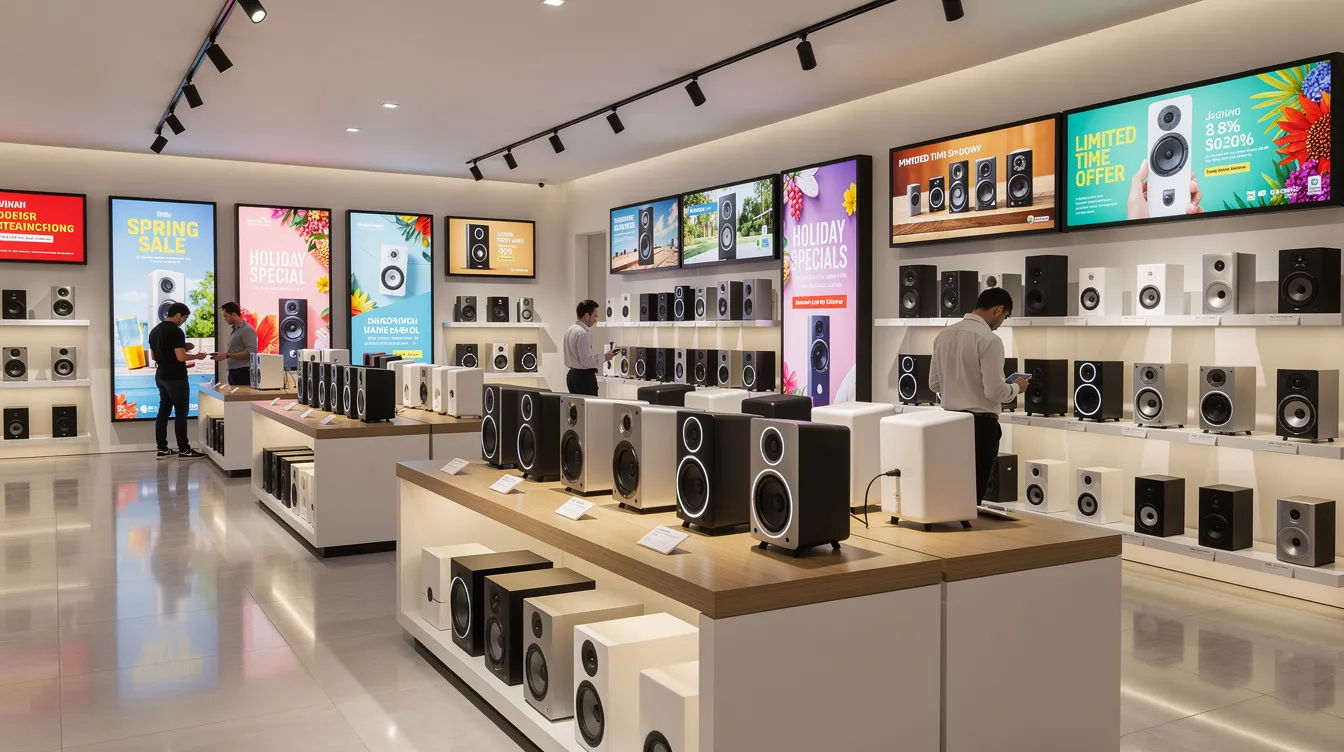
Many modern chains already use digital signage – LCD screens, menu boards, video walls. Coordinating in store media visuals with your store radio audio amplifies every message.
A QSR showing a new burger on a single screen while the radio mentions a limited-time combo sees far better conversion than either channel alone. A shopping centre using screens plus a central mall radio station to promote events creates an immersive experience. Digital signage can positively impact brand perception when paired with matching audio.
While Zeno.fm focuses on audio streaming, it fits easily into an ecosystem of store media solutions and digital signage systems managed from head office. The key is integration – same team, same schedule, same brand voice across every sense. This is how in store media becomes a cohesive system rather than scattered pieces. It goes beyond traditional print advertisements into something customers actually engage with.
Technology & Equipment: How In‑Store Radio Works in Practice
The tech setup is simpler than you might expect – even for hundreds of stores. Online radio requires minimal special equipment compared to traditional broadcasting, and the same principles apply if you want to start your own online radio station or experiment with powerful tools to broadcast live radio online beyond in-store use.
What you need at each location:
- Cloud streaming platform (Zeno.fm) to host and distribute the stream
- Reliable internet connection – an internet connection is required for in store radio
- Playback device – you need a device to stream audio, like a laptop or smartphone, a tablet, or a small dedicated streaming box
- Amplifier and speakers – a speaker system is necessary to play audio in-store, with a sound system sized to cover the space evenly
Each store tunes in to the private stream URL, similar to listening to any online radio station. Configure auto-start so the stream begins when power comes on.
For resilience: keep offline backup playlists in case connectivity drops, ensure automatic reconnection, and consider volume zoning – entrance louder, restrooms quieter, training zones in gyms at full energy.
Central Management: One Dashboard for All Your Locations
Instead of managing music at each store individually, HQ uses a single online dashboard to control all content. In-store radio systems allow centralized management of playlists across multiple locations. Content can be scheduled in advance for specific occasions. Messaging scheduling tools are included in all subscriptions.
Practical capabilities:
- Schedule different playlists for weekdays vs. weekends
- Push special campaigns – Black Friday, holiday playlists, 2026 summer sale – across the whole network with one click
- Create regional versions (French announcements in Quebec, English elsewhere)
Head office sets core playlists and brand rules. Local managers can trigger local messages or adjust volume within limits. Live status reports let your team verify every location is streaming as planned.
Zeno.fm supports multiple stations per account – main, regional, seasonal – so global brands and medium sized businesses alike can run the exact feeds they need. Regularly updated content in an in-store radio system can prevent listener fatigue, keeping the vast music selection from the music library feeling fresh. The platform ensures all the songs in rotation are constantly updated with the help of its radio automation platform for 24/7 broadcasting.
Designing Your In‑Store Music Strategy
The goal is not just to play songs. The right background music supports sales and customer experience directly.
Define your objectives: increase dwell time in fashion retail, speed perceived wait times in restaurants (in-store radio reduces perceived wait times by helping customers feel that they are waiting less time), or boost workout motivation in fitness clubs.
Segment by time and audience:
- Family-friendly playlists during afternoons
- More energetic music in the evening
- Quieter profiles for early morning setups
Playing slow tempo music can encourage shoppers to linger longer in stores. Curated music can positively affect customer mood and increase dwell time. In-store audio can increase customer dwell time. Custom playlists can enhance the shopping experience significantly.
Effective in-store radio requires balancing audio quality and thoughtful programming. Consider working with music curators rather than relying solely on algorithms – human curation captures regional nuance and brand warmth that algorithms miss. Many Zeno.fm users combine curated sets with smart rotation rules to deliver perfect playlists and the best possible music experience, then extend that experience beyond the store with mobile apps for radio stations that are essential in 2026.
Step‑by‑Step: How to Launch Your Own Branded In‑Store Radio
Launching is a 6–7 step process you can roll out over a few weeks:
- Audit current music use – identify what services are in use (Spotify, radio, CDs) and check for legal gaps
- Confirm or obtain proper music licensing – get public performance licenses from relevant PROs in each country or region
- Define your audio brand – select genres, tone, voice identity, and language versions to match your brand’s unique needs
- Set up your stream on Zeno.fm – create your channel, upload content from your music library, configure schedules
- Install hardware in pilot locations – test the stream, adjust volume zones, verify speedy deployment
- Roll out to all locations in phases – train managers on basic controls
- Monitor and refine – gather feedback from staff and clients, adjust playlists and promos
Broadcasting over the internet does not require a broadcasting license – you are streaming to your own premises, not transmitting over airwaves. This makes the whole process far more accessible, as long as you follow an internet radio licensing beginner’s guide to broadcasting legally.
In‑Store Radio for Different Types of Multi‑Location Businesses
The same core concept adapts to many formats – but this is only the beginning of what each vertical can do:
- Retail chains in shopping centres: highlight flash offers, loyalty perks, and seasonal campaigns. In-store radio allows for tailored messaging to customers and can boost sales during key windows.
- Restaurant and café groups: softer background music, lunch specials announcements, comfort-focused playlists. Raise brand awareness with gentle brand idents.
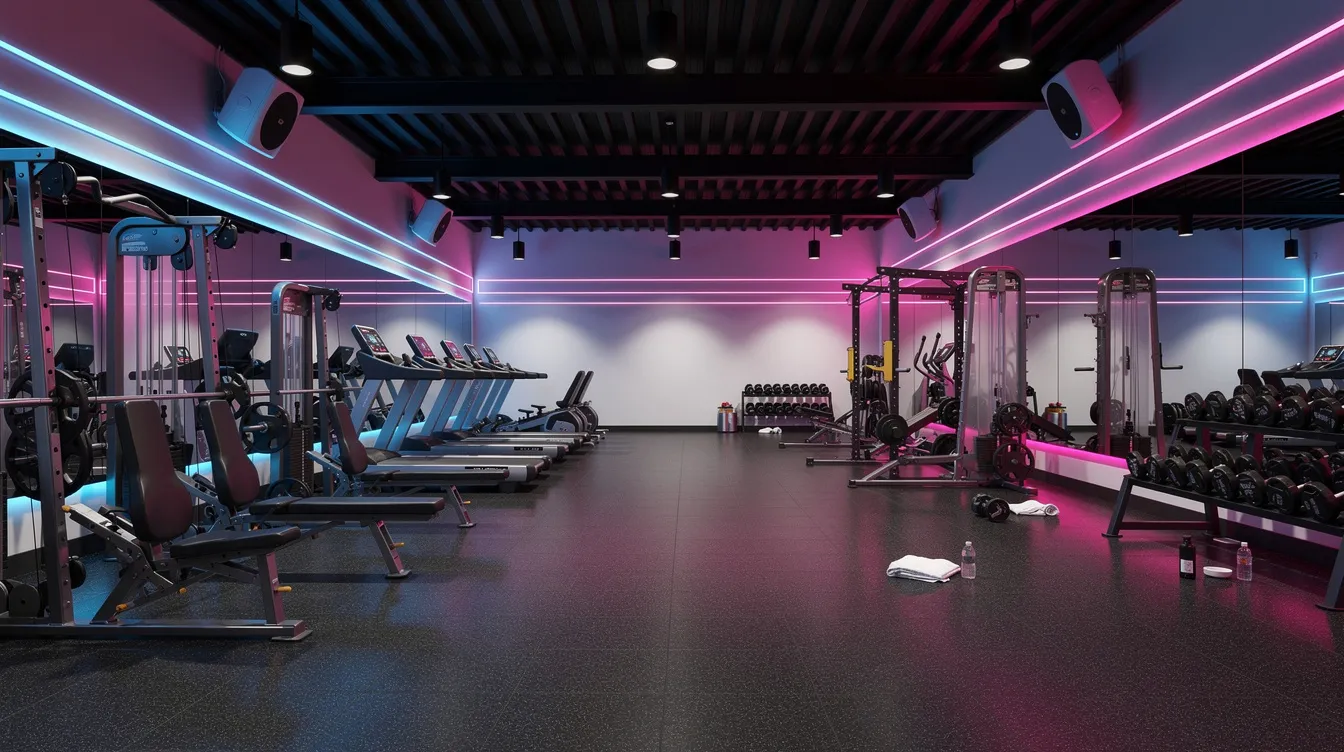
- Gyms and fitness franchises: high-energy playlists, class reminders, membership upgrade messaging. A music experience built for motivation.
- Service franchises (salons, car services): relaxed music, waiting estimates, upsell messages for premium treatments
Each vertical tweaks tempo, promo frequency, and seasonal programming to fit. A New Year fitness campaign sounds very different from a holiday retail push – and your station handles both, especially when supported by a dedicated radio station mobile app for iOS and Android broadcasters.
Measuring the Impact of Your In‑Store Radio
Music is emotional, but you can still track its positive impact with concrete numbers, especially if you apply proven strategies to grow your online radio station:
- Dwell time and basket size for retailers – before and after station launch
- Average ticket size during specific overhead messaging campaigns
- Membership upgrades and class bookings in gyms after targeted announcements
Test by running A/B days with and without certain promos, or comparing regions using the new station vs. standard background music. Collect qualitative feedback from your team and customers. Tie your radio scheduling to existing campaign calendars – e-mail blasts, app push notifications – for clearer attribution. In-store radio can influence customer purchasing decisions when every element works together.
Why Build Your Station on Zeno.fm?
Zeno.fm is a proven online radio platform that can power reliable, branded in store radio for your business. It is built for streaming at scale – whether you have 5 or 500 locations, every store can hear the same consistent feed, supported by flexible professional streaming plans for online radio.
Key advantages:
- Fast setup of your own branded radio station, available 24/7
- Central online control panel to manage shows, playlists, and scheduling
- Ability to create multiple streams (main, regional, seasonal) within the same account
- AutoDJ backup to keep music flowing if live content is unavailable
- Royalties reporting to document what played and when for licensing compliance
Stores connect via direct streaming URLs for hardware players or browser-based players on existing PCs. Instore radio puts your brand sound in every location without the complexity of enterprise broadcast tools. It is how you make your business sound amazing.
Taking the Next Step: Create Your Branded In‑Store Radio Station
Using Spotify or similar services in store is both legally risky and operationally impossible to scale. A branded, fully licensed in store radio station gives you consistent background music, clear brand identity, and centralized control across every location.
Here is what to do next:
- This week: audit your current setup across all locations
- This month: align your team on brand sound, messaging, and licensing
- Next 30–60 days: start a pilot station on Zeno.fm for a subset of locations and create your first test stream
Legal peace of mind, stronger brand perception, and an improved customer experience across every store — that is what a professional in store radio solution delivers. Your customers already hear you. Make sure they hear something worth remembering.
Ready to take control? Create your own branded in store radio station on Zeno.fm today and start enjoying our 7-day free trial with no commitment required. Explore the platform, customize your stream, and experience the difference firsthand.
Not sure which plan fits your business best? Discover the options available and find the perfect solution tailored to your needs by exploring Zeno.fm’s flexible plans now.
July 9, 2026