Radio Stream Buffering: How to Find and Fix the Cause
When listeners tell you the audio keeps cutting out, your first reaction is to look for a quick fix. But radio stream buffering has several possible causes, and applying the wrong solution can waste weeks of effort or make your broadcast worse. This article walks you through a diagnostic method so you can identify the real problem and solve it.
What buffering means for your online radio station
Buffering happens when audio data cannot keep up with the rate the listener’s device needs to play it. Instead of steady music or speech, the listener hears silence, stuttering, or a loading icon that spins without moving. The stream stops when the gap between incoming data and playback grows too wide.
What listeners actually report sounds like this: “the stream keeps pausing,” “it cuts out after a few minutes,” “the player just keeps loading.” All of those point to the same thing: somewhere in the chain, the stream is starving for data.
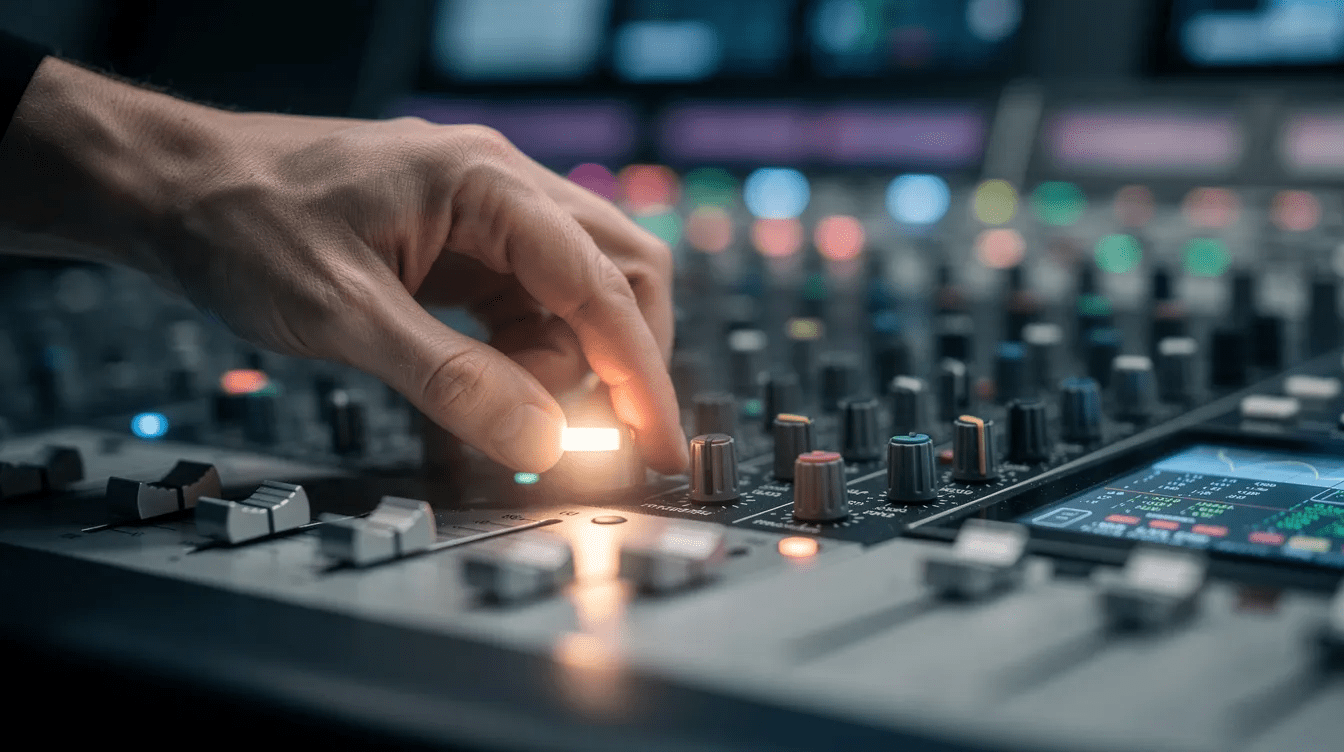
Here is how the chain works. Your studio encoder converts your live audio into a digital stream and sends it to Zeno.FM’s servers over your internet connection. The servers distribute that stream to every listener’s device. Three segments, three possible failure points: you to the server, the server itself, and the server to the listener.
Some delay between what you say into the microphone and what a listener hears is normal. Encoding, network travel, and server processing all add latency. Constant stops and restarts are not normal. Those do point to a real problem in one of the links.
The rest of this article helps you work out which link is failing so you can apply a targeted fix. If you run your online radio station on Zeno.FM, every section below applies directly to your setup.
Quick checks when listeners report cutouts
Before you touch any setting, gather facts:
- Confirm whether the cutouts affect many listeners or just one or two. Check messages, social media, and chat. A single complaint is worth investigating, but you diagnose it differently than a station-wide failure.
- Test your own public player page from a different network. Switch from office Wi-Fi to mobile data, for example. If the stream stalls the same way on both, the problem is unlikely to sit on the listener’s end.
- Check whether the cutouts affect both the live feed and AutoDJ, or only one of them. If AutoDJ plays fine and the live feed breaks up, the problem is in your studio.
- Listen to your audio locally in the studio. If the music, the jingles, or the microphone already sound distorted before encoding, what looks like a streaming problem may be an audio quality problem.
- Write down the patterns: what hour it happens, which regions report it, and whether it starts after a specific action such as switching from AutoDJ to a live show. Those patterns guide everything that follows.
Check the three links: studio, server, listener
Buffering almost always starts in one of three places. Identify the right link before you change any setting.
Studio-side causes
A stable upload from the studio to Zeno.FM is the essential piece. If that link drops, the stream cuts out for every listener at the same moment. A live feed is more sensitive to network problems than pre-recorded content, so even brief dips show up.
The most common studio-side problems are:
- An unstable connection where the encoder runs. Congestion delays data packet delivery, especially on a shared office or church network where other people are downloading files, on video calls, or syncing cloud backups.
- An overloaded computer. If the machine is at its processor or memory limit while also handling effects, antivirus, or backups, the audio freezes. Close the processes you do not need while you are on air.
- Encoder settings that do not match what the server expects: wrong codec, sample rate, or channel count.
Use an Ethernet cable instead of Wi-Fi whenever you can. It is more stable and should be your default in the studio. That said, if the underlying internet line is unreliable, buffering can appear anyway. Improving stability on the upload side reduces cutouts for all of your listeners at once.
Server-side signs
If players on very different devices stop at the same moment, that points to the server or the ingest connection rather than to one particular listener.
If AutoDJ files play fine but the link from the studio keeps reconnecting, or the other way around, review your streaming configuration in the Zeno.FM dashboard.
[PRODUCT VALIDATION: confirm with the team whether the dashboard exposes an error log to the broadcaster and what that section is actually called. Do not publish this sentence without confirmation.]
Listener-side patterns
Sometimes the problem lives with the person listening:
- Only listeners in one region complain, while everyone else hears the stream fine.
- The listener’s Wi-Fi signal is weak or their mobile data connection is unstable.
- A firewall or a VPN delays incoming audio packets.
- Outdated players on older phones or tablets.
Place each symptom in one of these three links before you reset settings or change your bitrate. When in doubt, let AutoDJ carry the schedule and temporarily stop the live link. If the buffering disappears, the fault is in the studio. It helps to read how automation keeps your station on air during unstable periods.
Match your bitrate to your internet connection
Bitrate defines how many bits per second your encoder sends to Zeno.FM. More bitrate usually means cleaner sound, but it also demands more bandwidth. A high-bitrate stream is more vulnerable to cutouts if your connection speed dips, even for a moment.
To choose a sensible bitrate:
- Talk formats work well at a lower bitrate and still sound clean. Encoding in mono is a reasonable option.
- Music formats with complex sound justify a higher bitrate, as long as your connection is strong and stable.
- Avoid unusual or experimental values unless you are clear about the trade-off.
Your upload link to Zeno.FM always needs more capacity than the bitrate you choose. Leave a margin: a 128 kbps stream is best supported by roughly double that in available upload capacity, to absorb protocol overhead, Wi-Fi fluctuation, and any other traffic on the same network. If someone else in the studio is downloading large files, your stream will feel it.
Use the same format and the same bitrate on your live encoder and on AutoDJ wherever possible. Sudden format switches between segments confuse some players and produce something that sounds exactly like buffering.
Keep your audio library and automation clean
Not every gap in playback comes from the network. Some interruptions come from damaged files, incomplete metadata, or automation settings.
A corrupt or badly encoded file in the AutoDJ queue behaves just like buffering for the listener: the player appears to hang when in fact the file cannot be played correctly.
To handle this:
- Use consistent formats and sample rates across your whole library.
- Avoid mixing very low-quality files with much higher-quality ones in the same playlist.
- Replace files that repeatedly cause silence, errors, or stumbles.
- Review crossfade, intro, and outro settings in your automation, to confirm that overly aggressive fades are not creating moments that sound like a pause.
Use the AzuraCast tools built into Zeno.FM to inspect and tidy your library. The article on how AzuraCast handles your library covers this in more detail. Check track titles and artist tags too: messy metadata makes it harder to identify which specific track is failing.
When the problem is not buffering
Some complaints that sound like buffering actually come from schedule design or from the studio audio chain.
When a lot of people tune in at once and then leave during a long speech block, whoever stays may assume the station has a technical fault. Compare the reported hours with your listener stats inside Zeno.FM before you change anything.
Distortion, pumping, and sudden volume jumps inside the studio also sound like a broken stream. They almost always trace back to microphone gain, a badly set compressor, cheap adapters, or wireless interference, not to the connection. Review your studio audio chain to get a clean, stable signal into the encoder.
With stable audio and a realistic bitrate, most genuine buffering disappears. Any complaints left over should be placed carefully into one of the three links: studio, server, or listener.
Frequently asked questions about radio stream buffering
Why does my stream buffer only at certain times of day? Shared connections get saturated at peak hours. If you broadcast from an office or a church, other people on the same network are probably consuming the bandwidth at the same hour every day. Something similar happens by region on the listener side. Log the hours and compare them against your network usage and your stats.
Should I lower my bitrate until the buffering stops? Lowering quality helps on slow connections, but if you go too low the sound degrades and you lose listeners. It is better to confirm your real upload capacity, set the highest bitrate that fits comfortably inside it, and then look for the real cause using the diagnostic steps above.
Does automation solve this? Partly. When your live link is unstable, handing control to AutoDJ keeps the station on air with already-tested files while you fix the underlying problem. Learn more about radio automation on Zeno.FM.
August 31, 2026