05 May 2026
Multidomain Operations: The Pursuit of Battlefield Dominance in the 21st Century
Wavell Room Audio Reads
About
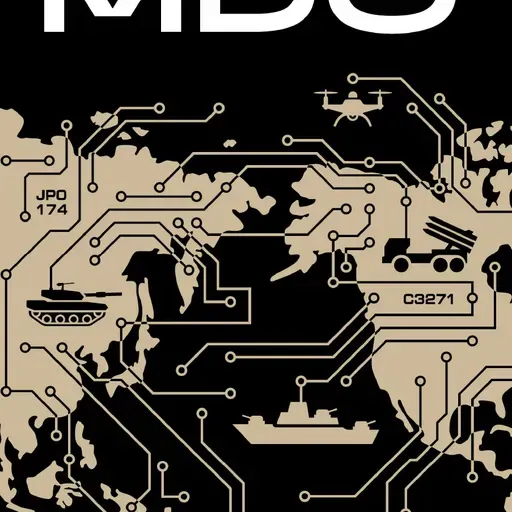
"All façade and no filler." That characteristically blunt assessment captures the tone and thrust of Multidomain Operations: The Pursuit of Battlefield Dominance in the 21st Century, an edited volume by Amos Fox and Frantz-Stefan Gady. At a time when "multidomain operations" (MDO) has become the dominant, if ill-defined, concept in Western military thinking, Multidomain Operations sets out to interrogate its intellectual foundations, practical utility, and coherence. The result is a sustained and often damning critique of what many contributors see as a concept full of ambition but short on substance.
The volume is structured into four parts. The first explores the origins and lineage of multidomain doctrine, tracing how and where it emerged from. Part two examines the practical considerations, including force design and implementation challenges. Part three looks at tensions with contemporary conflict and tests MDO against the realities of warfare. The final section offers international perspectives that both reinforce and complicate the core critique.
At its core, and oversimplifying enormously, the book advances several interlocking arguments about why multidomain operations are not fit for purpose. First, the doctrine's development process was deeply flawed. Contributors argue that MDO is the product of bureaucratic compromise rather than intellectual clarity, resulting in a concept shaped by institutional consensus over operational necessity. The language of MDO, replete with buzzwords such as "convergence," "integration," and "cross-domain synergy, is criticised as vague and imprecise. This lack of definitional clarity, particularly within U.S. military thinking, is not, according to the writers, only an academic concern. It has real implications for how doctrine is interpreted and applied undermining its potential value.
Second, the book contends that multidomain operations lack a coherent theory of victory. While MDO promises to deliver battlefield dominance through the integration of capabilities across land, sea, air, cyber, and space, it remains unclear how this integration translates into strategic success. Without a clear theory linking tactical actions to strategic outcomes, MDO risks becoming an exercise in operational abstraction.
Third, and perhaps most damagingly, Multidomain Operations argues that MDO lacks credible tactical application. Robert Rose's chapter is particularly effective in this regard, highlighting how combat teams struggled to understand, and therefore implement, the doctrine. Rose's argument that MDO's "twisted roots" lie in bureaucratic compromise resonates strongly: in attempting to satisfy multiple stakeholders, the concept has become diluted to the point of impracticality. This critique aligns closely with Amos Fox's broader argument that MDO lacks both the resources and the operational clarity required to work as intended. While much of this analysis is grounded in the U.S. Army experience, other contributors extend the critique to joint and tri-service contexts, suggesting that the problem is systemic rather than service-specific.
A recurring theme throughout the book and one echoed in other critical commentary on MDO is the issue of technological overreach. Davis Ellison and Tim Sweijs pose the provocative question: "Does the emperor have any clothes?" Their answer is, at best, uncertain. MDO is predicated on the assumption that advanced technologies, particularly in areas such as networking, artificial intelligence, and long-range precision fires, will enable seamless integration across domains. Yet many of these capabilities remain immature or unevenly distributed. As a result, the concept risks being built on a foundation of technological optimism rather than operational reality. This critique is consistent with wider debates in defence circles, where concerns about over-reliance on unproven technologies have become increasingly prominent.
The question of the adversary further ...
The volume is structured into four parts. The first explores the origins and lineage of multidomain doctrine, tracing how and where it emerged from. Part two examines the practical considerations, including force design and implementation challenges. Part three looks at tensions with contemporary conflict and tests MDO against the realities of warfare. The final section offers international perspectives that both reinforce and complicate the core critique.
At its core, and oversimplifying enormously, the book advances several interlocking arguments about why multidomain operations are not fit for purpose. First, the doctrine's development process was deeply flawed. Contributors argue that MDO is the product of bureaucratic compromise rather than intellectual clarity, resulting in a concept shaped by institutional consensus over operational necessity. The language of MDO, replete with buzzwords such as "convergence," "integration," and "cross-domain synergy, is criticised as vague and imprecise. This lack of definitional clarity, particularly within U.S. military thinking, is not, according to the writers, only an academic concern. It has real implications for how doctrine is interpreted and applied undermining its potential value.
Second, the book contends that multidomain operations lack a coherent theory of victory. While MDO promises to deliver battlefield dominance through the integration of capabilities across land, sea, air, cyber, and space, it remains unclear how this integration translates into strategic success. Without a clear theory linking tactical actions to strategic outcomes, MDO risks becoming an exercise in operational abstraction.
Third, and perhaps most damagingly, Multidomain Operations argues that MDO lacks credible tactical application. Robert Rose's chapter is particularly effective in this regard, highlighting how combat teams struggled to understand, and therefore implement, the doctrine. Rose's argument that MDO's "twisted roots" lie in bureaucratic compromise resonates strongly: in attempting to satisfy multiple stakeholders, the concept has become diluted to the point of impracticality. This critique aligns closely with Amos Fox's broader argument that MDO lacks both the resources and the operational clarity required to work as intended. While much of this analysis is grounded in the U.S. Army experience, other contributors extend the critique to joint and tri-service contexts, suggesting that the problem is systemic rather than service-specific.
A recurring theme throughout the book and one echoed in other critical commentary on MDO is the issue of technological overreach. Davis Ellison and Tim Sweijs pose the provocative question: "Does the emperor have any clothes?" Their answer is, at best, uncertain. MDO is predicated on the assumption that advanced technologies, particularly in areas such as networking, artificial intelligence, and long-range precision fires, will enable seamless integration across domains. Yet many of these capabilities remain immature or unevenly distributed. As a result, the concept risks being built on a foundation of technological optimism rather than operational reality. This critique is consistent with wider debates in defence circles, where concerns about over-reliance on unproven technologies have become increasingly prominent.
The question of the adversary further ...