About
WHY BRITAIN SHOULD RESURRECT 'LETTERS OF MARQUE' FOR THE DIGITAL AGE
In 1708, a Bristol trading captain named Woodes Rogers departed England in command of the 'Duke' and 'Duchess', two heavily armed merchantmen, with a commission from Queen Anne authorising him to wage war against French and Spanish shipping. The letter of marque had transformed him from a private citizen into a state sanctioned privateer. Over three years, Rogers circumnavigated the globe and captured – amongst many – a prize Spanish treasure galleon worth approximately £800,000. Rogers returned home having demonstrated the value of private enterprise under sovereign aegis: strategic power could be projected with minimal Crown expense.
Three centuries later, on 18 December 2025, Senator M. Lee (R-UT) introduced S.3567 to the 1st Session of the 119th Congress. Named the Cartel Marque and Reprisal Authorization Act of 2025, it proposes to give the US President authorities "to issue letters of marque and reprisal with respect to acts of aggression against the United States by a member of a cartel". The US Government is also reportedly considering "enlisting private companies to assist with offensive cyberattacks". The historical inspirations are clear and the modern utility of private enterprise for British national purposes is worth considering.
What are Privateers?
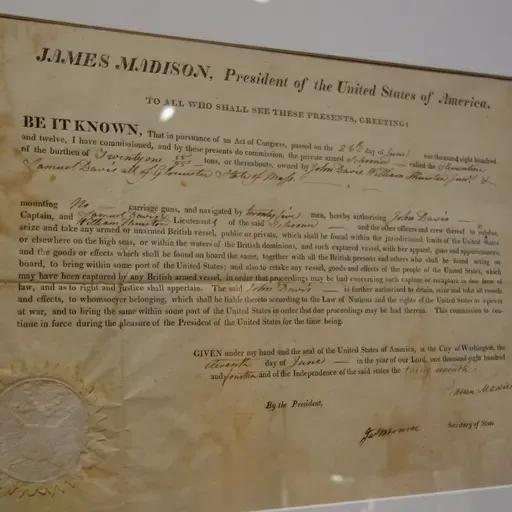
Letters of marque were state-issued licences authorising private individuals to wage war on designated state enemies. Britain once dominated privateering. Elizabeth I's sanctioning of Drake, Hawkins and Raleigh transformed merchant adventurers into instruments of grand strategy against Spanish hegemony. The British Monarchy issued as many as 4,000 letters of marque during the Napoleonic Wars. In the war of 1812 alone, American privateers captured 1,300 British vessels. Privateering allowed governments to project power to complement or negate sovereign economic or military resource. The system worked because frameworks were clear, courts enforced rules and strategic objectives aligned with commercial incentives.
The 1856 Declaration of Paris formally abolished British naval privateering, yet in the United States the Constitution still empowers Congress to grant letters of marque under Article I, Section 8 of the US Constitution. As the national defence conversation in Britain develops, with many difficult fiscal choices that lie ahead of the Government and all departments. Meanwhile, Private offensive cyber operations are reportedly occurring daily around the world and the consequences of unregulated private cyber capabilities are already visible. The Israeli firm NSO Group was ordered to pay damages by a US federal court for using intrusion cyber capabilities in June 2025. Whilst Ukraine's IT Army operates today as a volunteer cyber militia with tacit government blessing but minimal legal framework. The choice is not whether private actors will conduct cyber operations – they already do – but whether democracies should harness them through regulation.
Not doing so may cede advantage to adversaries exploiting unaccountable proxies.
Why could it be important?
The world of Great Power Competition and the looming threat of war crystallises the defence imperative and security challenge facing Britain today. The Strategic Defence Review 2025 said "innovation and industrial power are central to deterrence and decisive factors in war", going beyond pure military force to a 'whole of society' approach. The British Army stands at approximately 73,000 personnel – its smallest since the Napoleonic era and much reduced from 102,000 in 2006 – and the broader Armed Forces and security services will inevitably concentrate on protecting critical government and military networks, rather than the national infrastructure that underpins economic activity. More capacity is needed as capacity shrinks and threats expand.
Private companies and enterprise could fill this gap. British Private Military Companies (PMCs) alre...
In 1708, a Bristol trading captain named Woodes Rogers departed England in command of the 'Duke' and 'Duchess', two heavily armed merchantmen, with a commission from Queen Anne authorising him to wage war against French and Spanish shipping. The letter of marque had transformed him from a private citizen into a state sanctioned privateer. Over three years, Rogers circumnavigated the globe and captured – amongst many – a prize Spanish treasure galleon worth approximately £800,000. Rogers returned home having demonstrated the value of private enterprise under sovereign aegis: strategic power could be projected with minimal Crown expense.
Three centuries later, on 18 December 2025, Senator M. Lee (R-UT) introduced S.3567 to the 1st Session of the 119th Congress. Named the Cartel Marque and Reprisal Authorization Act of 2025, it proposes to give the US President authorities "to issue letters of marque and reprisal with respect to acts of aggression against the United States by a member of a cartel". The US Government is also reportedly considering "enlisting private companies to assist with offensive cyberattacks". The historical inspirations are clear and the modern utility of private enterprise for British national purposes is worth considering.
What are Privateers?
Letters of marque were state-issued licences authorising private individuals to wage war on designated state enemies. Britain once dominated privateering. Elizabeth I's sanctioning of Drake, Hawkins and Raleigh transformed merchant adventurers into instruments of grand strategy against Spanish hegemony. The British Monarchy issued as many as 4,000 letters of marque during the Napoleonic Wars. In the war of 1812 alone, American privateers captured 1,300 British vessels. Privateering allowed governments to project power to complement or negate sovereign economic or military resource. The system worked because frameworks were clear, courts enforced rules and strategic objectives aligned with commercial incentives.
The 1856 Declaration of Paris formally abolished British naval privateering, yet in the United States the Constitution still empowers Congress to grant letters of marque under Article I, Section 8 of the US Constitution. As the national defence conversation in Britain develops, with many difficult fiscal choices that lie ahead of the Government and all departments. Meanwhile, Private offensive cyber operations are reportedly occurring daily around the world and the consequences of unregulated private cyber capabilities are already visible. The Israeli firm NSO Group was ordered to pay damages by a US federal court for using intrusion cyber capabilities in June 2025. Whilst Ukraine's IT Army operates today as a volunteer cyber militia with tacit government blessing but minimal legal framework. The choice is not whether private actors will conduct cyber operations – they already do – but whether democracies should harness them through regulation.
Not doing so may cede advantage to adversaries exploiting unaccountable proxies.
Why could it be important?
The world of Great Power Competition and the looming threat of war crystallises the defence imperative and security challenge facing Britain today. The Strategic Defence Review 2025 said "innovation and industrial power are central to deterrence and decisive factors in war", going beyond pure military force to a 'whole of society' approach. The British Army stands at approximately 73,000 personnel – its smallest since the Napoleonic era and much reduced from 102,000 in 2006 – and the broader Armed Forces and security services will inevitably concentrate on protecting critical government and military networks, rather than the national infrastructure that underpins economic activity. More capacity is needed as capacity shrinks and threats expand.
Private companies and enterprise could fill this gap. British Private Military Companies (PMCs) alre...