10 April 2026
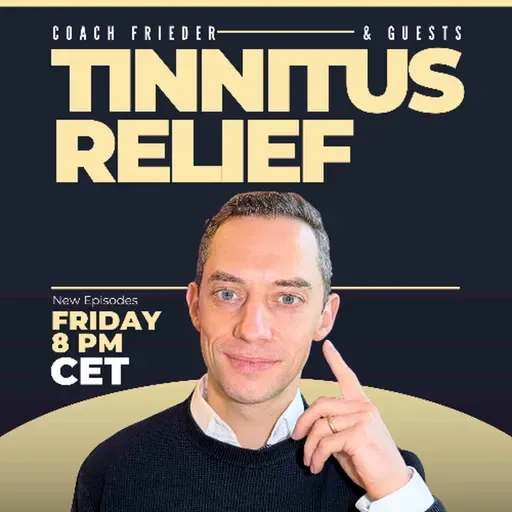
Episode 151 - Tinnitus Habituation: The Question that Everyone asks at the Start
Tinnitus Relief & Habituation with Coach Frieder
About
Hey Tinnitus Friends and Family,
Almost everyone who starts working with me asks the same question in week one.
"Will this ever get better?"
Sometimes it's more specific:
"Will I ever sleep properly again?"
"Will I ever stop thinking about it?"
"Is this my life now?"
Underneath all of them is the same fear:
"I might be stuck here forever."
In this episode we talk about:
Googling at 2am trying to find a cure
Avoiding quiet places and certain activities
Bracing yourself for it to get worse
Can't imagine a day where tinnitus isn't the main thing
The question makes complete sense.
When you're in week one, you have no evidence that things can change.
You're in survival mode. Every day feels impossible.
You've probably already tried a lot of things—and you're still here.
So the question isn't just "Will it get better?"
It's: "I've already tried so much and I'm still suffering. So will it?"
What happens across 12 weeks:
Important: It's not a linear improvement.
There are hard weeks. There are spikes. There are moments of doubt.
But the quality of the experience starts to shift:
Weeks 2-5:
Catastrophic thoughts start to loosen
"This will never get better" becomes "This is really hard right now, but maybe it can shift"
Sleep improves (not because the tinnitus got quieter, but because your nervous system starts to feel safer)
Gaps appear - hours where tinnitus wasn't the main thing
Weeks 8-10:
People start making plans again
Seeing friends, traveling, going to restaurants
The tinnitus is still there—but it's moved from foreground to background
Week 12:
Something has genuinely settled
Not silence. Not gone. But different.
What people actually say in week 12:
Almost nobody asks "Will it ever get better?" anymore.
Because they have their answer.
What they say instead:
"I went to the concert (with ear protection) and I just... enjoyed it."
"I'm working regularly again."
"I'm doing sports again."
"I'm getting back into life."
These are not descriptions of the sound changing.
These are descriptions of a life returning.
The tinnitus volume is pretty much the same.
But the brain downgraded the threat level.
The volume knob turned down—not because the sound got quieter, but because life got bigger.
What makes the difference:
It's not time alone.
Plenty of people have had tinnitus for years or decades without this change.
It's specific:
1. Nervous system work
Teaching your brain that tinnitus is safe—through lived experience, not just understanding.
2. ACT principles
Acceptance (very different from what you think)
Cognitive defusion (observing thoughts without being controlled by them)
Values-based living (not forcing yourself to be okay, but learning you can do it)
3. Community support
Being around other people who understand.
Not family saying "Yeah, you have tinnitus, so what? Get on with it."
But people saying: "This is difficult. I get it. But look—this person did this. You can do it too."
The combination of:
Understanding the mechanism
Having somewhere to do the work
Not being alone in it
That's what creates this shift.
That's why week 12 sounds different from week 1.
Ready to understand where you are in your habituation journey?
Take the free habituation quiz: www.habituate.online
It takes 2 minutes and will help you:
Identify your current stage
Understand what's keeping you stuck
Get personalized next steps
After the quiz, you'll get our free 4-day email course on ACT-based tinnitus habituation.
Want to join the 12-week program?
Go to: www.mytinnitus.club
— Frieder
Almost everyone who starts working with me asks the same question in week one.
"Will this ever get better?"
Sometimes it's more specific:
"Will I ever sleep properly again?"
"Will I ever stop thinking about it?"
"Is this my life now?"
Underneath all of them is the same fear:
"I might be stuck here forever."
In this episode we talk about:
Googling at 2am trying to find a cure
Avoiding quiet places and certain activities
Bracing yourself for it to get worse
Can't imagine a day where tinnitus isn't the main thing
The question makes complete sense.
When you're in week one, you have no evidence that things can change.
You're in survival mode. Every day feels impossible.
You've probably already tried a lot of things—and you're still here.
So the question isn't just "Will it get better?"
It's: "I've already tried so much and I'm still suffering. So will it?"
What happens across 12 weeks:
Important: It's not a linear improvement.
There are hard weeks. There are spikes. There are moments of doubt.
But the quality of the experience starts to shift:
Weeks 2-5:
Catastrophic thoughts start to loosen
"This will never get better" becomes "This is really hard right now, but maybe it can shift"
Sleep improves (not because the tinnitus got quieter, but because your nervous system starts to feel safer)
Gaps appear - hours where tinnitus wasn't the main thing
Weeks 8-10:
People start making plans again
Seeing friends, traveling, going to restaurants
The tinnitus is still there—but it's moved from foreground to background
Week 12:
Something has genuinely settled
Not silence. Not gone. But different.
What people actually say in week 12:
Almost nobody asks "Will it ever get better?" anymore.
Because they have their answer.
What they say instead:
"I went to the concert (with ear protection) and I just... enjoyed it."
"I'm working regularly again."
"I'm doing sports again."
"I'm getting back into life."
These are not descriptions of the sound changing.
These are descriptions of a life returning.
The tinnitus volume is pretty much the same.
But the brain downgraded the threat level.
The volume knob turned down—not because the sound got quieter, but because life got bigger.
What makes the difference:
It's not time alone.
Plenty of people have had tinnitus for years or decades without this change.
It's specific:
1. Nervous system work
Teaching your brain that tinnitus is safe—through lived experience, not just understanding.
2. ACT principles
Acceptance (very different from what you think)
Cognitive defusion (observing thoughts without being controlled by them)
Values-based living (not forcing yourself to be okay, but learning you can do it)
3. Community support
Being around other people who understand.
Not family saying "Yeah, you have tinnitus, so what? Get on with it."
But people saying: "This is difficult. I get it. But look—this person did this. You can do it too."
The combination of:
Understanding the mechanism
Having somewhere to do the work
Not being alone in it
That's what creates this shift.
That's why week 12 sounds different from week 1.
Ready to understand where you are in your habituation journey?
Take the free habituation quiz: www.habituate.online
It takes 2 minutes and will help you:
Identify your current stage
Understand what's keeping you stuck
Get personalized next steps
After the quiz, you'll get our free 4-day email course on ACT-based tinnitus habituation.
Want to join the 12-week program?
Go to: www.mytinnitus.club
— Frieder