05 March 2026
Social Media Landscape Shifts Toward Decentralized Platforms as Users Demand Privacy and Control in 2026
The Social Media Breakdown
About
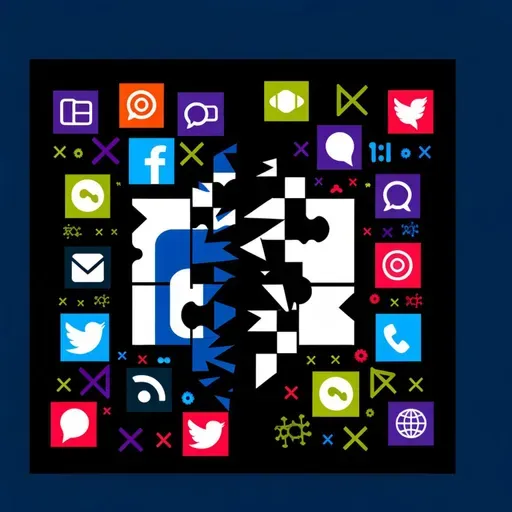
The social media landscape continues to experience significant turbulence as major platforms grapple with evolving user expectations and regulatory pressures heading into early 2026. The breakdown of traditional social media dominance represents one of the most consequential shifts in digital communication in over a decade.
Recent developments show that user engagement patterns have fundamentally changed. Listeners are increasingly migrating toward decentralized platforms and niche communities rather than consolidating on mega-platforms. This fragmentation reflects growing concerns about data privacy, algorithmic manipulation, and mental health impacts associated with mainstream social networks.
Meta's platforms, which have dominated the landscape for years, reported declining engagement metrics among younger demographics. TikTok faces continued regulatory scrutiny across multiple countries, with governments questioning data security practices and content moderation approaches. Meanwhile, newer platforms emphasizing privacy and user control have gained considerable traction, attracting millions of listeners seeking alternatives to algorithm-driven feeds.
The advertising model that sustained social media for nearly two decades is also experiencing strain. Advertisers are diversifying their spending across emerging platforms, forcing legacy companies to reconsider their monetization strategies. Some platforms have introduced subscription models without advertisements, catering to listeners willing to pay for ad-free experiences.
Content creators represent another pivotal force reshaping the ecosystem. Many established creators now maintain presence across multiple platforms simultaneously, reducing dependence on any single network. This approach reflects uncertainty about which platforms will remain viable long-term and listeners' desire to support creators directly through varied channels.
Regulatory frameworks continue tightening globally. The European Union, United States, and other jurisdictions are implementing stricter content moderation requirements and data protection standards. These regulations are forcing platforms to invest heavily in compliance infrastructure while creating barriers to entry for smaller competitors.
Despite the turbulence, social media remains integral to daily communication and commerce. The breakdown is not a collapse but rather a realignment. Listeners are becoming more intentional about their digital presence, choosing platforms aligned with their values and needs rather than passively accepting whatever algorithms serve them.
This transformation suggests the future of social media will be more diverse, distributed, and user-centric than the centralized model that dominated the past fifteen years. As listeners continue demanding greater control over their data and digital experiences, platforms must adapt or risk further relevance decline.
Thank you for tuning in. Please subscribe for more insights into digital culture and technology trends. This has been a quiet please production. For more, check out quietplease.ai
Some great Deals https://amzn.to/49SJ3Qs
For more check out http://www.quietplease.ai
This content was created in partnership and with the help of Artificial Intelligence AI
Recent developments show that user engagement patterns have fundamentally changed. Listeners are increasingly migrating toward decentralized platforms and niche communities rather than consolidating on mega-platforms. This fragmentation reflects growing concerns about data privacy, algorithmic manipulation, and mental health impacts associated with mainstream social networks.
Meta's platforms, which have dominated the landscape for years, reported declining engagement metrics among younger demographics. TikTok faces continued regulatory scrutiny across multiple countries, with governments questioning data security practices and content moderation approaches. Meanwhile, newer platforms emphasizing privacy and user control have gained considerable traction, attracting millions of listeners seeking alternatives to algorithm-driven feeds.
The advertising model that sustained social media for nearly two decades is also experiencing strain. Advertisers are diversifying their spending across emerging platforms, forcing legacy companies to reconsider their monetization strategies. Some platforms have introduced subscription models without advertisements, catering to listeners willing to pay for ad-free experiences.
Content creators represent another pivotal force reshaping the ecosystem. Many established creators now maintain presence across multiple platforms simultaneously, reducing dependence on any single network. This approach reflects uncertainty about which platforms will remain viable long-term and listeners' desire to support creators directly through varied channels.
Regulatory frameworks continue tightening globally. The European Union, United States, and other jurisdictions are implementing stricter content moderation requirements and data protection standards. These regulations are forcing platforms to invest heavily in compliance infrastructure while creating barriers to entry for smaller competitors.
Despite the turbulence, social media remains integral to daily communication and commerce. The breakdown is not a collapse but rather a realignment. Listeners are becoming more intentional about their digital presence, choosing platforms aligned with their values and needs rather than passively accepting whatever algorithms serve them.
This transformation suggests the future of social media will be more diverse, distributed, and user-centric than the centralized model that dominated the past fifteen years. As listeners continue demanding greater control over their data and digital experiences, platforms must adapt or risk further relevance decline.
Thank you for tuning in. Please subscribe for more insights into digital culture and technology trends. This has been a quiet please production. For more, check out quietplease.ai
Some great Deals https://amzn.to/49SJ3Qs
For more check out http://www.quietplease.ai
This content was created in partnership and with the help of Artificial Intelligence AI