07 March 2026
Social Media Breakdown: Trust Falls as Gen Z Spends 4 Hours Daily Despite Harassment and Misinformation Concerns
The Social Media Breakdown
About
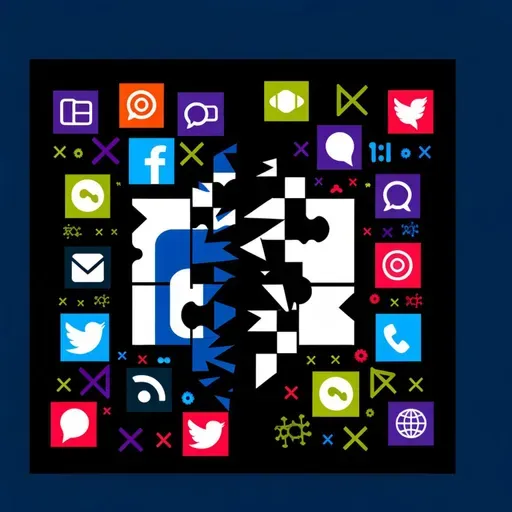
The Social Media Breakdown isn’t just a catchy phrase anymore; it captures a moment when the platforms that promised connection are starting to show real cracks. Pew Research Center has been tracking how listeners feel about social networks, and its latest surveys show trust in major platforms has fallen sharply as people report more harassment, misinformation, and a sense of constant surveillance. At the same time, The Wall Street Journal and The New York Times have documented how apps like TikTok and Instagram reshape attention spans and fuel anxiety, especially among younger audiences.
Yet people are not logging off. According to Señal News, Gen Z in the United States now spends over four hours a day on social media, with YouTube, Instagram, and TikTok dominating their media diet. In Latin America, analysis from CommentGrid describes 2026 as a social media battleground: TikTok commands near-ubiquitous reach in Mexico, while Instagram leads in Argentina, turning these feeds into de facto gateways for news, shopping, and culture. Social media is no longer a side dish; it is the main course of daily information.
Governments and researchers are responding. The Knight‑Georgetown Institute’s Tech & Society Week this year is hosting a panel called “Designing for Democracy: Social Media Feeds in a Hyper‑Polarized World,” where scholars Tiziano Piccardi and Nejla Asimovic will examine how engagement‑driven algorithms amplify misinformation and partisan hostility, and what alternative feed designs might better support democratic values. Meanwhile, the U.S. Federal Register recently announced plans for expanded data collection on social media use to help agencies understand how digital platforms affect public health and consumer behavior.
For creators and businesses, the breakdown is economic as well as social. Independent developers, like those featured on YouTube channels dissecting the real costs of “viral” apps, reveal that even with thousands of users, high infrastructure, data, and marketing costs can wipe out profits. Behind every swipe and like is an expensive ecosystem of servers, AI models, and targeted ads.
Taken together, The Social Media Breakdown is about overload, mistrust, and dependence colliding at the same time. Platforms shape what listeners see, buy, and believe, while regulators scramble to keep up and younger generations quietly redefine what media even means.
Thanks for tuning in, and don’t forget to subscribe. This has been a quiet please production, for more check out quiet please dot ai.
Some great Deals https://amzn.to/49SJ3Qs
For more check out http://www.quietplease.ai
This content was created in partnership and with the help of Artificial Intelligence AI
Yet people are not logging off. According to Señal News, Gen Z in the United States now spends over four hours a day on social media, with YouTube, Instagram, and TikTok dominating their media diet. In Latin America, analysis from CommentGrid describes 2026 as a social media battleground: TikTok commands near-ubiquitous reach in Mexico, while Instagram leads in Argentina, turning these feeds into de facto gateways for news, shopping, and culture. Social media is no longer a side dish; it is the main course of daily information.
Governments and researchers are responding. The Knight‑Georgetown Institute’s Tech & Society Week this year is hosting a panel called “Designing for Democracy: Social Media Feeds in a Hyper‑Polarized World,” where scholars Tiziano Piccardi and Nejla Asimovic will examine how engagement‑driven algorithms amplify misinformation and partisan hostility, and what alternative feed designs might better support democratic values. Meanwhile, the U.S. Federal Register recently announced plans for expanded data collection on social media use to help agencies understand how digital platforms affect public health and consumer behavior.
For creators and businesses, the breakdown is economic as well as social. Independent developers, like those featured on YouTube channels dissecting the real costs of “viral” apps, reveal that even with thousands of users, high infrastructure, data, and marketing costs can wipe out profits. Behind every swipe and like is an expensive ecosystem of servers, AI models, and targeted ads.
Taken together, The Social Media Breakdown is about overload, mistrust, and dependence colliding at the same time. Platforms shape what listeners see, buy, and believe, while regulators scramble to keep up and younger generations quietly redefine what media even means.
Thanks for tuning in, and don’t forget to subscribe. This has been a quiet please production, for more check out quiet please dot ai.
Some great Deals https://amzn.to/49SJ3Qs
For more check out http://www.quietplease.ai
This content was created in partnership and with the help of Artificial Intelligence AI