Portland's Business Struggles and Las Vegas's
SCHEDULE JBS 6-19-2026.
1900 LA
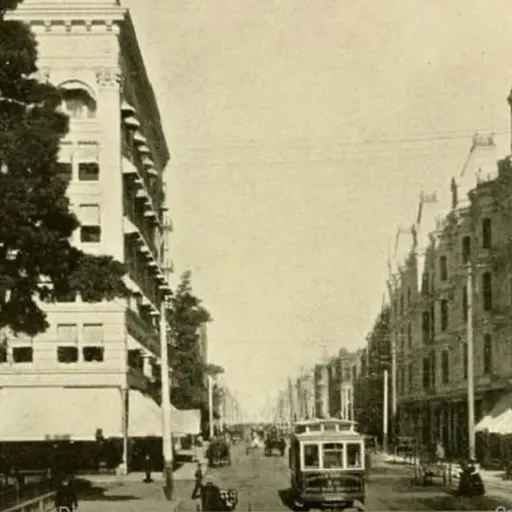
Growth. Guest: Jeff Bliss. High taxes and progressive policies in Portland are driving a corporate exodus, including Under Armour, as business districts empty. Conversely, Las Vegas is thriving, highlighted by the opening of a massive four-story In-N-Out on the Strip. The segment also covers California's proposed wealth tax and calls to nationalize AI. 1
Ethics Investigations into the Newsom Administration. Guest: Jeff Bliss. Governor Gavin Newsom and his wife, Jennifer Siebel Newsom, face investigations regarding millions in "behested payments" from entities like PG&E to her media company. While Newsom dismisses the probe as political weaponization, critics suggest these payments indicate potential undue influence and significant ethical scandals within the administration. 2
Critique of Middle East Ceasefire Strategy. Guest: Richard Epstein. Epstein argues that recurring ceasefire declarations are merely strategic devices for rearmament rather than genuine steps toward peace. He criticizes current negotiation styles for alienating allies and failing to pursue the unconditional surrender of adversaries, which he believes is the only stable solution for regional security. 3
Supreme Court Rulings on Gun Rights and Drug Use. Guest: Richard Epstein. In a unanimous decision, the Supreme Court ruled that marijuana use alone does not justify the categorical stripping of a citizen's Second Amendment rights. Epstein critiques the court's narrow reliance on originalism, suggesting a "police power" analysis should instead determine if a person poses an immediate physical threat. 4
Economic Resilience in D.C. and Lancaster County. Guest: Jim McTague. A drop in gasoline prices has boosted consumer spending at retail stores and supermarkets. While D.C. remains popular with tourists, employers are struggling to find workers with specialized technical skills. Meanwhile, the housing market remains robust at the high end despite higher interest rates. 5
Italian Defense Pressures and the Summer Heatwave. Guest: Lorenzo Fiori. Italy's government is balancing NATO's demands for increased military spending against rising energy costs. Simultaneously, a record-breaking heatwave reaching 104°F in Milan is straining public resources, prompting Fiori to recommend the cooler Garfagnana region for its fresh environment and traditional bean and cabbage soup. 6
SpaceX's Aggressive Launch Schedule and Innovation. Guest: Bob Zimmerman. Gwynne Shotwell indicates that SpaceX's Starship may begin operational flights and orbital refueling tests by year's end. The company is also demolishing older facilities at Vandenberg for new launchpads, while private startups advance 3D-printed rockets and orbital satellite rescue missions to assist aging telescopes. 7
Mars Discoveries and Cosmological Mysteries. Guest: Bob Zimmerman. The discovery of galaxies devoid of dark matter is challenging fundamental astronomical theories. On Mars, the Curiosity rover has reached smooth ground after five years of rocky terrain. Additionally, orbiters have detected multiple dust devils and potential frost and ice in the planet's equatorial regions during winter. 8
Literary Giants of the New England Renaissance. Guest: Bruce Nichols. This segment explores the intense relationship between Hawthorne and Melville, who dedicated Moby Dick to Hawthorne. While Ralph Waldo Emersonoften criticized their dark worldviews, these authors, alongside Walt Whitman and Margaret Fuller, were instrumental in inventing a uniquely original and enduring American literary voice. 9
Thoreau's Performative Solitude at Walden Pond. Guest: Bruce Nichols. Henry David Thoreau built his famous cabin on land owned by Ralph Waldo Emerson. Contrary to his image as a total hermit, Thoreau was quite social, often walking into town for fresh-cooked meals and laundry. He eventually spent years refining his journals into the masterpiece Walden. 10
The Struggles and Triumphs of Louisa May Alcott. Guest: Bruce Nichols. Louisa May Alcott supported her family because her father, Bronson Alcott, failed to earn a consistent living. She served as a Civil War nurse, dealing with horrific casualties before contracting a severe illness she attributed to mercury poisoning. Her 1868 novel Little Womenfinally resolved the family's debts. 11
The Literary Legacy and Final Days of the Alcotts. Guest: Bruce Nichols. Following the success of Little Women, Alcott resisted fan demands for her protagonist to marry Laurie, choosing an independent path. As the circle aged, both Emerson and Bronson Alcott suffered significant cognitive decline, with Louisa providing essential financial and personal support until her death in 1888. 12
Diplomatic Strains and Escalation Risks in Ukraine. Guest: Anatol Lieven. European leaders are divided over initiating direct negotiations with Russia as the war remains stuck on the ground. While some advocate for offering Putina "golden bridge" to claim a symbolic victory, others argue for continued pressure, despite the constant risks of accidental or nuclear escalation. 13
The Rise of Andy Burnham in UK Politics. Guest: Anatol Lieven. Greater Manchester Mayor Andy Burnham is emerging as a formidable potential successor to Prime Minister Keir Starmer. Though Burnham enjoys strong regional support, he faces daunting national issues, including the funding crisis in the NHS and Britain's inability to borrow like the United States. 14
A Vision for Governance Reform in Canada. Guest: Conrad Black. Biographer Conrad Black and billionaire Stephen Jarislowsky have proposed recommendations to streamline Canadian governance by reducing duplicated bureaucracy. They argue that Canada's public service is top-heavy and that lowering corporate and personal taxes is essential for maintaining economic growth and competitiveness with the United States. 15
CISA's Mission to Protect Critical Infrastructure. Guest: Francis Rose. Acting Director Nick Anderson explains CISA's role as a vital clearinghouse for cyber threat information across federal and private sectors. Since 85% of critical infrastructure is privately owned, CISA focuses on information exchange to prevent bad actors from moving laterally to disrupt water or power supplies. 16