About
CONTENTS JOHN BATCHELOR SHOW 11-12-26
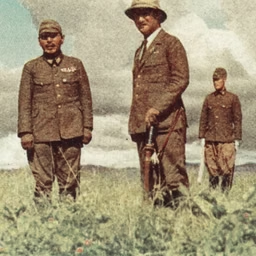
1942 SINGAPORE
Nvidia Scandal Reveals Chinese Espionage — Part One
David Shedd discusses the resignation of Nvidia CEO Jensen Huang after revelations of an extramarital affair with Alice Wang, a suspected agent linked to China’s Ministry of State Security. Shedd describes how Wang exploited commercial networks to divert more than seven billion dollars in forbidden GPUs into China. (1)
Sabotage Threatens American Artificial Intelligence — Part Two
David Shedd argues that Beijing’s sophisticated espionage campaign against Nvidia amounts to strategic sabotage intended to dismantle America’s lead in artificial intelligence. Meanwhile, Wall Street remains deeply vulnerable because corporate leadership repeatedly suppressed early warnings from intelligence officials about Chinese operations targeting microchips. (2)
Mike Pence Defends Traditional Conservatism
Tal Fortgang discusses Mike Pence’s new book examining traditional Reaganite conservatism versus rising right-wing populism. Pence champions constitutional limits, free trade, and strong foreign alliances while critiquing populist isolationism, and suggests that recent election setbacks should prompt Republicans to realign with core principles. (3)
Mismanagement Causes Cuban Power Blackouts
Mary Anastasia O’Grady refutes claims that American sanctions caused Cuba’s severe power blackouts, attributing the crisis to communist infrastructure neglect and financial failure. While US policies target corrupt military conglomerates, Havana uses propaganda to blame Washington and preserve its authoritarian grip. (4)
Stalled Negotiations Over Ukraine Conflict — Part One
Anatol Lieven analyzes the diplomatic stalemate in the Ukraine war, noting that US proposals on Donbas border adjustments and European security architecture have hit roadblocks. He argues that lasting peace requires negotiating European security alongside territorial issues, warning that a protracted war benefits neither side. (5)
Changing Dynamics in British Politics — Part Two
Anatol Lieven examines British political shifts in which voters favor individual leaders like Andy Burnham and Kemi Badenoch while despising their respective parties. As traditional party infrastructure declines across Europe, dissatisfaction with both main parties and with radical figures creates a distinctive reliance on centrist personalities. (6)
Mapping Early Cosmic Microwave Background — Part One
On Hotel Mars, Mark Devlin tells David Livingston how the Simons Observatory in Chile measures the Cosmic Microwave Background to study light released about 380,000 years after the Big Bang. Scientists analyze minute temperature fluctuations and polarization patterns to search for primordial gravitational wave signatures from the universe’s origin. (7)
Versatile Capabilities of Simons Observatory — Part Two
On Hotel Mars, Mark Devlin tells David Livingston about the Simons Observatory’s dual capabilities, using small aperture telescopes for gravitational wave searches and a large six-meter telescope for millimeter-wave sky surveys. This versatile setup tracks galactic star formation, interstellar dust, massive galaxy clusters, and fast-changing transient events. (8)
Recruiting Cambridge Spies for Stalin — Part One
Antonia Senior details how Soviet handler Arnold Deutsch recruited Kim Philby in 1934, and how Philby then brought Donald Maclean into Soviet espionage. Disillusioned by the Great Depression and fascism, these privileged Cambridge ideologues believed violent revolution and spying were necessary to advance Marxist history. (9)
Infiltration of British Intelligence Networks — Part Two
Antonia Senior describes how high-trust British institutions enabled Maclean to steal secrets unnoticed before escaping Nazi-occupied Paris with his wife Melinda. Meanwhile, Philby posed as a pro-Franco journalist in Spain before leveraging wartime expansion to infiltrate Britain’s Secret Intelligence Service, MI6. (10)
Complex Espionage Dynamics in Wartime — Part Three
Antonia Senior explores how Guy Burgess forced his way into Soviet intelligence despite his chaotic temperament, while Anthony Blunt used his MI5 post to pass critical secrets. Ironically, Soviet paranoia at the Lubyanka caused handlers to dismiss genuine intelligence as Western deception. (11)
Legacy of Cambridge Spy Ring — Part Four
Antonia Senior details the decades-long unspooling of the Cambridge Five spy ring, emphasizing Anthony Blunt’s insidious role as a talent spotter grooming recruits. She rejects revisionist sympathy for Blunt, highlighting the devastating damage these ideologically driven betrayals inflicted on Western security. (12)
Banking Scandal Triggers Paraguayan Crisis — Part One
Evan Ellis examines the banking scandal in Paraguay that led to the impeachment and imprisonment of President Santiago Peña over fraudulent loan schemes. While former president Horacio Cartes consolidated control of the ruling party, established legal frameworks protected small bank depositors. (13)
Political Uncertainty Surrounding Venezuelan Transition — Part Two
Evan Ellis reports on Venezuela as opposition leader María Corina Machado demands democratic elections and the release of political prisoners. With Secretary of State Marco Rubio attempting to negotiate electoral timelines, incoming congressional committee leadership is set to escalate pressure against the regime’s delay tactics. (14)
Foreign Influence in Cuban Policy — Part Three
Evan Ellis analyzes US policy toward Cuba amid tightening sanctions, alongside authoritarian consolidation in Nicaragua. As President Daniel Ortega’s failing health prompts family succession maneuvers, Russia and Chinacontinue expanding military footprints, intelligence posts, and mining concessions within Nicaragua. (15)
Papal Visit Highlights Latin America — Part Four
Evan Ellis addresses Brazil’s economic struggles with high national debt and interest rates under President Lula da Silva. He then highlights Pope Leo XIV’s 31,000-mile Latin American tour across Uruguay, Argentina, and Peru, drawing millions with messages of compassion and ethical leadership. (16)