05 September 2026
6. Historical Myths Shape America's Divided Identity: DAVID REYNOLDS (HOUR TWO)
The John Batchelor Show
About
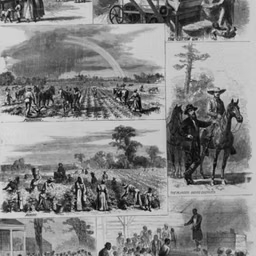
CAPTION 1867 PLANTATION IMAGES
Historical Myths Shape America's Divided Identity
David S. Reynolds, author of Two Ships: Jamestown 1619, Plymouth 1620, and the Struggle for the Soul of America, Part Two: Reynolds analyzes the historical and cultural myths shaping America's division. Pre-war, romanticized Southern fiction revived a Cavalier identity defending slavery, while Northern abolitionists drew on Puritan ideals. Though many used a two-ships metaphor—contrasting Jamestown's hierarchy with Plymouth's democracy—Abraham Lincolnrejected division, fighting for one nation founded on equality. After the war, Edward Pollard's book romanticized the plantation South as the Lost Cause, a myth later popularized by Hollywood. Reynolds also notes positive legacies, like Rhode Island Quaker abolitionist Moses Brown and early suffragists. (5)
Historical Myths Shape America's Divided Identity
David S. Reynolds, author of Two Ships: Jamestown 1619, Plymouth 1620, and the Struggle for the Soul of America, Part Two: Reynolds analyzes the historical and cultural myths shaping America's division. Pre-war, romanticized Southern fiction revived a Cavalier identity defending slavery, while Northern abolitionists drew on Puritan ideals. Though many used a two-ships metaphor—contrasting Jamestown's hierarchy with Plymouth's democracy—Abraham Lincolnrejected division, fighting for one nation founded on equality. After the war, Edward Pollard's book romanticized the plantation South as the Lost Cause, a myth later popularized by Hollywood. Reynolds also notes positive legacies, like Rhode Island Quaker abolitionist Moses Brown and early suffragists. (5)