About
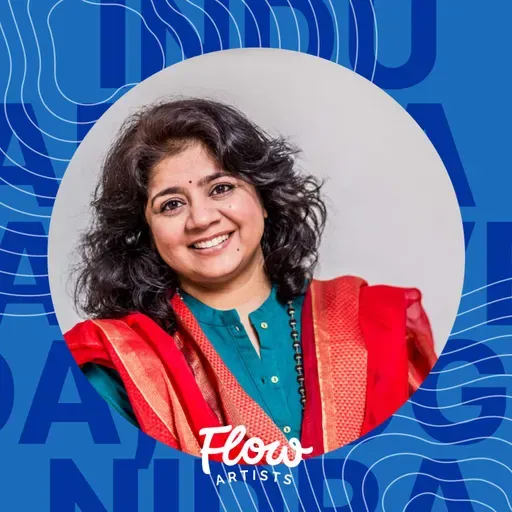
Indu Arora, a yoga and Ayurveda teacher with over two decades of experience, offers a perspective on yoga nidra that extends far beyond the structured, technique-driven formats familiar to many modern practitioners. Drawing from Vedic, Tantric, Upanishadic, and Puranic texts, Indu emphasizes that yoga nidra is not simply a guided relaxation practice but a philosophy, a state of consciousness, and a bridge to deeper self-realization. As she notes, "Content without context" represents one of the most significant gaps in contemporary yoga education, and understanding the philosophical foundations of yoga nidra is essential to accessing its true depth.
One of the most illuminating aspects of Indu's teaching is her etymological exploration of the word "ratri," found in the Rig Veda. Rather than representing darkness or ignorance, ratri breaks down as "ra" (nurturing, nourishing, uplifting) and "tri" (to protect), revealing yoga nidra as a protective, nourishing force present during sleep. In Tantric texts such as the Devi Mahatmyam, yoga nidra is personified as a Goddess, while in the Mandukya Upanishad it represents Turiya—the fourth state of consciousness beyond waking, dreaming, and deep sleep. This richness, Indu argues, is largely absent from the modern, highly structured approaches to yoga nidra that have emerged in the past century.
Indu is candid about the challenges of integrating philosophy with experiential practice. She waited seventeen years after beginning her formal yoga education before receiving her first yoga nidra training—not because the opportunity was unavailable, but because she understood that genuine practice and embodiment must precede teaching. She is critical of the modern expectation that completing a certification immediately qualifies one to teach, arguing that this approach produces practitioners who regurgitate information rather than transmit realized wisdom. In her words, yoga is "not to be learned and done, but to be explored and realised."
For practitioners trained within contemporary frameworks, Indu offers both encouragement and a practical reorientation. She suggests reframing teacher training programs as "student training programs," recognising that sincere, committed practice naturally gives rise to authentic teaching over time. True learning, she argues, occurs not in group classes but in personal sadhana—the private, honest dialogue with oneself. This means observing the breath during a forward fold, noticing which nostril is dominant after practice, and cultivating genuine curiosity rather than mechanically following scripts. As Indu reminds her audience, "The real yoga is found in the heart of the practitioner, and that yoga does not have a language—it speaks in silence."
Links:
Study with Indu in Australia: https://indu-arora.mykajabi.com/yoga-nidra-australia
Indu's instagram: https://www.instagram.com/induaroraofficial/
Jo's book: https://gardenofyoga.com.au/learn/eight-limbs-of-aerial-yoga/
One of the most illuminating aspects of Indu's teaching is her etymological exploration of the word "ratri," found in the Rig Veda. Rather than representing darkness or ignorance, ratri breaks down as "ra" (nurturing, nourishing, uplifting) and "tri" (to protect), revealing yoga nidra as a protective, nourishing force present during sleep. In Tantric texts such as the Devi Mahatmyam, yoga nidra is personified as a Goddess, while in the Mandukya Upanishad it represents Turiya—the fourth state of consciousness beyond waking, dreaming, and deep sleep. This richness, Indu argues, is largely absent from the modern, highly structured approaches to yoga nidra that have emerged in the past century.
Indu is candid about the challenges of integrating philosophy with experiential practice. She waited seventeen years after beginning her formal yoga education before receiving her first yoga nidra training—not because the opportunity was unavailable, but because she understood that genuine practice and embodiment must precede teaching. She is critical of the modern expectation that completing a certification immediately qualifies one to teach, arguing that this approach produces practitioners who regurgitate information rather than transmit realized wisdom. In her words, yoga is "not to be learned and done, but to be explored and realised."
For practitioners trained within contemporary frameworks, Indu offers both encouragement and a practical reorientation. She suggests reframing teacher training programs as "student training programs," recognising that sincere, committed practice naturally gives rise to authentic teaching over time. True learning, she argues, occurs not in group classes but in personal sadhana—the private, honest dialogue with oneself. This means observing the breath during a forward fold, noticing which nostril is dominant after practice, and cultivating genuine curiosity rather than mechanically following scripts. As Indu reminds her audience, "The real yoga is found in the heart of the practitioner, and that yoga does not have a language—it speaks in silence."
Links:
Study with Indu in Australia: https://indu-arora.mykajabi.com/yoga-nidra-australia
Indu's instagram: https://www.instagram.com/induaroraofficial/
Jo's book: https://gardenofyoga.com.au/learn/eight-limbs-of-aerial-yoga/