30 March 2026
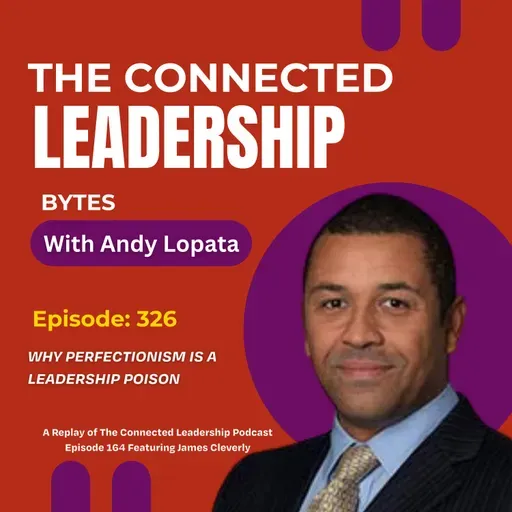
Why Perfectionism is a Leadership Problem with James Cleverly
The Connected Leadership Podcast
About
Is admitting a mistake a sign of weakness or a leadership superpower? In this episode of Connected Leadership Bytes, Andy Lopata reaches into the archive to share a fascinating conversation with James Cleverly MP.
Cleverly explores the "artificiality" of politics—a world where a simple "I’ll check those figures and get back to you" can be framed as a lack of credibility, and any change of course is branded a " U-turn." Drawing from his background in the military and business, he contrasts these rigid expectations with other industries where making mistakes is seen as a vital part of the evolutionary process.
James discusses the anatomy of a political car crash, to reveal how "clever people in closed rooms" accidentally create echo chambers. Discover why leaders often fail to press the "stop button" even when they see a disaster coming, and learn how to balance the need for speed with the vital necessity of a "periodic sanity check."
What you will learn in this episode
1. The Pivot vs. The Scandal: Why is a "course correction" celebrated in startups but punished in leadership—and how is this mindset stifling your team’s growth?
2. The "Clever People" Trap: How small, high-performing teams accidentally "plug themselves into the matrix" and ignore the elephant in the room.
3. The Anatomy of a Car Crash: Discover the five or six specific points in every decision where a simple intervention could have prevented total failure.
4. The Aeronautical Safety Lesson: Why adding too many "safety valves" to your leadership process might actually make your organisation too heavy to fly.
5. The Art of "Rolling the Pitch": Why you should never present a solution until you have achieved a collective agreement on the parameters of the problem.
Actionable Insights
1. Schedule a "Sanity Check": To avoid echo chambers, ensure that your decision-making process includes an explicit phase where the team must "unplug from the matrix" and seek a blunt, external perspective. Ask: "Am I the only one who thinks this is bonkers?"
2. Reward the "Stop Button": Build a culture where team members feel empowered to pause a process if a fact or figure "doesn't feel right." In high-stakes environments, the confidence to intervene is more valuable than the speed of implementation.
3. Frame Mistakes with the 80/10/10 Rule: When correcting a policy or project, frame it logically: "80% is working brilliantly, 10% is adequate, and 10% needs adjustment." This shifts the narrative from a "failure" to a pragmatic optimisation.
Connect with Andy Lopata: Website | Instagram | LinkedIn | X/Twitter | YouTube
Connect with James Cleverly: Website |LinkedIn |
The Financial Times Guide to Mentoring
Episode 164 Featuring James Cleverly
Cleverly explores the "artificiality" of politics—a world where a simple "I’ll check those figures and get back to you" can be framed as a lack of credibility, and any change of course is branded a " U-turn." Drawing from his background in the military and business, he contrasts these rigid expectations with other industries where making mistakes is seen as a vital part of the evolutionary process.
James discusses the anatomy of a political car crash, to reveal how "clever people in closed rooms" accidentally create echo chambers. Discover why leaders often fail to press the "stop button" even when they see a disaster coming, and learn how to balance the need for speed with the vital necessity of a "periodic sanity check."
What you will learn in this episode
1. The Pivot vs. The Scandal: Why is a "course correction" celebrated in startups but punished in leadership—and how is this mindset stifling your team’s growth?
2. The "Clever People" Trap: How small, high-performing teams accidentally "plug themselves into the matrix" and ignore the elephant in the room.
3. The Anatomy of a Car Crash: Discover the five or six specific points in every decision where a simple intervention could have prevented total failure.
4. The Aeronautical Safety Lesson: Why adding too many "safety valves" to your leadership process might actually make your organisation too heavy to fly.
5. The Art of "Rolling the Pitch": Why you should never present a solution until you have achieved a collective agreement on the parameters of the problem.
Actionable Insights
1. Schedule a "Sanity Check": To avoid echo chambers, ensure that your decision-making process includes an explicit phase where the team must "unplug from the matrix" and seek a blunt, external perspective. Ask: "Am I the only one who thinks this is bonkers?"
2. Reward the "Stop Button": Build a culture where team members feel empowered to pause a process if a fact or figure "doesn't feel right." In high-stakes environments, the confidence to intervene is more valuable than the speed of implementation.
3. Frame Mistakes with the 80/10/10 Rule: When correcting a policy or project, frame it logically: "80% is working brilliantly, 10% is adequate, and 10% needs adjustment." This shifts the narrative from a "failure" to a pragmatic optimisation.
Connect with Andy Lopata: Website | Instagram | LinkedIn | X/Twitter | YouTube
Connect with James Cleverly: Website |LinkedIn |
The Financial Times Guide to Mentoring
Episode 164 Featuring James Cleverly