About
By Matthew Walz
But first a note from Robert Royal: Professor Walz reminds us today of a fundamental truth: that underneath all the challenges we face, it all comes down to trusting the One who deserves our trust. This evening, we'll be starting a short course on the Augustinianism of Pope Leo, which will look at some additional home truths that our world ignores at its peril. Please join us by enrolling (click here). And please, also, remember why it's important to support everything we do at The Catholic Thing. Now for today's column...
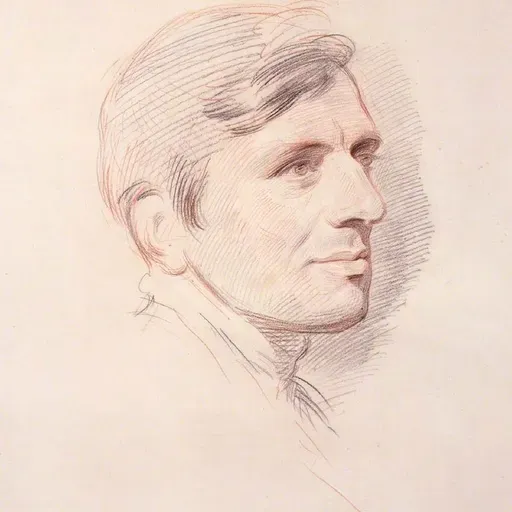
During this past academic year, I was honored to hold the St. John Henry Newman Visiting Chair of Catholic Studies at Thomas More College. (This was especially an honor since this same Chair was held initially by TCT's own Robert Royal and then by Joseph Pearce.) Soon after accepting this appointment, the Church announced that she was going to name St. John Henry Newman a Doctor Ecclesiae, a Doctor or Teacher of the Church, which she did last November. For me, this was a happy coincidence or a "God-incidence," as a priest once suggested I call such a happening. I was being asked, I thought, to ponder the significance of Newman as a Doctor.
The "of" in "Doctor of the Church" (the genitive case of Ecclesia) certainly expresses a relationship of possession: a Doctor belongs to the Church; he or she worked and still works on behalf of the Church's evangelistic mission. The "of" also suggests, it seems to me, the object of a Doctor's teaching (in Latin, Ecclesiae can be read as an "objective genitive"). Thus a Doctor not only represents the Church, but also teaches the Church herself, bringing her to a greater realization of revealed truth.
The Church learns something new from Newman. Newman mined the depths of the Church's Scriptures and Tradition in illuminating ways, and in turn he articulated novel insights that have now become part of the Church's intellectual treasury. Newman taught the Church a whole host of things, ranging from the development of doctrine to the primacy of truth to the nature of conscience.
But I want to consider here something that the newest Doctor teaches the Church by reflecting on a captivating phrase that he uses, a phrase altogether pertinent to those who desire to be sanctified in truth. The phrase comes from a meditation written by Newman called "Hope in God – Creator," one of the most powerful of his numerous Meditations on Christian Doctrine.
God the Creator, Newman says, "knows what He's about." God knows what He's about! Perhaps more than any Doctor, Newman teaches us how to take this phrase as a touchstone for our lives. Do we know what we are about? Do we trust that God knows what He's about? What does it even mean to know what one is about, especially since we encounter so many shadows and images on our way toward and into truth? (Newman had the words Ex umbris et imaginibus in veritatem cut on to his tomb).
Humanly speaking, to know what one is about is an achievement, perhaps of a lifetime. Great minds have long recognized it as such, though not as pithily as Newman. Consider, for example, Socrates, undoubtedly a man who knew what he was about. The Delphic oracle revealed that none is wiser than Socrates. Thus provoked, Socrates probes this assertion, eventually seeing that its truth lay in Socrates' knowing-that-he-does-not-know.
As Plato recounts it, moreover, Socrates' knowing-that-he-does-not-know stood at the heart of his apologia, his defense against those fellow Athenians who accused him of spreading harmful teachings.
Newman, of course, also delivered an Apologia in response to similar accusations from his fellow countrymen. Like Socrates, Newman narrates just how far he probed his own knowing-that-he-does-not-know in pursuit of the fullness of truth. It was a relentlessly honest probing that led him into the arms of Mother Church and the intellectual sanctuary of her infallibility.
We know, of course, that there exists an even greater model o...
But first a note from Robert Royal: Professor Walz reminds us today of a fundamental truth: that underneath all the challenges we face, it all comes down to trusting the One who deserves our trust. This evening, we'll be starting a short course on the Augustinianism of Pope Leo, which will look at some additional home truths that our world ignores at its peril. Please join us by enrolling (click here). And please, also, remember why it's important to support everything we do at The Catholic Thing. Now for today's column...
During this past academic year, I was honored to hold the St. John Henry Newman Visiting Chair of Catholic Studies at Thomas More College. (This was especially an honor since this same Chair was held initially by TCT's own Robert Royal and then by Joseph Pearce.) Soon after accepting this appointment, the Church announced that she was going to name St. John Henry Newman a Doctor Ecclesiae, a Doctor or Teacher of the Church, which she did last November. For me, this was a happy coincidence or a "God-incidence," as a priest once suggested I call such a happening. I was being asked, I thought, to ponder the significance of Newman as a Doctor.
The "of" in "Doctor of the Church" (the genitive case of Ecclesia) certainly expresses a relationship of possession: a Doctor belongs to the Church; he or she worked and still works on behalf of the Church's evangelistic mission. The "of" also suggests, it seems to me, the object of a Doctor's teaching (in Latin, Ecclesiae can be read as an "objective genitive"). Thus a Doctor not only represents the Church, but also teaches the Church herself, bringing her to a greater realization of revealed truth.
The Church learns something new from Newman. Newman mined the depths of the Church's Scriptures and Tradition in illuminating ways, and in turn he articulated novel insights that have now become part of the Church's intellectual treasury. Newman taught the Church a whole host of things, ranging from the development of doctrine to the primacy of truth to the nature of conscience.
But I want to consider here something that the newest Doctor teaches the Church by reflecting on a captivating phrase that he uses, a phrase altogether pertinent to those who desire to be sanctified in truth. The phrase comes from a meditation written by Newman called "Hope in God – Creator," one of the most powerful of his numerous Meditations on Christian Doctrine.
God the Creator, Newman says, "knows what He's about." God knows what He's about! Perhaps more than any Doctor, Newman teaches us how to take this phrase as a touchstone for our lives. Do we know what we are about? Do we trust that God knows what He's about? What does it even mean to know what one is about, especially since we encounter so many shadows and images on our way toward and into truth? (Newman had the words Ex umbris et imaginibus in veritatem cut on to his tomb).
Humanly speaking, to know what one is about is an achievement, perhaps of a lifetime. Great minds have long recognized it as such, though not as pithily as Newman. Consider, for example, Socrates, undoubtedly a man who knew what he was about. The Delphic oracle revealed that none is wiser than Socrates. Thus provoked, Socrates probes this assertion, eventually seeing that its truth lay in Socrates' knowing-that-he-does-not-know.
As Plato recounts it, moreover, Socrates' knowing-that-he-does-not-know stood at the heart of his apologia, his defense against those fellow Athenians who accused him of spreading harmful teachings.
Newman, of course, also delivered an Apologia in response to similar accusations from his fellow countrymen. Like Socrates, Newman narrates just how far he probed his own knowing-that-he-does-not-know in pursuit of the fullness of truth. It was a relentlessly honest probing that led him into the arms of Mother Church and the intellectual sanctuary of her infallibility.
We know, of course, that there exists an even greater model o...