About
By Kristen Ziccarelli
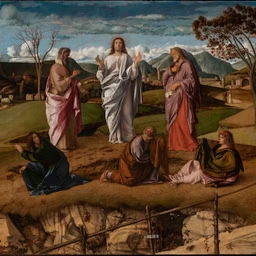
Today, August 6, the Feast of the Transfiguration, commemorates one of the most mysterious moments in Christ's public ministry. Ascending Mount Tabor with Peter, James, and John, Jesus is transfigured before them. His face shines "like the sun," and His garments become dazzling white, Moses and Elijah appear beside Him, and the Father's voice declares, "This is my beloved Son. . . .listen to Him."
Peter immediately responds, "Lord, it is good that we are here."
The Transfiguration is recounted in all three of the Synoptic Gospels. It happens in the final year of Jesus's life, before his Crucifixion. So this should lead us to wonder: Why did Christ ascend Mount Tabor with Peter, James, and John before His Passion? Why reveal His glory at that particular moment?
Archbishop Fulton Sheen offers one illuminating answer in his short book, The Life of Christ: "Peter the 'rock,' James, the one destined to be the first Apostle Martyr, and John, the visionary of the future glory of the Apocalypse. Undoubtedly, He chose these three because they most needed strength for the hour of trial."
The crux of Sheen's observation is that Christ did not reveal His glory after the Cross as a reward for their fidelity, but before the Cross to strengthen and support them in preparation for it.
Though Peter would deny Him, he would later repent. James would become the first Apostle to lay down his life for the Gospel. John would stand beneath the Cross, only later receiving the heavenly vision recorded in the Apocalypse. Christ knew precisely what awaited each of them, but before asking them to witness the greatest ugliness in history, He first allowed them to behold its greatest beauty.
It is interesting to reflect on the Transfiguration specifically in light of beauty's purpose in the spiritual life. Or to even surmise – as many might not consider – that beauty has such a purpose.
The world has a way of trying to justify things according to their utility. From that perspective, beauty may seem unnecessary, or even indulgent, compared to more practical concerns. Even in modern Christian circles, beauty may be relegated to something secondary, its relationship to truth and goodness severed.
But the scene of the Transfiguration, where Christ's "face shone like the sun, and his clothes became as white as the light," is probably one of the most striking scenes of beauty in the Scriptures.
Beauty presenting the means by which Christ Himself prepared His disciples for suffering? He could have strengthened them another way; he could have simply commanded them to persevere. He could have told them a parable or sent a message through an angel.
Instead, He gave them an encounter with His glory.
Beauty strengthens, but how? For one, it reminds us that the visible world is capable of revealing something beyond the banal, which can offer both hope and solace.
At the time we encounter it, we may feel both fulfilled and unsatisfied, enlightened but desiring more. We recognize the existence of something we have always longed for yet cannot fully possess.
But more importantly, this experience moves us to perfect contrition, which is born not principally from fear of punishment, but from love itself. Beauty awakens that love, and having glimpsed something of God's glory, however fleetingly, we recognize how little we wish to be separated from it.
In the Gospel of Matthew, Peter's response is recorded as, "Lord, it is well that we are here." He continues with Peter making a proposal: If you wish, I will make "three booths here, one for you and one for Moses and one for Elijah."
It is easy for us to relate to his stunned reaction: our encounters with authentic beauty awaken the desire to remain. We listen to symphonies not wanting them to end; we sadden at the thought of the vivid sunset sinking finally below the clouds.
But Christ will lead the Apostles back down, to where crowds are waiting, and where there is suffering still to be endured. Th...
Today, August 6, the Feast of the Transfiguration, commemorates one of the most mysterious moments in Christ's public ministry. Ascending Mount Tabor with Peter, James, and John, Jesus is transfigured before them. His face shines "like the sun," and His garments become dazzling white, Moses and Elijah appear beside Him, and the Father's voice declares, "This is my beloved Son. . . .listen to Him."
Peter immediately responds, "Lord, it is good that we are here."
The Transfiguration is recounted in all three of the Synoptic Gospels. It happens in the final year of Jesus's life, before his Crucifixion. So this should lead us to wonder: Why did Christ ascend Mount Tabor with Peter, James, and John before His Passion? Why reveal His glory at that particular moment?
Archbishop Fulton Sheen offers one illuminating answer in his short book, The Life of Christ: "Peter the 'rock,' James, the one destined to be the first Apostle Martyr, and John, the visionary of the future glory of the Apocalypse. Undoubtedly, He chose these three because they most needed strength for the hour of trial."
The crux of Sheen's observation is that Christ did not reveal His glory after the Cross as a reward for their fidelity, but before the Cross to strengthen and support them in preparation for it.
Though Peter would deny Him, he would later repent. James would become the first Apostle to lay down his life for the Gospel. John would stand beneath the Cross, only later receiving the heavenly vision recorded in the Apocalypse. Christ knew precisely what awaited each of them, but before asking them to witness the greatest ugliness in history, He first allowed them to behold its greatest beauty.
It is interesting to reflect on the Transfiguration specifically in light of beauty's purpose in the spiritual life. Or to even surmise – as many might not consider – that beauty has such a purpose.
The world has a way of trying to justify things according to their utility. From that perspective, beauty may seem unnecessary, or even indulgent, compared to more practical concerns. Even in modern Christian circles, beauty may be relegated to something secondary, its relationship to truth and goodness severed.
But the scene of the Transfiguration, where Christ's "face shone like the sun, and his clothes became as white as the light," is probably one of the most striking scenes of beauty in the Scriptures.
Beauty presenting the means by which Christ Himself prepared His disciples for suffering? He could have strengthened them another way; he could have simply commanded them to persevere. He could have told them a parable or sent a message through an angel.
Instead, He gave them an encounter with His glory.
Beauty strengthens, but how? For one, it reminds us that the visible world is capable of revealing something beyond the banal, which can offer both hope and solace.
At the time we encounter it, we may feel both fulfilled and unsatisfied, enlightened but desiring more. We recognize the existence of something we have always longed for yet cannot fully possess.
But more importantly, this experience moves us to perfect contrition, which is born not principally from fear of punishment, but from love itself. Beauty awakens that love, and having glimpsed something of God's glory, however fleetingly, we recognize how little we wish to be separated from it.
In the Gospel of Matthew, Peter's response is recorded as, "Lord, it is well that we are here." He continues with Peter making a proposal: If you wish, I will make "three booths here, one for you and one for Moses and one for Elijah."
It is easy for us to relate to his stunned reaction: our encounters with authentic beauty awaken the desire to remain. We listen to symphonies not wanting them to end; we sadden at the thought of the vivid sunset sinking finally below the clouds.
But Christ will lead the Apostles back down, to where crowds are waiting, and where there is suffering still to be endured. Th...