About
By Stephen P. White
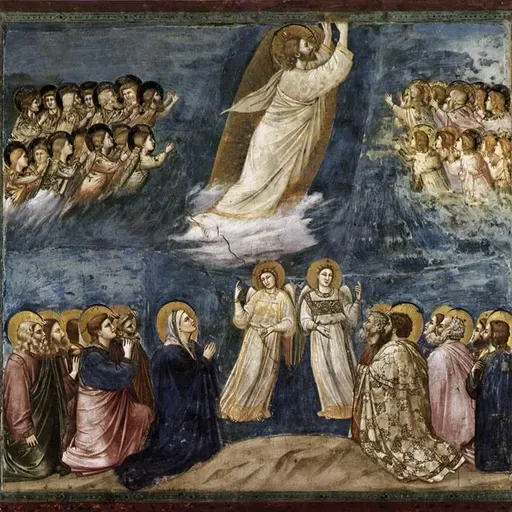
Today the Church celebrates the Solemnity of Ascension. (Depending on where you are; check your local listings.) It's worth pondering: Why did Christ ascend? Why, having conquered death, did He not remain? Wouldn't it have been simpler for a manifestly divine, resurrected Jesus to walk the earth, for however many millennia it might take, converting sinners by the unmistakable fact of His glorified bodily presence?
In the Acts of the Apostles, the disciples ask Jesus a question which suggests that they were thinking along these lines themselves: "Lord, are you at this time going to restore the kingdom to Israel?" It is a reasonable question to ask the newly risen Messiah, but Jesus avoids a direct answer: "It is not for you to know the times or seasons. . . .But you will receive power when the Holy Spirit comes upon you, and you will be my witnesses in Jerusalem, throughout Judea and Samaria, and to the ends of the earth."
Both the question and the response suggest an answer to our original question.
Jesus did not come to be a worldly ruler. That is to say, He is the master of the universe, but not in a worldly sense. Not in the sense that His disciples, who believed Him divine though they knew Him in the flesh, were inclined to expect. His kingdom, as He told Pilate, is not of this world. As Jesus told the Samaritan woman at the well, "God is Spirit, and those who worship him must worship in Spirit and truth."
How can we, bodily creatures that we are, learn to worship in Spirit and in truth?
The short answer: we learn through faith. Faith is a gift, of course, but more specifically, it's a gift fitting to the limits and condition of our humanity. God is not a capricious trickster who likes to make things more difficult for His creations by making Himself hard to see. He is a loving Father who gives us what is best for us. And faith is a true gift to those whose "best" requires faith.
Which is to say, Jesus ascended for our sake.
In John's Gospel, at the Last Supper, Jesus tells His disciples: "But I tell you the truth, it is better for you that I go. For if I do not go, the Advocate will not come to you. But if I go, I will send him to you."
The Ascension is a gift precisely because it demands of us a faith in things unseen and opens to us a dependence upon the Holy Spirit.
Pope Leo the Great, in the fifth century, reflected on this point in a beautiful sermon about the Ascension:
[W]e commemorate and duly venerate that day on which the Nature of our humility in Christ was raised above all the host of heaven, over all the ranks of angels, beyond the height of all powers, to sit with God the Father. On which Providential order of events we are founded and built up, that God's Grace might become more wondrous, when, notwithstanding the removal from men's sight of what was rightly felt to command their awe, faith did not fail, hope did not waver, love did not grow cold. For it is the strength of great minds and the light of firmly-faithful souls, unhesitatingly to believe what is not seen with the bodily sight, and there to fix one's affections whither you cannot direct your gaze.
The pope continued:
And whence should this Godliness spring up in our hearts, or how should a man be justified by faith, if our salvation rested on those things only which lie beneath our eyes? Hence our Lord said to him who seemed to doubt of Christ's Resurrection, until he had tested by sight and touch the traces of His Passion in His very Flesh, "because you have seen Me, you have believed: blessed are they who have not seen and yet have believed."
Jesus ascended, in Pope Leo's words, in order "that we may be capable of this blessedness." Our dependence upon faith is itself a gift.
The bodily presence of the Risen Lord was a boon to the faith of the Apostles; its absence is even more of a boon to us. We know the presence of Jesus through the Sacrament of the altar and by the Holy Spirit, who instructs and guides the Church. In...
Today the Church celebrates the Solemnity of Ascension. (Depending on where you are; check your local listings.) It's worth pondering: Why did Christ ascend? Why, having conquered death, did He not remain? Wouldn't it have been simpler for a manifestly divine, resurrected Jesus to walk the earth, for however many millennia it might take, converting sinners by the unmistakable fact of His glorified bodily presence?
In the Acts of the Apostles, the disciples ask Jesus a question which suggests that they were thinking along these lines themselves: "Lord, are you at this time going to restore the kingdom to Israel?" It is a reasonable question to ask the newly risen Messiah, but Jesus avoids a direct answer: "It is not for you to know the times or seasons. . . .But you will receive power when the Holy Spirit comes upon you, and you will be my witnesses in Jerusalem, throughout Judea and Samaria, and to the ends of the earth."
Both the question and the response suggest an answer to our original question.
Jesus did not come to be a worldly ruler. That is to say, He is the master of the universe, but not in a worldly sense. Not in the sense that His disciples, who believed Him divine though they knew Him in the flesh, were inclined to expect. His kingdom, as He told Pilate, is not of this world. As Jesus told the Samaritan woman at the well, "God is Spirit, and those who worship him must worship in Spirit and truth."
How can we, bodily creatures that we are, learn to worship in Spirit and in truth?
The short answer: we learn through faith. Faith is a gift, of course, but more specifically, it's a gift fitting to the limits and condition of our humanity. God is not a capricious trickster who likes to make things more difficult for His creations by making Himself hard to see. He is a loving Father who gives us what is best for us. And faith is a true gift to those whose "best" requires faith.
Which is to say, Jesus ascended for our sake.
In John's Gospel, at the Last Supper, Jesus tells His disciples: "But I tell you the truth, it is better for you that I go. For if I do not go, the Advocate will not come to you. But if I go, I will send him to you."
The Ascension is a gift precisely because it demands of us a faith in things unseen and opens to us a dependence upon the Holy Spirit.
Pope Leo the Great, in the fifth century, reflected on this point in a beautiful sermon about the Ascension:
[W]e commemorate and duly venerate that day on which the Nature of our humility in Christ was raised above all the host of heaven, over all the ranks of angels, beyond the height of all powers, to sit with God the Father. On which Providential order of events we are founded and built up, that God's Grace might become more wondrous, when, notwithstanding the removal from men's sight of what was rightly felt to command their awe, faith did not fail, hope did not waver, love did not grow cold. For it is the strength of great minds and the light of firmly-faithful souls, unhesitatingly to believe what is not seen with the bodily sight, and there to fix one's affections whither you cannot direct your gaze.
The pope continued:
And whence should this Godliness spring up in our hearts, or how should a man be justified by faith, if our salvation rested on those things only which lie beneath our eyes? Hence our Lord said to him who seemed to doubt of Christ's Resurrection, until he had tested by sight and touch the traces of His Passion in His very Flesh, "because you have seen Me, you have believed: blessed are they who have not seen and yet have believed."
Jesus ascended, in Pope Leo's words, in order "that we may be capable of this blessedness." Our dependence upon faith is itself a gift.
The bodily presence of the Risen Lord was a boon to the faith of the Apostles; its absence is even more of a boon to us. We know the presence of Jesus through the Sacrament of the altar and by the Holy Spirit, who instructs and guides the Church. In...