About
By Randall Smith
We pride ourselves on the fact that we don't have a "caste system" in America, with higher and lower castes and those at the bottom who are "untouchables." I sometimes wonder, though, whether we have something analogous in the way we distinguish "the elite" from the "deplorables." As for "untouchables," try going to a "Not a King" rally and saying, "I like some of the things Trump does," and you'll quickly discover what lepers felt like at the time of Christ.
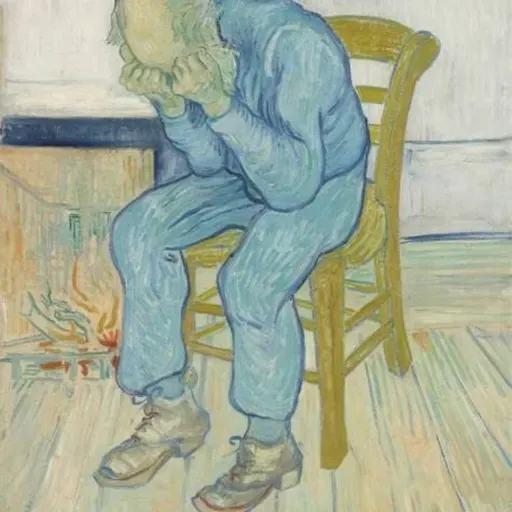
Each side in the political divide has created its hated "other." But one group that has become our society's real "untouchables" is the weak and infirm elderly. Rather than honoring the elderly, our tendency is to warehouse them in institutions to keep them out of sight and out of mind.
Please don't misunderstand me. Many of those in "personal care homes" or "assisted living" facilities were placed there out of loving concern for them because they could no longer live alone and needed the extra medical care that such facilities can offer. But this reality still gives rise to several questions.
Why are so many of our elderly alone? Have we valued "independence" in ways that are not conducive to health and human flourishing as we age? Why warehouse the elderly in separate facilities rather than trying to incorporate them into society in a new, vital way? And finally, why are so many of those facilities for the elderly so terrible? Rarely are they very good.
One lesson anyone who has dealt with elderly parents needing special care soon realizes is that there is really no good answer to the challenge. Everyone I have asked, "Did you find a better way?" has said in no uncertain terms: "No, it's all terrible." The second lesson is don't be old and poor in America. A small room with mediocre care can run $8,000 to $8,500 per month, and often more. So, if you don't have $100,000 to $150,000 dollars per year to spend on housing and food alone and continue that level of spending for ten or twelve years, you may find yourself in some very uncomfortable circumstances, your world contracted to a small room with a television.
Even the expensive places that are nicer have the feel of a cruise ship. Life there may be pleasant, but one gets the sense that there is also a sense of meaninglessness – of facing one's own death while watching one's fellow cruise-ship passengers die off one by one. Inhabitants sense that they have been shunted aside by society, no longer needed (or so we mistakenly imagine).
Personally, I have never understood why we have a society of elderly, who are filled with stories of life and the wisdom of old age, on the one hand, and groups of teens, on the other, who need someone with wisdom to talk to and listen to them. For some odd reason, we can't figure out how to put them together.
Instead, we do everything we can to warehouse them as far apart as possible. We don't put high schools or colleges next to centers for the elderly, likely because we know that the teens in those schools won't respect the elderly. We don't put elder care centers next to the gorilla cages either.
But what if, instead of following the cultural trends, we took seriously the word of God? Leviticus 19:32 states: "You shall stand up before the gray head and honor the face of an old man, and you shall fear your God." This passage has long been understood as showing that respect for our elders is directly connected to reverence for God.
One could draw this conclusion as well from the first commandment on the "second tablet" of the Decalogue corresponding to the respect for God on the "first tablet": it is the command to "Honor your father and mother." 1 Timothy 5:1-2 exhorts us to treat older men as our own fathers and older women as our own mothers, admonishing us not to speak harshly to them.
Technology offers some hope. Self-driving cars may help older people who no longer can or should drive. Being unable to drive oneself in America is like being a child again, always ...
We pride ourselves on the fact that we don't have a "caste system" in America, with higher and lower castes and those at the bottom who are "untouchables." I sometimes wonder, though, whether we have something analogous in the way we distinguish "the elite" from the "deplorables." As for "untouchables," try going to a "Not a King" rally and saying, "I like some of the things Trump does," and you'll quickly discover what lepers felt like at the time of Christ.
Each side in the political divide has created its hated "other." But one group that has become our society's real "untouchables" is the weak and infirm elderly. Rather than honoring the elderly, our tendency is to warehouse them in institutions to keep them out of sight and out of mind.
Please don't misunderstand me. Many of those in "personal care homes" or "assisted living" facilities were placed there out of loving concern for them because they could no longer live alone and needed the extra medical care that such facilities can offer. But this reality still gives rise to several questions.
Why are so many of our elderly alone? Have we valued "independence" in ways that are not conducive to health and human flourishing as we age? Why warehouse the elderly in separate facilities rather than trying to incorporate them into society in a new, vital way? And finally, why are so many of those facilities for the elderly so terrible? Rarely are they very good.
One lesson anyone who has dealt with elderly parents needing special care soon realizes is that there is really no good answer to the challenge. Everyone I have asked, "Did you find a better way?" has said in no uncertain terms: "No, it's all terrible." The second lesson is don't be old and poor in America. A small room with mediocre care can run $8,000 to $8,500 per month, and often more. So, if you don't have $100,000 to $150,000 dollars per year to spend on housing and food alone and continue that level of spending for ten or twelve years, you may find yourself in some very uncomfortable circumstances, your world contracted to a small room with a television.
Even the expensive places that are nicer have the feel of a cruise ship. Life there may be pleasant, but one gets the sense that there is also a sense of meaninglessness – of facing one's own death while watching one's fellow cruise-ship passengers die off one by one. Inhabitants sense that they have been shunted aside by society, no longer needed (or so we mistakenly imagine).
Personally, I have never understood why we have a society of elderly, who are filled with stories of life and the wisdom of old age, on the one hand, and groups of teens, on the other, who need someone with wisdom to talk to and listen to them. For some odd reason, we can't figure out how to put them together.
Instead, we do everything we can to warehouse them as far apart as possible. We don't put high schools or colleges next to centers for the elderly, likely because we know that the teens in those schools won't respect the elderly. We don't put elder care centers next to the gorilla cages either.
But what if, instead of following the cultural trends, we took seriously the word of God? Leviticus 19:32 states: "You shall stand up before the gray head and honor the face of an old man, and you shall fear your God." This passage has long been understood as showing that respect for our elders is directly connected to reverence for God.
One could draw this conclusion as well from the first commandment on the "second tablet" of the Decalogue corresponding to the respect for God on the "first tablet": it is the command to "Honor your father and mother." 1 Timothy 5:1-2 exhorts us to treat older men as our own fathers and older women as our own mothers, admonishing us not to speak harshly to them.
Technology offers some hope. Self-driving cars may help older people who no longer can or should drive. Being unable to drive oneself in America is like being a child again, always ...