About
By Francis X. Maier
But first a note from Robert Royal:
The editor of The Catholic Thing has many surprises, almost daily. But how about this from today's author: Bob, just in case you'd like to offer those first two grafs in High Elvish (Quenya) for your Middle-earth readers, here you go. No need to thank me: Sín, órelyen loqui neldëa quillië, ar avanyárë enquë-epenquë loilli lúteva vanyë ar handë Amandil nissemen, láman lesta anta titta sanwi lesta vanya "Erunítë veru." Ú-antaleva, haryas mári: yávëa antando; mára atar; alassëa mi yárë lanyar; ar nítë mal tanyë carva mardë andë loilli. Mettë colla ná foina-andavárea. Tana colla mapë ístëa ar netya Erunítë veri andavë tanna andalúmë. I casta ná calina. I ilvanya veru ná illumë titta hampa ollo ilvanyessë — aí quë lastas quallë.
I ask you: How can you NOT donate to a publication like this?
Now in my late 70s and the veteran of 56 annual performance reviews by a beautiful and highly intelligent Catholic female, I feel licensed to offer a few thoughts on the nature of an acceptably "Christian man," married variety.
In no special order, he must be: a fruitful provider; a good dad; fun, within traditional moral parameters; and an endearing but stubbornly long-term construction project. This last trait is deceptively vital. It keeps even the most gifted, crafty, and impatient Christian wife engaged for the duration. The reason why should be obvious. The perfect husband is always just a few (dozen) well-meaning tweaks away from perfection – if he would only listen.
So much for humor. In the real world, the Christian man needs, above all, to be faithful: faithful to his wife and children, faithful to his Church, and faithful to Jesus Christ. No exceptions. No excuses. No escape clauses. Fidelity matters. This is the Big One.
There's more to becoming a man, of course. Check out the relevant comments here of a great Catholic pastor; Philadelphia's emeritus archbishop, Charles Chaput. Note the 22 rules for a Christian man's conduct that he borrows from Erasmus. Note, too, his reflection on the history and essence of Christian knighthood. His whole talk is worth branding on the masculine heart – but especially its closing thought: "Maleness, brothers, is a matter of biology. It just happens. Manhood must be learned and earned and taught."
How does a young man do any of that? Let's start with a few simple facts: Mothers shape the early lives of their sons. Wives anchor their husbands in reality and purpose. But in the end, men are made better men by the example and friendship of other, better men.
Over the space of my lifetime, American culture has recognized the dignity of women more fully than ever before and created fresh avenues for their leadership in dramatic new ways. As a man with an extraordinary wife, daughter, and granddaughters, I can welcome that enthusiastically – absent the anarchic sex and homage to unborn child-killing "rights."
But in the process, the same culture has too often neglected and even deliberately debased the formation of young men. And that has ugly consequences. "Toxic masculinity" isn't fixed by effeminizing young males. The result of that mistake is a bumper crop of drones, Peter Pans, predators, porn addicts, and Lost Boys; in other words, a shortage of good, unselfish men of virtue, trained to provide and protect. Which is the pressing problem we now face.
So how do we deal with it?
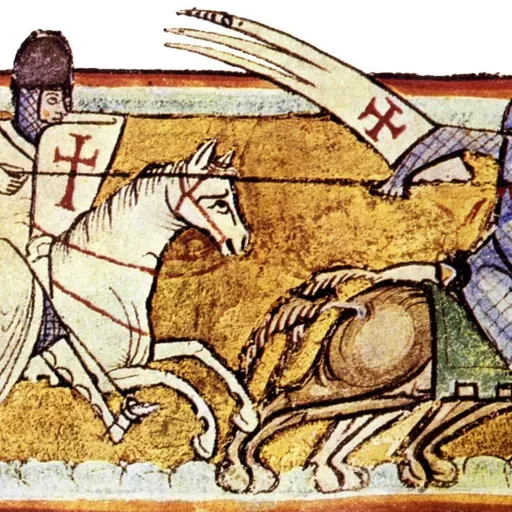
Exactly 900 years ago, a new religious order of fighting men took root in the Holy Land, the "Poor Fellow-Soldiers of Christ and of the Temple of Solomon." They're better known to history as the Knights Templar. The animating core of the Templars, as the archbishop stressed in his remarks above, was a uniquely demanding form of love; one urgently needed by the times: "to build a new order of new Christian men, skilled at arms, living as brothers, committed to prayer, austerity, and chastity, and devoting themselves radically to serving the Church and her people, especial...
But first a note from Robert Royal:
The editor of The Catholic Thing has many surprises, almost daily. But how about this from today's author: Bob, just in case you'd like to offer those first two grafs in High Elvish (Quenya) for your Middle-earth readers, here you go. No need to thank me: Sín, órelyen loqui neldëa quillië, ar avanyárë enquë-epenquë loilli lúteva vanyë ar handë Amandil nissemen, láman lesta anta titta sanwi lesta vanya "Erunítë veru." Ú-antaleva, haryas mári: yávëa antando; mára atar; alassëa mi yárë lanyar; ar nítë mal tanyë carva mardë andë loilli. Mettë colla ná foina-andavárea. Tana colla mapë ístëa ar netya Erunítë veri andavë tanna andalúmë. I casta ná calina. I ilvanya veru ná illumë titta hampa ollo ilvanyessë — aí quë lastas quallë.
I ask you: How can you NOT donate to a publication like this?
Now in my late 70s and the veteran of 56 annual performance reviews by a beautiful and highly intelligent Catholic female, I feel licensed to offer a few thoughts on the nature of an acceptably "Christian man," married variety.
In no special order, he must be: a fruitful provider; a good dad; fun, within traditional moral parameters; and an endearing but stubbornly long-term construction project. This last trait is deceptively vital. It keeps even the most gifted, crafty, and impatient Christian wife engaged for the duration. The reason why should be obvious. The perfect husband is always just a few (dozen) well-meaning tweaks away from perfection – if he would only listen.
So much for humor. In the real world, the Christian man needs, above all, to be faithful: faithful to his wife and children, faithful to his Church, and faithful to Jesus Christ. No exceptions. No excuses. No escape clauses. Fidelity matters. This is the Big One.
There's more to becoming a man, of course. Check out the relevant comments here of a great Catholic pastor; Philadelphia's emeritus archbishop, Charles Chaput. Note the 22 rules for a Christian man's conduct that he borrows from Erasmus. Note, too, his reflection on the history and essence of Christian knighthood. His whole talk is worth branding on the masculine heart – but especially its closing thought: "Maleness, brothers, is a matter of biology. It just happens. Manhood must be learned and earned and taught."
How does a young man do any of that? Let's start with a few simple facts: Mothers shape the early lives of their sons. Wives anchor their husbands in reality and purpose. But in the end, men are made better men by the example and friendship of other, better men.
Over the space of my lifetime, American culture has recognized the dignity of women more fully than ever before and created fresh avenues for their leadership in dramatic new ways. As a man with an extraordinary wife, daughter, and granddaughters, I can welcome that enthusiastically – absent the anarchic sex and homage to unborn child-killing "rights."
But in the process, the same culture has too often neglected and even deliberately debased the formation of young men. And that has ugly consequences. "Toxic masculinity" isn't fixed by effeminizing young males. The result of that mistake is a bumper crop of drones, Peter Pans, predators, porn addicts, and Lost Boys; in other words, a shortage of good, unselfish men of virtue, trained to provide and protect. Which is the pressing problem we now face.
So how do we deal with it?
Exactly 900 years ago, a new religious order of fighting men took root in the Holy Land, the "Poor Fellow-Soldiers of Christ and of the Temple of Solomon." They're better known to history as the Knights Templar. The animating core of the Templars, as the archbishop stressed in his remarks above, was a uniquely demanding form of love; one urgently needed by the times: "to build a new order of new Christian men, skilled at arms, living as brothers, committed to prayer, austerity, and chastity, and devoting themselves radically to serving the Church and her people, especial...