About
By Fr. Jerry J. Pokorsky.
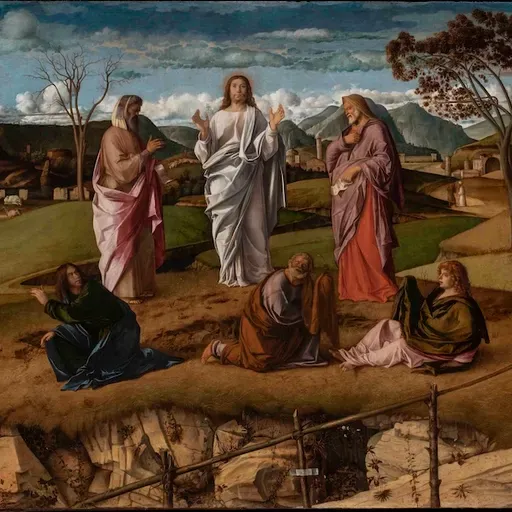
The Transfiguration reveals the mystery of Christ's Person. In His glorified body, He stands as the fulfillment of the Law with Moses and of the Prophets with Elijah. He is the beloved Son of the Father, the Second Person of the Blessed Trinity. Yet Tabor cannot be separated from Calvary, nor Calvary from Easter morning.
The Apostles could not grasp this at once. Comprehension required time, memory, and grace. What was revealed had to be received before it could be understood. This pattern is woven into human life itself: mystery first, then revelation, then understanding. And even understanding does not exhaust mystery; it opens us to still more.
This same pattern governs ordinary experience. A young man may take up manual work without fully knowing why. Skill comes slowly – through correction, repetition, and trust in those who know more than he does. Eventually, he produces something solid and recognizable as his own – perhaps just a table. Yet even so, he did not create from nothing. His achievement rests on instruction, materials, discipline, and the wisdom of others. What he makes is truly his, but it is not his alone.
Our vocations follow a similar path. We consider whether our lives should follow marriage, single life, or religious life. The answer rarely comes with initial certainty. Discernment requires observation and testing. Motives must be examined. Decisions arise from attention to circumstances and to God's direction. As understanding of one's vocation grows, it can reveal deeper questions about purpose, service, and God's plan. Clarity comes only through disciplined inquiry.
Once a vocation is assumed, it requires continuity. Fidelity depends on discipline and consistent effort. The vocation is not our voice. Properly discerned, it is the voice of God. We manage His plan for us as stewards. Responsibility stems from our performing what is assigned, rather than imposing our personal agendas. The more we understand our vocation, the more we become aware of its depth and participation in broader mysteries.
Intellectual inquiry, too, follows a comparable pattern. Integrating the sacraments with daily living, harmonizing faith and reason, is difficult. Atheists drive a wedge between faith and reason. Atheists commonly argue that the available evidence does not warrant belief in God. They argue that material processes, evolution, and chance explain existence.
But the very existence of the universe raises questions. It is ordered and intelligible. Scientific investigation presupposes that reality is coherent. The question is not whether mechanisms operate. They do. But why is the world structured in such a way that makes rational investigation possible? Understanding in science does not exhaust mystery; it directs reflection toward the transcendent source of intelligibility.
A clock does not assemble itself. Its ordered parts presuppose intelligence. So too the intelligibility of the universe points beyond itself. The questions raised by atheists, pursued honestly, lead not to the dismissal of a Divine Clockmaker but toward a deeper appreciation of Him.
Acknowledging a Creator raises another question: Has He revealed Himself? The Christian claim is that He has: through Israel's history, through the life and teaching of Christ, and through the Church's witness. Faith relies on testimony. It allows understanding to develop without eliminating mystery, and each insight opens us to deeper truths of God's plan.
Suffering, of course, presents a persistent challenge. Atheists commonly ask, "How can an all-good God allow the presence of evil?" A child with cancer presents the reality with terrible clarity.
Suffering itself is not morally evil. It is our encounter with disorder, deprivation, and the effects of sin. No argument removes the fact of suffering. Even an atheist cannot explain away the mystery. The protest against suffering presupposes that things ought to be otherwise. How does an ath...
The Transfiguration reveals the mystery of Christ's Person. In His glorified body, He stands as the fulfillment of the Law with Moses and of the Prophets with Elijah. He is the beloved Son of the Father, the Second Person of the Blessed Trinity. Yet Tabor cannot be separated from Calvary, nor Calvary from Easter morning.
The Apostles could not grasp this at once. Comprehension required time, memory, and grace. What was revealed had to be received before it could be understood. This pattern is woven into human life itself: mystery first, then revelation, then understanding. And even understanding does not exhaust mystery; it opens us to still more.
This same pattern governs ordinary experience. A young man may take up manual work without fully knowing why. Skill comes slowly – through correction, repetition, and trust in those who know more than he does. Eventually, he produces something solid and recognizable as his own – perhaps just a table. Yet even so, he did not create from nothing. His achievement rests on instruction, materials, discipline, and the wisdom of others. What he makes is truly his, but it is not his alone.
Our vocations follow a similar path. We consider whether our lives should follow marriage, single life, or religious life. The answer rarely comes with initial certainty. Discernment requires observation and testing. Motives must be examined. Decisions arise from attention to circumstances and to God's direction. As understanding of one's vocation grows, it can reveal deeper questions about purpose, service, and God's plan. Clarity comes only through disciplined inquiry.
Once a vocation is assumed, it requires continuity. Fidelity depends on discipline and consistent effort. The vocation is not our voice. Properly discerned, it is the voice of God. We manage His plan for us as stewards. Responsibility stems from our performing what is assigned, rather than imposing our personal agendas. The more we understand our vocation, the more we become aware of its depth and participation in broader mysteries.
Intellectual inquiry, too, follows a comparable pattern. Integrating the sacraments with daily living, harmonizing faith and reason, is difficult. Atheists drive a wedge between faith and reason. Atheists commonly argue that the available evidence does not warrant belief in God. They argue that material processes, evolution, and chance explain existence.
But the very existence of the universe raises questions. It is ordered and intelligible. Scientific investigation presupposes that reality is coherent. The question is not whether mechanisms operate. They do. But why is the world structured in such a way that makes rational investigation possible? Understanding in science does not exhaust mystery; it directs reflection toward the transcendent source of intelligibility.
A clock does not assemble itself. Its ordered parts presuppose intelligence. So too the intelligibility of the universe points beyond itself. The questions raised by atheists, pursued honestly, lead not to the dismissal of a Divine Clockmaker but toward a deeper appreciation of Him.
Acknowledging a Creator raises another question: Has He revealed Himself? The Christian claim is that He has: through Israel's history, through the life and teaching of Christ, and through the Church's witness. Faith relies on testimony. It allows understanding to develop without eliminating mystery, and each insight opens us to deeper truths of God's plan.
Suffering, of course, presents a persistent challenge. Atheists commonly ask, "How can an all-good God allow the presence of evil?" A child with cancer presents the reality with terrible clarity.
Suffering itself is not morally evil. It is our encounter with disorder, deprivation, and the effects of sin. No argument removes the fact of suffering. Even an atheist cannot explain away the mystery. The protest against suffering presupposes that things ought to be otherwise. How does an ath...