About
By J. P. Royal.
But first a note from Robert Royal: Friends: There are many challenges internal to Catholicism these days. But as today's column traces, although we've put the hard toltatiarianisms of the century past behind us, softer forms of repression of religion are still with us - and in need of constant vigilance. We have some new projects coming next year to keep you abreast of persecution of Catholics around the world (you can already consult my book about that here). But we don't intend to ignore what's happening in all our modern "democracies" either. All this calls for daily study and analysis. It calls for your support - and your reliable daily source, The Catholic Thing.
Now for today's column...
On December 10, 1989, at the confluence of the Danube and Morava rivers under the shadow of Devin Castle, tens of thousands of Slovaks marched from Bratislava to Hainburg, Austria, piercing the Iron Curtain. Large crowds also assembled at the castle to protest peacefully under the slogan "Hello, Europe!" The protesters cut through the barbed wire separating Czechoslovakia from the Free World. The very next day, the communist government in Czechoslovakia began dismantling the barriers in this border zone, effectively bringing down the Iron Curtain in Central Europe.
These events were the culmination of the Velvet Revolution, the nationwide Czechoslovak protest movement that ended over forty years of communist rule, leading to the restoration of democracy and freedom there. Slovakia and the Czech Republic, now separate countries, both celebrate these miraculous events on November 17th, the day student protests were brutally disrupted in 1989, which became the catalyst for the chain of events leading to December 10th.
Astonishingly, this holiday, called the Struggle for Freedom and Democracy Day, was canceled this year by Slovakia's Prime Minister Robert Fico. A former member of the Czech Communist Party who has served as prime minister since 2023, Fico cited austerity measures as justification. Instead, Fico's ruling party marked the anniversary with a party congress, where one of his closest advisors greeted the participants with the Marxist greeting, "Honor to work, comrades." To add insult to injury, Fico is on record averring that he does not celebrate November 17th because he does not consider it a fundamental turning point in the life of the country.
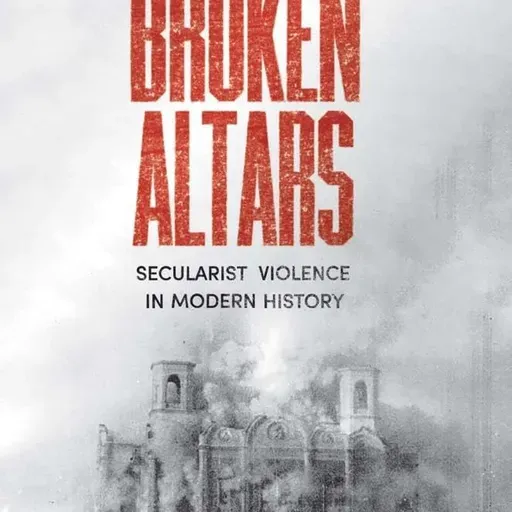
While Fico and his cronies in Slovakia attempt to memory-hole those brutalized by the ruling Communist Party during the Cold War and the bravery of those who defied it, Thomas Albert Howard admirably documents the widespread depravity visited upon Czechoslovakia and many other regions of the world over the course of the 20th century in his new book Broken Altars: Secularist Violence in Modern History.
Among the hundreds of atrocities documented in the book, two began in 1950, launched by Czechoslovakia's Communist Party General.
Operation K (for klastery, the Czech word for monastery) utilized state security to round up the vast majority of religious orders throughout the country, focusing on Salesians, Jesuits, Redemptorists, Benedictines, and Franciscans.
Operation R (for the Slovak word for nun, rehol'nicka) decimated female religious houses and convents. Both operations resulted in "the sudden liquidation of religious institutions, some of which had existed for more than a thousand years." Artwork, libraries, and other valuables were looted or destroyed while the religious were shipped to work camps, under prison-like conditions.
In spite of these and other persecutions that continued into the 1980s, as described in gripping detail in Broken Altars, a clandestine church flourished with bishops appointed secretly by the Vatican. This underground church "contributed through samizdat literature to currents of thought leading to the Velvet Revolution."
Broken Altars counters the popular Enlightenment cliché that violence is inherent to religious belief, while secular...
But first a note from Robert Royal: Friends: There are many challenges internal to Catholicism these days. But as today's column traces, although we've put the hard toltatiarianisms of the century past behind us, softer forms of repression of religion are still with us - and in need of constant vigilance. We have some new projects coming next year to keep you abreast of persecution of Catholics around the world (you can already consult my book about that here). But we don't intend to ignore what's happening in all our modern "democracies" either. All this calls for daily study and analysis. It calls for your support - and your reliable daily source, The Catholic Thing.
Now for today's column...
On December 10, 1989, at the confluence of the Danube and Morava rivers under the shadow of Devin Castle, tens of thousands of Slovaks marched from Bratislava to Hainburg, Austria, piercing the Iron Curtain. Large crowds also assembled at the castle to protest peacefully under the slogan "Hello, Europe!" The protesters cut through the barbed wire separating Czechoslovakia from the Free World. The very next day, the communist government in Czechoslovakia began dismantling the barriers in this border zone, effectively bringing down the Iron Curtain in Central Europe.
These events were the culmination of the Velvet Revolution, the nationwide Czechoslovak protest movement that ended over forty years of communist rule, leading to the restoration of democracy and freedom there. Slovakia and the Czech Republic, now separate countries, both celebrate these miraculous events on November 17th, the day student protests were brutally disrupted in 1989, which became the catalyst for the chain of events leading to December 10th.
Astonishingly, this holiday, called the Struggle for Freedom and Democracy Day, was canceled this year by Slovakia's Prime Minister Robert Fico. A former member of the Czech Communist Party who has served as prime minister since 2023, Fico cited austerity measures as justification. Instead, Fico's ruling party marked the anniversary with a party congress, where one of his closest advisors greeted the participants with the Marxist greeting, "Honor to work, comrades." To add insult to injury, Fico is on record averring that he does not celebrate November 17th because he does not consider it a fundamental turning point in the life of the country.
While Fico and his cronies in Slovakia attempt to memory-hole those brutalized by the ruling Communist Party during the Cold War and the bravery of those who defied it, Thomas Albert Howard admirably documents the widespread depravity visited upon Czechoslovakia and many other regions of the world over the course of the 20th century in his new book Broken Altars: Secularist Violence in Modern History.
Among the hundreds of atrocities documented in the book, two began in 1950, launched by Czechoslovakia's Communist Party General.
Operation K (for klastery, the Czech word for monastery) utilized state security to round up the vast majority of religious orders throughout the country, focusing on Salesians, Jesuits, Redemptorists, Benedictines, and Franciscans.
Operation R (for the Slovak word for nun, rehol'nicka) decimated female religious houses and convents. Both operations resulted in "the sudden liquidation of religious institutions, some of which had existed for more than a thousand years." Artwork, libraries, and other valuables were looted or destroyed while the religious were shipped to work camps, under prison-like conditions.
In spite of these and other persecutions that continued into the 1980s, as described in gripping detail in Broken Altars, a clandestine church flourished with bishops appointed secretly by the Vatican. This underground church "contributed through samizdat literature to currents of thought leading to the Velvet Revolution."
Broken Altars counters the popular Enlightenment cliché that violence is inherent to religious belief, while secular...