About
By David G Bonagura, Jr.
But first a note from Robert Royal: Friends: Only five days remain in our end-of-year fundraising. And we're still in need of several thousand dollars to bring this to a successful close. I want TCT to be here next year and for many years to come. If you do too, this is the moment to show it. Please, let's get this campaign done and get back to giving our full attention to the best daily commentary there is on the Church and world today: The Catholic Thing.
Now for today's column...
A turning point is an event that inaugurates substantial change, such as the Battles of Saratoga and Gettysburg or the Eagles' "Philly Special" trick play in Super Bowl LII. The change is decisive - the future takes an unexpected path that would not have worked out otherwise. Its synonyms - climax, watershed, milestone - lack the critical element of beginning something new that might not have been.
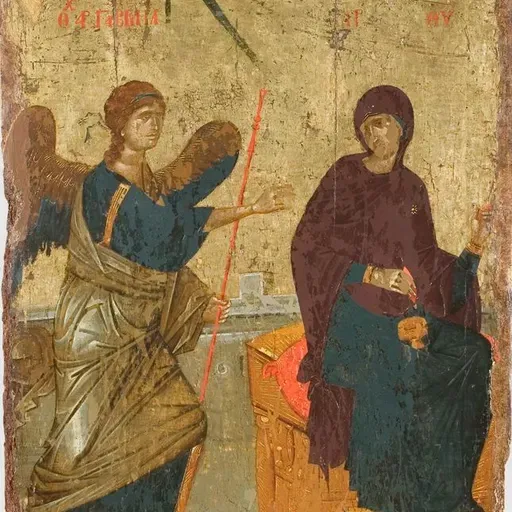
With Advent, we prepare for the biggest turning point the universe has ever seen: the Incarnation of the Son of God. The world was languishing in sin with no hope, no prospects for renewal. "All things are full of weariness," laments the Book of Ecclesiastes. "What has been is what will be, and what has been done is what will be done; and there is nothing new under the sun." (Ecclesiastes 1:8-9)
The birth of Christ permanently altered the human story. No longer is there politics without a goal. No longer is there suffering without meaning. No longer is there death without the prospect of a greater life to come.
"Now we know the path that we human beings have to take in this world," wrote Pope Benedict XVI in his first Jesus of Nazareth volume. "Jesus has brought God and with God the truth about our origin and destiny: faith, hope, and love. It is only because of our hardness of heart that we think this too little."
We cannot register a turning point until we see the endpoint, which provides a prospective for evaluating the past. Advent helps us prepare for the universe's turning point by beginning with the end point: the second Advent, the second coming of Christ. Because He will triumphantly come again to judge the living and the dead, we know that His first Advent turned the tide forever. God's Anointed, destined to rule heaven and earth in splendor, is born in Bethlehem so that we may have life more abundantly.
In Christ, we know that evil is not the final word - though, alas, it still has more to say. From the wood of the crib to the wood of the Cross, He shows us the way. "If you follow the will of God," continues Benedict, "you know that despite all the terrible things that happen to you, you will never lose a final refuge." Jesus is Emanuel - God with us, through thick and thin, even when suffering tries to tear us apart.
The West's calendar places the universe's turning point at its center. The years of antiquity are counted downwards until His Advent - the time "before Christ." A new era dawned at His birth - the years of our Lord, anni Domini - and time is now counted forward. The years will cease when the second Advent dawns.
Turning points, however, are a matter of interpretation. Where the Christian sees the reconstitution of creation in Christ, nonbelievers see nothing. As these nonbelievers have gained power in the West, they have imposed their blindness on the calendar: rather than distinguish the years "BC/AD," they insist on "BCE/CE," that is, "Before the Common Era" and "Common Era," counting the years in the same way, but with these senseless labels.
And they are senseless: there is nothing to distinguish the year 1 BCE from 1CE. Nothing happened to make the latter "common." By a nonbeliever's reckoning, those years are every bit as common as the ones before and after it. In fact, the BCE/CE system is a modern refashioning of the Book of Ecclesiastes: without Christ, there is nothing new under the sun.
It's tempting to think that turning points in "some other game" don't apply to some of us. Consider Sarat...
But first a note from Robert Royal: Friends: Only five days remain in our end-of-year fundraising. And we're still in need of several thousand dollars to bring this to a successful close. I want TCT to be here next year and for many years to come. If you do too, this is the moment to show it. Please, let's get this campaign done and get back to giving our full attention to the best daily commentary there is on the Church and world today: The Catholic Thing.
Now for today's column...
A turning point is an event that inaugurates substantial change, such as the Battles of Saratoga and Gettysburg or the Eagles' "Philly Special" trick play in Super Bowl LII. The change is decisive - the future takes an unexpected path that would not have worked out otherwise. Its synonyms - climax, watershed, milestone - lack the critical element of beginning something new that might not have been.
With Advent, we prepare for the biggest turning point the universe has ever seen: the Incarnation of the Son of God. The world was languishing in sin with no hope, no prospects for renewal. "All things are full of weariness," laments the Book of Ecclesiastes. "What has been is what will be, and what has been done is what will be done; and there is nothing new under the sun." (Ecclesiastes 1:8-9)
The birth of Christ permanently altered the human story. No longer is there politics without a goal. No longer is there suffering without meaning. No longer is there death without the prospect of a greater life to come.
"Now we know the path that we human beings have to take in this world," wrote Pope Benedict XVI in his first Jesus of Nazareth volume. "Jesus has brought God and with God the truth about our origin and destiny: faith, hope, and love. It is only because of our hardness of heart that we think this too little."
We cannot register a turning point until we see the endpoint, which provides a prospective for evaluating the past. Advent helps us prepare for the universe's turning point by beginning with the end point: the second Advent, the second coming of Christ. Because He will triumphantly come again to judge the living and the dead, we know that His first Advent turned the tide forever. God's Anointed, destined to rule heaven and earth in splendor, is born in Bethlehem so that we may have life more abundantly.
In Christ, we know that evil is not the final word - though, alas, it still has more to say. From the wood of the crib to the wood of the Cross, He shows us the way. "If you follow the will of God," continues Benedict, "you know that despite all the terrible things that happen to you, you will never lose a final refuge." Jesus is Emanuel - God with us, through thick and thin, even when suffering tries to tear us apart.
The West's calendar places the universe's turning point at its center. The years of antiquity are counted downwards until His Advent - the time "before Christ." A new era dawned at His birth - the years of our Lord, anni Domini - and time is now counted forward. The years will cease when the second Advent dawns.
Turning points, however, are a matter of interpretation. Where the Christian sees the reconstitution of creation in Christ, nonbelievers see nothing. As these nonbelievers have gained power in the West, they have imposed their blindness on the calendar: rather than distinguish the years "BC/AD," they insist on "BCE/CE," that is, "Before the Common Era" and "Common Era," counting the years in the same way, but with these senseless labels.
And they are senseless: there is nothing to distinguish the year 1 BCE from 1CE. Nothing happened to make the latter "common." By a nonbeliever's reckoning, those years are every bit as common as the ones before and after it. In fact, the BCE/CE system is a modern refashioning of the Book of Ecclesiastes: without Christ, there is nothing new under the sun.
It's tempting to think that turning points in "some other game" don't apply to some of us. Consider Sarat...