21 April 2026
Space Tech Surges Past Blue Origin Setback as Direct-to-Device Satellite Boom Accelerates
Space Technology Industry News
About
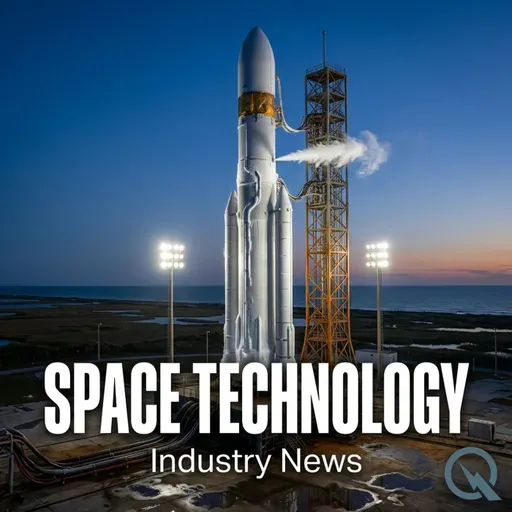
In the past 48 hours, the space technology industry experienced a mix of setbacks and surges, highlighted by Blue Origins New Glenn rocket mishap on Sunday. The launch from Cape Canaveral successfully reused and recovered its booster but failed to place AST SpaceMobiles communications satellite into the correct orbit due to insufficient thrust from a BE-3U engine on the second burn[1][4]. The FAA has ordered a mishap investigation, halting flights until corrective actions ensure public safety, with Blue Origin CEO Dave Limp pledging quick improvements[1][3][4]. AST SpaceMobile noted the satellites low altitude prevents operations, but insurance will cover costs[1].
Despite this, deals and expansions drive momentum. Rocket Lab this week launched Gauss, a new electric spacecraft thruster to support its programs and fill industry gaps, following its acquisition of Mynaric for optical terminals[5]. In direct-to-device D2D satellite tech, global connections grew 24.5 percent from July 2025 to March 2026, with Starlink leading 59 partnerships across 15 launched countries and planning African and other expansions[2]. Amazon announced acquiring Globalstar this month for D2D via its Leo venture, while AST eyes 45-60 satellites by late 2026 at up to 120 Mbps speeds, and SpaceX preps a doubled D2D constellation[2]. Launch costs per kilogram have dropped to around 3300 dollars from 10000 dollars recently[2].
No major regulatory shifts or consumer behavior changes emerged in the last week, but D2D promises to erase cellular dead zones, shifting reliance from towers. Leaders like Blue Origin respond swiftly with probes, Rocket Lab diversifies offerings, and Starlink scales aggressively. Compared to prior reports, this blends a rare orbital failure with robust D2D growth, underscoring resilient innovation amid technical hurdles. University of Minnesota students continue NASA spacesuit collaborations, signaling talent pipeline strength[6].
(Word count: 298)
For great deals today, check out https://amzn.to/44ci4hQ
This content was created in partnership and with the help of Artificial Intelligence AI
Despite this, deals and expansions drive momentum. Rocket Lab this week launched Gauss, a new electric spacecraft thruster to support its programs and fill industry gaps, following its acquisition of Mynaric for optical terminals[5]. In direct-to-device D2D satellite tech, global connections grew 24.5 percent from July 2025 to March 2026, with Starlink leading 59 partnerships across 15 launched countries and planning African and other expansions[2]. Amazon announced acquiring Globalstar this month for D2D via its Leo venture, while AST eyes 45-60 satellites by late 2026 at up to 120 Mbps speeds, and SpaceX preps a doubled D2D constellation[2]. Launch costs per kilogram have dropped to around 3300 dollars from 10000 dollars recently[2].
No major regulatory shifts or consumer behavior changes emerged in the last week, but D2D promises to erase cellular dead zones, shifting reliance from towers. Leaders like Blue Origin respond swiftly with probes, Rocket Lab diversifies offerings, and Starlink scales aggressively. Compared to prior reports, this blends a rare orbital failure with robust D2D growth, underscoring resilient innovation amid technical hurdles. University of Minnesota students continue NASA spacesuit collaborations, signaling talent pipeline strength[6].
(Word count: 298)
For great deals today, check out https://amzn.to/44ci4hQ
This content was created in partnership and with the help of Artificial Intelligence AI