20 April 2026
Space Industry Surges on Deals While Blue Origin Grapples with Orbit Mishap
Space Technology Industry News
About
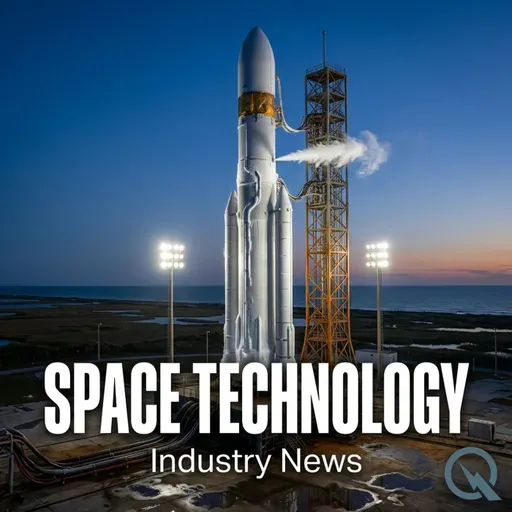
In the past 48 hours, the space technology industry faced a major setback with Blue Origin's third New Glenn rocket launch on Sunday, which successfully recovered its first stage but placed AST SpaceMobile's BlueBird 7 satellite into a lower-than-planned orbit, rendering it unusable and leading to de-orbiting despite full insurance coverage.[1] This incident highlights reusability progress amid upper-stage reliability challenges, prompting an ongoing investigation that could delay future missions.
Over the past week, dealmaking surged as capital shifted from launches to infrastructure. Amazon acquired Globalstar to bolster direct-to-device connectivity, Rocket Lab bought Mynaric for laser communications, Citra Space raised 15 million dollars for orbital object detection, and Turion Space secured 75 million dollars to expand its satellite fleet.[2] These moves signal investor focus on connectivity, awareness, and logistics, with Amazon's Project Kuiper ramping up manufacturing in Kirkland, Washington, for up to 3,236 low-Earth orbit satellites after FCC approval.[6]
Market data shows resilience: the space electronics sector, valued at 9.86 billion dollars in 2025, is projected to hit 16.45 billion dollars by 2033 at an 8.6 percent CAGR, driven by satellite constellations and radiation-hardened components.[4] North America holds a 36 percent share due to robust agencies and defense spending.[4] No major regulatory shifts or consumer behavior changes emerged, but the Strait of Hormuz closure raises potential supply chain risks for global components.[7]
Leaders are responding aggressively: Rocket Lab expanded via acquisition and inked a Japanese launch deal, boosting its stock,[9] while Blue Origin pushes reusability despite the mishap.[1] Compared to prior weeks, funding hit highs, contrasting quieter launch activity like Falcon 9's Cygnus to ISS.[2] No significant price changes or disruptions beyond the orbit failure were reported, positioning the industry for growth amid execution hurdles. (Word count: 298)
For great deals today, check out https://amzn.to/44ci4hQ
This content was created in partnership and with the help of Artificial Intelligence AI
Over the past week, dealmaking surged as capital shifted from launches to infrastructure. Amazon acquired Globalstar to bolster direct-to-device connectivity, Rocket Lab bought Mynaric for laser communications, Citra Space raised 15 million dollars for orbital object detection, and Turion Space secured 75 million dollars to expand its satellite fleet.[2] These moves signal investor focus on connectivity, awareness, and logistics, with Amazon's Project Kuiper ramping up manufacturing in Kirkland, Washington, for up to 3,236 low-Earth orbit satellites after FCC approval.[6]
Market data shows resilience: the space electronics sector, valued at 9.86 billion dollars in 2025, is projected to hit 16.45 billion dollars by 2033 at an 8.6 percent CAGR, driven by satellite constellations and radiation-hardened components.[4] North America holds a 36 percent share due to robust agencies and defense spending.[4] No major regulatory shifts or consumer behavior changes emerged, but the Strait of Hormuz closure raises potential supply chain risks for global components.[7]
Leaders are responding aggressively: Rocket Lab expanded via acquisition and inked a Japanese launch deal, boosting its stock,[9] while Blue Origin pushes reusability despite the mishap.[1] Compared to prior weeks, funding hit highs, contrasting quieter launch activity like Falcon 9's Cygnus to ISS.[2] No significant price changes or disruptions beyond the orbit failure were reported, positioning the industry for growth amid execution hurdles. (Word count: 298)
For great deals today, check out https://amzn.to/44ci4hQ
This content was created in partnership and with the help of Artificial Intelligence AI