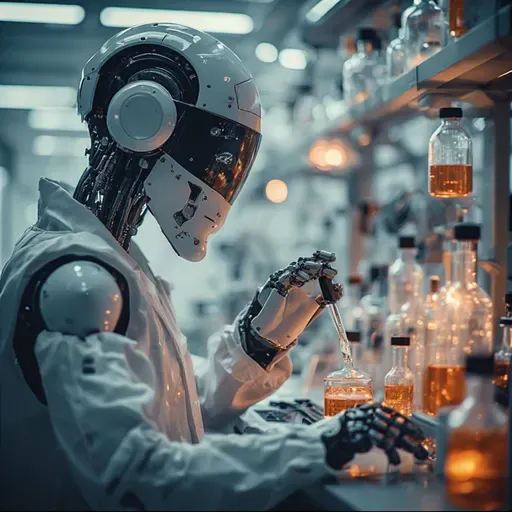
The development of CRISPR has evolved from the discovery of a **bacterial immune system** into a sophisticated, programmable platform for **precision genome engineering**. Following the landmark 2012 work by Doudna and Charpentier and the 2013 adaptation for human cells by Zhang and Church, the technology has transitioned from simple "molecular scissors" that cut DNA to "pencils and erasers" like **base and prime editing**, which allow for single-letter swaps and search-and-replace functions without the risks of double-stranded breaks. This progress is increasingly driven by the **AI revolution**, where tools like **AlphaFold 3** allow scientists to predict 3D molecular interactions with near-perfect accuracy and utilize generative models to design "bespoke" proteins and miniaturized enzymes from scratch.
By April 2026, CRISPR has moved into a **commercial era** defined by the success of therapies like **Casgevy** for sickle cell disease and **in vivo** treatments like **Verve-101**, which offers permanent reductions in cholesterol. Regulatory environments have adapted through the **FDA’s Plausible Mechanism Framework**, which accelerates approvals for individualized "N-of-1" treatments, and the **EU’s NGT-1 rollout**, which deregulates certain gene-edited crops to foster climate resilience. As the field explores frontiers like **age reversal** and **epigenetic editing**, it remains constrained by a global **germline moratorium** and new biosecurity laws mandating high-resolution DNA screening to prevent misuse. However, emerging challenges like **"chromatin fatigue"**—structural footprints left on the genome after editing—highlight the ongoing need for long-term safety monitoring as humans become the primary architects of their own evolution.