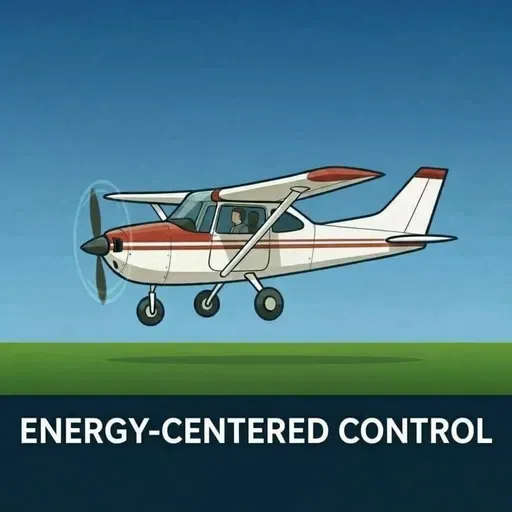
In this episode, we explore the revolutionary energy-centered approach to aircraft flight control, a paradigm shift that moves beyond the traditional "pitch for airspeed, power for altitude" mindset. Instead, pilots learn to manage an aircraft’s total mechanical energy as a unified system, balancing both the total amount of energy and its distribution between altitude and airspeed.
We break down the critical roles of primary flight controls: the throttle as the total energy controller, regulating the net flow of energy through thrust and drag, and the elevator as the energy distribution controller, allocating energy between vertical flight path and airspeed. Using the intuitive "reservoir analogy," we illustrate how these controls work together to achieve precise flight performance.
By the end of this episode, you’ll understand why effective flight isn’t about controlling altitude or airspeed independently—but mastering the integrated management of the aircraft’s energy state.