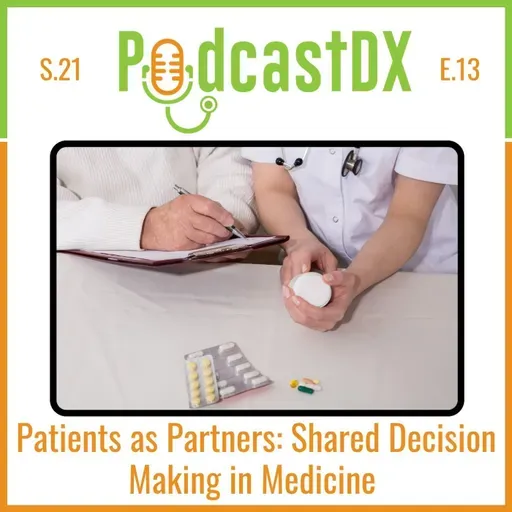
This week we are discussing the rise of a new type of health care where the patients play a vital role in their medical care. Patients as partners in care are at the heart of shared decision making (SDM), a model where clinicians and patients deliberately work together to choose tests and treatments that fit both best evidence and the patient's values and life context.
What shared decision making meansSDM is a collaborative process in which clinicians contribute clinical expertise while patients contribute their goals, preferences, and lived experience.
Core elements include at least two participants (patient and clinician), information sharing in both directions, building a shared understanding of options, and aiming for agreement on what to do next.
Historically, medical care was strongly paternalistic, with clinicians deciding and patients expected to comply, but from the 1970s onward, growing emphasis on autonomy and patient‑centered care began to challenge this model.
The term "shared decision-making" appeared in ethical discussions in the 1970s and early 1980s and gained momentum in the 1980s alongside evidence that patients increasingly wanted to participate in decisions.
SDM is associated with improved patient knowledge, more accurate risk perception, reduced decisional conflict, and treatment plans that better reflect what matters most to patients.
Studies link SDM to higher satisfaction, better adherence, improved quality of life, lower anxiety, and in some preference‑sensitive conditions, less invasive and sometimes less costly care.