09 June 2026
Biography Flash Pete Hegseth at Normandy Honoring Heroes or Writing His Next Political Chapter
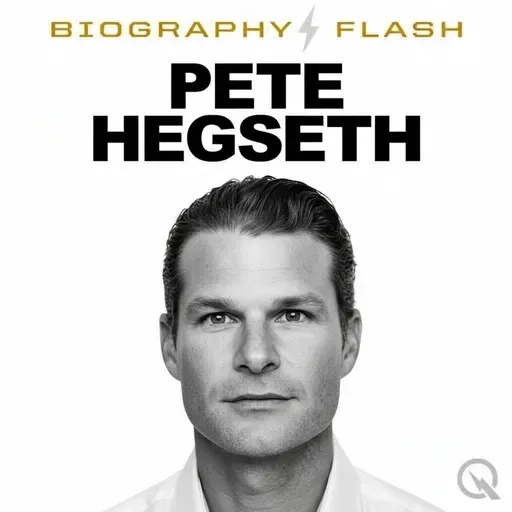
Pete Hegseth - Biography Flash
About
Pete Hegseth Biography Flash a weekly Biography.
Pete Hegseth’s past few days have looked less like a quiet commemoration tour and more like a defining chapter in his political and public biography. According to the Pentagon’s own news service, Hegseth spent the 82nd anniversary of the D-Day landings at the Normandy American Cemetery in Colleville-sur-Mer, delivering set-piece remarks honoring the 160,000 Allied troops who stormed the beaches in 1944, including 73,000 Americans. Army.mil reports that he framed the sacrifice at Normandy as the “moral foundation” of modern American power, a line clearly crafted for history books and campaign spots alike.
Video from the Department of War and major networks shows Hegseth laying wreaths and paying tribute at multiple sites along the French coast, including a solemn ceremony captured by Reuters-style feeds where he bowed his head in silence at a memorial cross. YouTube pool coverage also shows him meeting with U.S. troops in Sainte-Mere-Eglise, shaking hands, taking photos, and delivering a short pep talk about readiness and “never apologizing” for American strength. Those clips are already circulating widely on social platforms and right-leaning media, reinforcing his image as a combat veteran turned wartime cabinet officer.
But it was one unscripted line that drove the biggest headlines. In a speech in Normandy carried by outlets such as Forbes Breaking News, Hegseth declared that “today, different European beaches are being stormed by dangerous ideologies,” explicitly linking the D-Day legacy to current cultural and migration battles in Europe. That comment ricocheted across cable panels and social media feeds, with supporters praising it as blunt truth and critics slamming it as politicizing sacred ground.
The backlash was even sharper on the ground. The Daily Beast, citing French broadcaster BFM TV, reports that villagers in Langrune-sur-Mer labeled Hegseth “persona non grata,” bristling at what they saw as a partisan invasion of a local international ceremony and complaining that he turned a remembrance event into a family-heavy political photo op. Locals quoted in that reporting portrayed his entourage as more campaign caravan than diplomatic delegation.
On the official side, his public schedule on the Department of War website lists no domestic media events immediately following the trip, but pool video shows Hegseth offering brief tarmac remarks to reporters as he departed for Joint Base Andrews, brushing off criticism and insisting that “honoring our heroes means defending what they fought for today.” That line, clipped from the press gaggle, is trending across political X accounts and appears likely to become part of his long-term messaging.
There are unconfirmed social media rumors that the Normandy stopovers are groundwork for a future run for higher office or a larger role in a second Trump term; at this point those remain speculation, with no formal announcement or on-the-record confirmation from Hegseth or the White House.
For a biography watcher, these past few days may stand out as a pivot: a sitting Secretary of War using a globally symbolic battlefield not just to honor history, but to stake his claim in the next chapter of America’s political wars.
Thank you for listening, and be sure to subscribe so you never miss an update on Pete Hegseth, and search the term Biography Flash for more great biographies. Thanks for listening. This has been a Quiet Please production.
Get the best deals https://amzn.to/3ODvOta
Pete Hegseth’s past few days have looked less like a quiet commemoration tour and more like a defining chapter in his political and public biography. According to the Pentagon’s own news service, Hegseth spent the 82nd anniversary of the D-Day landings at the Normandy American Cemetery in Colleville-sur-Mer, delivering set-piece remarks honoring the 160,000 Allied troops who stormed the beaches in 1944, including 73,000 Americans. Army.mil reports that he framed the sacrifice at Normandy as the “moral foundation” of modern American power, a line clearly crafted for history books and campaign spots alike.
Video from the Department of War and major networks shows Hegseth laying wreaths and paying tribute at multiple sites along the French coast, including a solemn ceremony captured by Reuters-style feeds where he bowed his head in silence at a memorial cross. YouTube pool coverage also shows him meeting with U.S. troops in Sainte-Mere-Eglise, shaking hands, taking photos, and delivering a short pep talk about readiness and “never apologizing” for American strength. Those clips are already circulating widely on social platforms and right-leaning media, reinforcing his image as a combat veteran turned wartime cabinet officer.
But it was one unscripted line that drove the biggest headlines. In a speech in Normandy carried by outlets such as Forbes Breaking News, Hegseth declared that “today, different European beaches are being stormed by dangerous ideologies,” explicitly linking the D-Day legacy to current cultural and migration battles in Europe. That comment ricocheted across cable panels and social media feeds, with supporters praising it as blunt truth and critics slamming it as politicizing sacred ground.
The backlash was even sharper on the ground. The Daily Beast, citing French broadcaster BFM TV, reports that villagers in Langrune-sur-Mer labeled Hegseth “persona non grata,” bristling at what they saw as a partisan invasion of a local international ceremony and complaining that he turned a remembrance event into a family-heavy political photo op. Locals quoted in that reporting portrayed his entourage as more campaign caravan than diplomatic delegation.
On the official side, his public schedule on the Department of War website lists no domestic media events immediately following the trip, but pool video shows Hegseth offering brief tarmac remarks to reporters as he departed for Joint Base Andrews, brushing off criticism and insisting that “honoring our heroes means defending what they fought for today.” That line, clipped from the press gaggle, is trending across political X accounts and appears likely to become part of his long-term messaging.
There are unconfirmed social media rumors that the Normandy stopovers are groundwork for a future run for higher office or a larger role in a second Trump term; at this point those remain speculation, with no formal announcement or on-the-record confirmation from Hegseth or the White House.
For a biography watcher, these past few days may stand out as a pivot: a sitting Secretary of War using a globally symbolic battlefield not just to honor history, but to stake his claim in the next chapter of America’s political wars.
Thank you for listening, and be sure to subscribe so you never miss an update on Pete Hegseth, and search the term Biography Flash for more great biographies. Thanks for listening. This has been a Quiet Please production.
Get the best deals https://amzn.to/3ODvOta