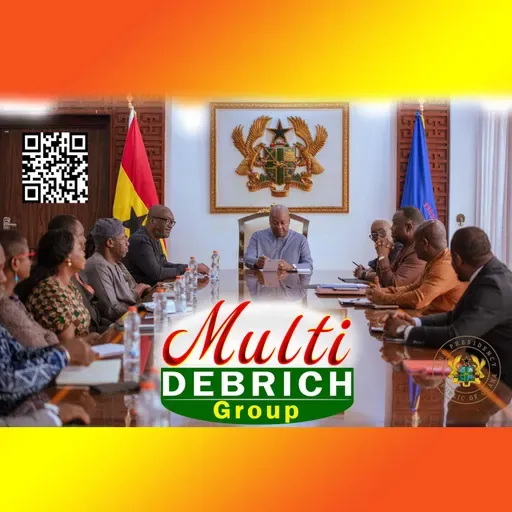
Ghana Constitution Review Committee Recommends No MP Be Appointed as Minister, 5-Year Presidential Term, 30-Year Age Limit: Implications for Ghana’s Political System
Multi Debrich Group
The recommendation by Ghana’s Constitution Review Committee (CRC) that no Member of Parliament (MP) should be appointed as a Minister of State, Deputy Minister, or Regional Minister has reignited national debate about the structure and efficiency of Ghana’s governance system.
According to Multi DebrichGroup.com analyst, this proposal, if adopted, would mark a major shift from Ghana’s long-standing hybrid system, which blends elements of both parliamentary and presidential governance.
The central question remains: Will separating MPs from ministerial appointments strengthen Ghana’s political system or weaken it? This article examines the implications of the CRC’s recommendation, its potential benefits and drawbacks, historical lessons, and modern governance systems that could sharpen Ghana’s political development.
Background: Ghana’s Current Political Arrangement
Under Article 78(1) of the 1992 Constitution, the President must appoint the majority of ministers from Parliament. This arrangement was intended to promote collaboration between the executive and legislature. However, over the years, critics argue that it has instead blurred the separation of powers, weakened parliamentary oversight, and compromised accountability.
The CRC’s recommendation seeks to fully separate the executive from the legislature, ensuring that MPs focus on lawmaking and oversight, while ministers concentrate on policy execution.
Can This Recommendation Help Ghana’s Political System?
1. Strengthening Separation of Powers
DebrichGroup.com editor can confirm that, one of the strongest arguments in favor of the CRC’s recommendation is that it would restore the true doctrine of separation of powers. MPs who are also ministers often find themselves supervising policies they helped implement, which undermines objective parliamentary scrutiny.
When MPs are barred from ministerial appointments:
Parliament becomes more independent
Oversight of the executive improves
Abuse of power is reduced
This reform would align Ghana more closely with modern democratic governance standards.
2. Improved Parliamentary Effectiveness
MPs who double as ministers, deputy ministers, board members, or regional ministers are often absent from parliamentary sittings, committee meetings, and constituency engagements. As a result:
Parliamentary debates suffer
Committees become weak
Oversight reports lose depth
By removing ministerial responsibilities from MPs, lawmakers can fully concentrate on their legislative duties, including lawmaking, constituency representation, and oversight of the executive.
3. Enhanced Executive Efficiency
When ministers are appointed from outside Parliament, they are free from constituency pressures and parliamentary obligations. This allows them to:
Focus fully on implementing government policies
Deliver measurable results in their ministries
Be evaluated strictly on performance, not political loyalty
This could lead to more professional, technocratic governance, especially in complex sectors such as finance, energy, health, and digitalization.
Concerns and Counterarguments
1. Possible Executive & Legislative Conflict
Critics argue that appointing ministers from outside Parliament could slow down government business and increase tension between the executive and legislature. Parliament may:
Delay approval of ministerial nominees
Reject government policies and budgets
Use its powers to frustrate executive initiatives
This concern is not unfounded. Ghana’s political history reminds us of the fall of Dr. Hilla Limann’s government, where strained executive–legislative relations contributed to instability. However, modern constitutional safeguards and political maturity can help mitigate such risks.
2. Cost to the Public Purse
On one hand, appointing ministers outside Parliament may increase public expenditure, as:
MPs continue to receive parliamentary entitlements
Ministers also earn full ministerial benefits
This means two separate individuals are paid where one previously served dual roles.
On the other hand, proponents argue that the cost of inefficiency and poor oversight caused by MPs doubling as ministers is far greater than the financial cost of hiring separate officeholders. Poor accountability, corruption, and weak governance drain the public purse far more than salaries.
Why MPs Doubling as Ministers Cost Ghana More
MPs who serve simultaneously as ministers:
Rarely attend parliamentary sittings regularly
Fail to scrutinize executive actions objectively
Avoid questioning policies they helped formulate
Undermine checks and balances
This weak oversight allows waste, corruption, and policy failures to go unchecked—a hidden cost that far exceeds ministerial salaries. In contrast, a clear separation would promote accountability and long-term national savings.
Best Modern Systematic Styles to Sharpen Ghana’s Political Development
To maximize the benefits of this constitutional reform, Ghana can adopt the following modern governance systems:
1. Full Presidential System (U.S.-Style)
Ministers appointed entirely outside Parliament
Strong legislative independence
Clear separation of powers
Robust checks and balances
2. Technocratic Ministerial Appointments
Ministers selected based on expertise, not political loyalty
Performance-based evaluation
Fixed-term performance contracts
3. Strengthened Parliamentary Committee System
Well-resourced committees
Mandatory ministerial accountability sessions
Independent research support for MPs
4. Proportional Representation or Mixed Electoral System
Reduces winner-takes-all politics
Encourages consensus-building
Strengthens minority voices in Parliament
5. Independent Oversight Institutions
Stronger Auditor-General
Independent Special Prosecutor
Empowered CHRAJ and EOCO
6. Clear Conflict-of-Interest Laws
MPs barred from board memberships and executive appointments
Strict asset declaration enforcement
Transparent procurement systems
Constitutional Review Committee Proposes 5-Year Presidential Term and 30-Year Age Limit: What It Means for Ghana
The Constitutional Review Committee (CRC) has proposed further far-reaching reforms aimed at strengthening Ghana’s democratic governance. Among the most debated recommendations are:
Extending the presidential term from four (4) years to five (5) years
Reducing the minimum age requirement for presidential candidates to 30 years
These proposals, together with the recommendation to bar MPs from ministerial appointments, signal a deliberate attempt to modernize Ghana’s political system and enhance efficiency, inclusion, and long-term planning.
Combined Impact of the CRC’s Proposed Reforms
When viewed together, the CRC’s proposals form a coherent reform agenda:
Reform
Expected Impact
No MPs as Ministers
Stronger oversight, clearer separation of powers
5-Year Presidential Term
Better planning, reduced election pressure
30-Year Age Limit
Youth inclusion, leadership renewal
These reforms complement each other and could collectively reshape Ghana’s governance architecture for greater efficiency and accountability.
Finally, the Constitution Review Committee’s recommendation that no MP should be appointed as a minister, deputy minister, or regional minister has the potential to significantly improve Ghana’s democratic governance.
While concerns about cost and executive–legislative conflict are valid, the long-term benefits, stronger oversight, improved efficiency, and clearer separation of powers, far outweigh the drawbacks.
Ultimately, Ghana’s political development depends not just on constitutional amendments, but on political will, institutional strength, and civic vigilance. If properly implemented alongside modern governance reforms, this recommendation could mark a turning point in building a more accountable, efficient, and resilient Ghanaian state.