11 March 2026
Kintarō: El Guerrero Nacido en las Montañas de Japón | Misterios Exóticos
MISTERIOS EXÓTICOS con Mark Schindler
About
En el vasto imaginario del folclore japonés existe una figura que encarna la fuerza primigenia de la montaña, el vínculo entre el ser humano y la naturaleza salvaje y el nacimiento del héroe: Kintarō (金太郎), el legendario “muchacho de oro”.
Según la tradición, Kintarō habría sido criado en los bosques y montañas del Japón antiguo por Yama-uba (山姥), la enigmática “anciana de la montaña”, una figura ambivalente del imaginario popular que oscila entre espíritu salvaje, bruja ancestral y entidad liminal vinculada a los parajes más remotos. En ese entorno agreste —lejos de aldeas, templos y caminos— el joven Kintarō habría desarrollado una fuerza extraordinaria y una relación casi mítica con los animales del bosque.
Las narraciones transmitidas por la tradición oral y recogidas posteriormente en relatos del Japón medieval lo describen levantando rocas imposibles, luchando amistosamente con osos y cruzando ríos sobre troncos arrancados con sus propias manos. Estas imágenes no deben interpretarse únicamente como exageraciones populares, sino como expresiones simbólicas del arquetipo del héroe nacido en la naturaleza, un motivo recurrente en numerosas tradiciones mitológicas.
Con el tiempo, la leyenda vincula a Kintarō con una figura histórica: el guerrero Sakata no Kintoki (坂田金時), uno de los célebres Cuatro Guardianes del samurái Minamoto no Yorimitsu (源頼光) durante el período Heian (794–1185). De este modo, el niño salvaje de las montañas se transforma en un héroe guerrero integrado en el orden aristocrático del Japón clásico.
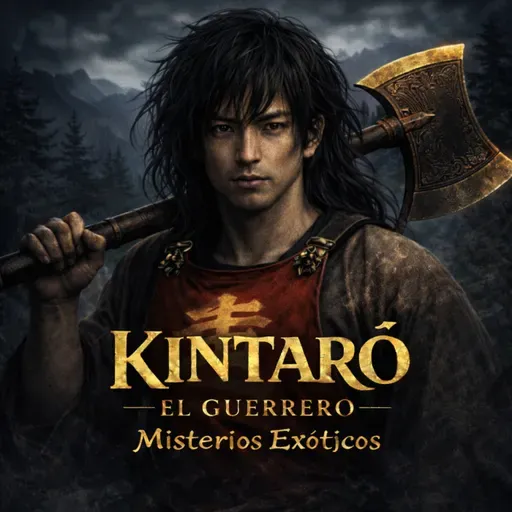
A lo largo de los siglos, la imagen de Kintarō ha perdurado en la cultura japonesa a través de grabados ukiyo-e (浮世絵), representaciones del teatro kabuki (歌舞伎), cuentos populares y festividades tradicionales. Su característico babero rojo con el kanji 金 —“oro”— se convirtió en símbolo de fortaleza, prosperidad y protección infantil, razón por la cual su figura sigue apareciendo en el Tango no Sekku (端午の節句), antigua celebración que con el tiempo evolucionaría hasta el actual Kodomo no Hi (こどもの日), el Día de los Niños en Japón.
Pero más allá del folclore y la iconografía, la historia de Kintarō habla de algo más profundo: la frontera entre lo humano y lo salvaje, entre la naturaleza indómita y el nacimiento del héroe.
En este episodio de Misterios Exóticos exploraremos el origen de esta fascinante leyenda japonesa, sus raíces en la tradición popular, su evolución histórica y el significado simbólico que aún conserva en la cultura del Japón.
Porque en las montañas cubiertas de niebla donde nacen los mitos, la historia de Kintarō sigue resonando como una de las narraciones más poderosas del imaginario japonés.
English (US) Description
Within the vast and fascinating world of Japanese mythology and folklore, few figures embody the primal strength of nature and the archetype of the heroic warrior as powerfully as Kintarō (金太郎), the legendary “Golden Boy” of Japanese tradition.
According to traditional accounts preserved in Japanese folklore, Kintarō was raised deep within the forests and mountains of ancient Japan by Yama-uba (山姥), the mysterious “Mountain Crone.” This enigmatic figure appears throughout Japanese mythological traditions as a supernatural woman of the wilderness—sometimes described as a mountain spirit, sometimes as a witch-like guardian of remote landscapes. Far from villages, temples, and the ordered world of human society, the young Kintarō grew up in the untamed wilderness, developing extraordinary physical strength and an almost mythical bond with the animals of the forest.
Stories transmitted through oral tradition and later recorded in medieval Japanese narratives describe him lifting enormous boulders, wrestling bears as companions, and crossing rivers upon trees he had torn from the earth with his own hands. These episodes, common in many Japanese folk tales, should not be understood merely as exaggerations, but rather as symbolic expressions of the hero born from nature, an archetype that appears across many mythological traditions.
Over time, the legend of Kintarō became associated with a historical figure: the warrior Sakata no Kintoki (坂田金時), one of the celebrated Four Guardians of the samurai Minamoto no Yorimitsu (源頼光) during the Heian period (794–1185). Through this transformation, the wild child of the mountains enters the world of the samurai, becoming part of the heroic traditions of classical Japan.
Across the centuries, the figure of Kintarō has remained deeply rooted in Japanese culture and folklore. His image appears in ukiyo-e (浮世絵) woodblock prints, kabuki (歌舞伎) theater, traditional folk tales, and seasonal festivals. The red bib he is often depicted wearing, marked with the kanji 金—meaning “gold”—became a symbol of strength, prosperity, and protection for children.
For this reason, the legendary hero continues to appear in Tango no Sekku (端午の節句), the traditional festival that eventually evolved into Kodomo no Hi (こどもの日), now celebrated as Children’s Day in Japan.
Yet beyond folklore and cultural symbolism, the legend of Kintarō reveals something deeper about the human imagination: the ancient boundary between civilization and wilderness, between the forces of nature and the emergence of the heroic figure.
In this episode of Misterios Exóticos, we explore the origins of this remarkable Japanese legend, its mythological foundations, its historical evolution, and the enduring cultural meaning of one of the most fascinating figures in Japanese mythology.
For in the mist-covered mountains where myths are born, the story of Kintarō continues to resonate as one of the most powerful narratives in the folklore of Japan.
Misterios Exóticos — where history is studied and mystery is respected.
Según la tradición, Kintarō habría sido criado en los bosques y montañas del Japón antiguo por Yama-uba (山姥), la enigmática “anciana de la montaña”, una figura ambivalente del imaginario popular que oscila entre espíritu salvaje, bruja ancestral y entidad liminal vinculada a los parajes más remotos. En ese entorno agreste —lejos de aldeas, templos y caminos— el joven Kintarō habría desarrollado una fuerza extraordinaria y una relación casi mítica con los animales del bosque.
Las narraciones transmitidas por la tradición oral y recogidas posteriormente en relatos del Japón medieval lo describen levantando rocas imposibles, luchando amistosamente con osos y cruzando ríos sobre troncos arrancados con sus propias manos. Estas imágenes no deben interpretarse únicamente como exageraciones populares, sino como expresiones simbólicas del arquetipo del héroe nacido en la naturaleza, un motivo recurrente en numerosas tradiciones mitológicas.
Con el tiempo, la leyenda vincula a Kintarō con una figura histórica: el guerrero Sakata no Kintoki (坂田金時), uno de los célebres Cuatro Guardianes del samurái Minamoto no Yorimitsu (源頼光) durante el período Heian (794–1185). De este modo, el niño salvaje de las montañas se transforma en un héroe guerrero integrado en el orden aristocrático del Japón clásico.
A lo largo de los siglos, la imagen de Kintarō ha perdurado en la cultura japonesa a través de grabados ukiyo-e (浮世絵), representaciones del teatro kabuki (歌舞伎), cuentos populares y festividades tradicionales. Su característico babero rojo con el kanji 金 —“oro”— se convirtió en símbolo de fortaleza, prosperidad y protección infantil, razón por la cual su figura sigue apareciendo en el Tango no Sekku (端午の節句), antigua celebración que con el tiempo evolucionaría hasta el actual Kodomo no Hi (こどもの日), el Día de los Niños en Japón.
Pero más allá del folclore y la iconografía, la historia de Kintarō habla de algo más profundo: la frontera entre lo humano y lo salvaje, entre la naturaleza indómita y el nacimiento del héroe.
En este episodio de Misterios Exóticos exploraremos el origen de esta fascinante leyenda japonesa, sus raíces en la tradición popular, su evolución histórica y el significado simbólico que aún conserva en la cultura del Japón.
Porque en las montañas cubiertas de niebla donde nacen los mitos, la historia de Kintarō sigue resonando como una de las narraciones más poderosas del imaginario japonés.
English (US) Description
Within the vast and fascinating world of Japanese mythology and folklore, few figures embody the primal strength of nature and the archetype of the heroic warrior as powerfully as Kintarō (金太郎), the legendary “Golden Boy” of Japanese tradition.
According to traditional accounts preserved in Japanese folklore, Kintarō was raised deep within the forests and mountains of ancient Japan by Yama-uba (山姥), the mysterious “Mountain Crone.” This enigmatic figure appears throughout Japanese mythological traditions as a supernatural woman of the wilderness—sometimes described as a mountain spirit, sometimes as a witch-like guardian of remote landscapes. Far from villages, temples, and the ordered world of human society, the young Kintarō grew up in the untamed wilderness, developing extraordinary physical strength and an almost mythical bond with the animals of the forest.
Stories transmitted through oral tradition and later recorded in medieval Japanese narratives describe him lifting enormous boulders, wrestling bears as companions, and crossing rivers upon trees he had torn from the earth with his own hands. These episodes, common in many Japanese folk tales, should not be understood merely as exaggerations, but rather as symbolic expressions of the hero born from nature, an archetype that appears across many mythological traditions.
Over time, the legend of Kintarō became associated with a historical figure: the warrior Sakata no Kintoki (坂田金時), one of the celebrated Four Guardians of the samurai Minamoto no Yorimitsu (源頼光) during the Heian period (794–1185). Through this transformation, the wild child of the mountains enters the world of the samurai, becoming part of the heroic traditions of classical Japan.
Across the centuries, the figure of Kintarō has remained deeply rooted in Japanese culture and folklore. His image appears in ukiyo-e (浮世絵) woodblock prints, kabuki (歌舞伎) theater, traditional folk tales, and seasonal festivals. The red bib he is often depicted wearing, marked with the kanji 金—meaning “gold”—became a symbol of strength, prosperity, and protection for children.
For this reason, the legendary hero continues to appear in Tango no Sekku (端午の節句), the traditional festival that eventually evolved into Kodomo no Hi (こどもの日), now celebrated as Children’s Day in Japan.
Yet beyond folklore and cultural symbolism, the legend of Kintarō reveals something deeper about the human imagination: the ancient boundary between civilization and wilderness, between the forces of nature and the emergence of the heroic figure.
In this episode of Misterios Exóticos, we explore the origins of this remarkable Japanese legend, its mythological foundations, its historical evolution, and the enduring cultural meaning of one of the most fascinating figures in Japanese mythology.
For in the mist-covered mountains where myths are born, the story of Kintarō continues to resonate as one of the most powerful narratives in the folklore of Japan.
Misterios Exóticos — where history is studied and mystery is respected.