18 November 2026
US high-purity metal producer General Flash garners $128m equity funding for scaling
Mining Weekly Audio Articles
About
This audio is brought to you by Endress and Hauser, a global leader in process and laboratory measurement technology, offering a broad portfolio of instruments, solutions and services for industrial process measurement and automation.
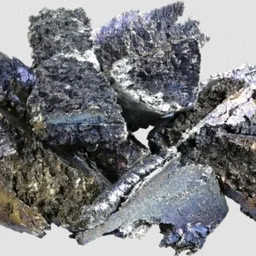
A company having developed a solid-state process to convert metal oxides directly into high-purity metal with no emissions called General Flash has raised $128-million in equity capital across its Seed and Series A rounds to scale domestic production of metals essential to manufacturing and national security.
Some of General Flash's investors include Lux Capital, Construct Capital, Overmatch Ventures, GreatPoint Ventures, Pillar Venture Capital, Lowercarbon Capital, Ensemble Venture Capital, Ravelin and other angel investors.
Based in Cambridge, Massachusetts, General Flash operates a 20 t/y pilot facility and is scaling to commercial production for defence and commercial customers. Its process is being developed for tungsten, tantalum, titanium, hafnium, zirconium, germanium, yttrium, niobium, molybdenum and rare earth elements.
"Critical metals and minerals such as tungsten, titanium, zirconium, tantalum and rare earths go into semiconductors, defense, aerospace and advanced manufacturing. In the twentieth century, the US developed most of the techniques used to make these materials but allowed production to move overseas, and today it depends heavily on foreign supply.
"Although these minerals are mined around the world, China accounts for more than 80% of refining capacity for many of them. Starting January 1, 2027, the US' Department of War rules will bar Chinese supply for many of these critical materials from US defense supply chains," General Flash explains. General Flash's process converts metal oxides directly into high-purity, semiconductor-grade metal, with no emissions. It is faster and lower cost than conventional refining and gives the US a way to build cost-effective refining capacity at home instead of relying on foreign supply.
The company's Solid-State Flash Electrolysis process is metal-agnostic and can be used to refine materials from tungsten to rare earths.
The funding will support commercial-scale production by mid-2027, in what will be one of the largest and most advanced critical materials production plants in the world. "Critical metals are foundational to every advanced industry. We started General Flash because we believe there's a better, cleaner and more efficient way to make these materials. We've already demonstrated it at our multi-ton pilot facility near Massachusetts Institute of Technology (MIT), and this funding fully finances production of our first large plant in the US," says General Flash co-founder and CEO Ric Fulop, who is also a member of the visiting committee of the MIT Department of Materials Science and Engineering and a research scientist at the MIT Center for Bits and Atoms.
INVESTOR VIEWS Lux Capital co-founder and partner Peter Herbert adds that every advanced industry runs on critical metals, and the way we make them has barely changed in decades. "General Flash has a genuinely new process, proven at pilot scale, and a founder who has built and scaled a manufacturing company before. We believe it can become one of the important American industrial companies of the next decade," he states. Construct Capital co-founder and managing partner Dayna Grayson says foundational industries such as metals production rarely sprout new companies, but that is exactly what is needed today as demand for onshore critical metals suppliers has skyrocketed. "General Flash is showing that critical metals can be made in America with a cleaner, more efficient process, and that the next generation of heavy industry can be built here," she notes.
Overmatch Ventures general partner Jordan Blashek further comments that America's defense supply chain depends on metals that are refined almost entirely overseas, and new Department of War rules make that dependence impos...