20 November 2026
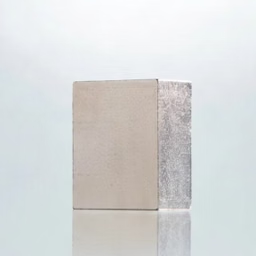
Non-China rare earth permanent magnet market poised to grow by 10% every year to 2034
Mining Weekly Audio Articles
About
This audio is brought to you by Endress and Hauser, a global leader in process and laboratory measurement technology, offering a broad portfolio of instruments, solutions and services for industrial process measurement and automation.
Research agency and consultancy Polaris Market Research predicts that the rare earth permanent magnet market will grow at a compound annual growth rate (CAGR) of 6.7% between 2026 and 2034 to reach a value of $39.23-billion, compared with $21.81-billion in 2025.
Rising demand from electric vehicles, industrial automation, wind energy and defence applications is supporting growth in this market, while manufacturers work to reduce their dependence on China developing alternative sources of supply.
Non-China rare earth permanent magnet supply is expected to grow at a CAGR of 10.8% while heavy rare earth-free and reduced-grade magnets are expected to grow by 9.22% between 2026 and 2034.
Earlier this month, China's Ministry of Commerce extended the suspension of its expanded rare earth export controls to January 10, 2027. The pause covers licensing requirements for additional medium and heavy rare earths, rare earth processing equipment and technology, and certain foreign-made products containing 0.1% or more Chinese-origin rare earth content.
However, licensing requirements for seven medium and heavy rare earth elements, including dysprosium and terbium, that were introduced in April 2025 remain in place.
The extension buys manufacturers more time, but it doesn't eliminate rare earth supply chain concerns.
Polaris reports China's rare earth magnet exports reached 6 165 t in September, the highest this year, as overseas buyers built inventories ahead of the January deadline.
"Companies that use rare earth magnets are increasingly qualifying alternative suppliers and investing in production capacity outside China," the consultancy states.
Polaris says replacing existing rare earth permanent magnet supply is difficult given the scale of China's production capacity and supplier network. Additionally, new facilities need time to reach consistent output and quality and limited mining, separation and refining capacity outside of China also restricts access to raw materials.
Commenting on China's suspension of expanded rare earth export controls to January next year, Polaris senior analyst Apurva Agarwal says the January deadline is a temporary relief, not a permanent solution. "Magnet buyers have realised that export rules can quickly change, making it more important to develop alternative suppliers. In coming years, manufacturers outside China will have more opportunities if they can match the quality and production capacity of established suppliers."
MARKET PERFORMANCE
By magnet type, neodymium-iron-boron (NdFeB) magnets dominated the market with a 66% share in 2025. Their high magnetic strength makes them ideal for electric vehicle motors, industrial systems and consumer electronics, while samarium cobalt (SmCo) magnets are projected to grow at a CAGR of 6.39% because they perform well under high temperatures and demanding conditions, particularly in aerospace and defense.
By manufacturing process, sintered magnets held the largest share of 70.14% in 2025, as they are widely used in high-performance electric motors and industrial equipment. Bonded magnets are projected to grow at the fastest CAGR of 7.13% owing to their flexible shapes and easy integration into different products.
By heavy rare earth content, standard grades accounted for 72.6% of the market in 2025. Heavy rare earth-free and reduced-grade magnets are projected to grow at a CAGR of 9.22% as manufacturers cut their use of dysprosium and terbium and lower their dependence on restricted materials.
By end use, the automotive segment led with a 39.52% share in 2025, as electric vehicle drive systems support growth in the permanent magnet motor market. Wind and renewable energy is projected to grow at the fastest CAGR of 7.61% as countries ...