「論破」を重視するコミュニケーションが増えた背景には、どんな社会的要因があると思いますか。
「メンタルパフォーマンス」を優先する生き方には、どんなメリットとデメリットがあるでしょうか。
感情を表に出さない「感情ミュート社会」は、人間関係にどのような影響を与えると思いますか。
インプット中心の語学学習が、会話力にどのような変化をもたらすと思いますか。
自分の趣味や興味と語学学習を結びつけることで、学習のモチベーションはどのように変化するでしょうか。
Join our community Japanese Together to discuss my podcast episodes. Japanese Together
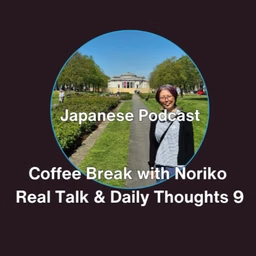
In this relaxed “Coffee Break with Noriko” episode, Noriko shares reflections on philosophy, modern social trends, and her recent language-learning experiences. She begins by introducing the book Suichuu no Tetsugakushatachi by Rei Nagai (永井玲衣『水中の哲学者たち』), a gentle philosophy essay collection that explains how philosophy begins with ordinary questions and everyday “why?” moments. Noriko especially appreciates the idea of philosophical dialogue as a respectful exchange where people listen openly instead of trying to “win” arguments online.
She then discusses two trendy Japanese words: メンパmenpa (mental performance) and “emotion-muted society.” These expressions describe how modern people feel mentally exhausted from social media, AI, endless choices, and online conflict. Many people now prioritize emotional comfort, simplicity, and stress-free lifestyles.
In the second half, Noriko gives updates on her language learning journey. She explains how extensive reading in Korean and Spanish helped her regain speaking confidence after years without practice. Through graded readers, podcasts, and conversations, she rediscovered the joy of learning languages naturally and gradually. Finally, she encourages listeners to connect Japanese learning with personal interests such as crafts, science, anime, or books in order to stay motivated long term.
哲学(てつがく)- philosophy
学術的(がくじゅつてき)- academic
対話(たいわ)- dialogue
肩書き(かたがき)- title / professional label
提供(ていきょう)- providing
日常生活(にちじょうせいかつ)- daily life
素朴(そぼく)- simple / innocent
疑問(ぎもん)- question / doubt
排除(はいじょ)- exclusion
論破(ろんぱ)- defeating an argument
風潮(ふうちょう)- social trend
対等(たいとう)- equal
雰囲気(ふんいき)- atmosphere
衝撃(しょうげき)- shock / impact
注目(ちゅうもく)- attention
発展(はってん)- development
概念(がいねん)- concept
限定(げんてい)- limitation / restriction
精神的(せいしんてき)- mental / psychological
感情(かんじょう)- emotion
我慢(がまん)- endurance / self-restraint
揺さぶる(ゆさぶる)- to shake emotionally
無難(ぶなん)- safe / uncontroversial
傾向(けいこう)- tendency
学習者(がくしゅうしゃ)- learner
自信(じしん)- confidence
定期的(ていきてき)- regularly
優先順位(ゆうせんじゅんい)- priority
習慣(しゅうかん)- habit
趣味(しゅみ)- hobby
編み物(あみもの)- knitting
惑星(わくせい)- planet