02 April 2026
Why are Koreans disposed toward trash bag panic buying amid the Middle East conflict?
Korea JoongAng Daily - Daily News from Korea
About
This article is by Seo Ji-eun, Cho Jung-woo and read by an artificial voice.
[EXPLAINER]
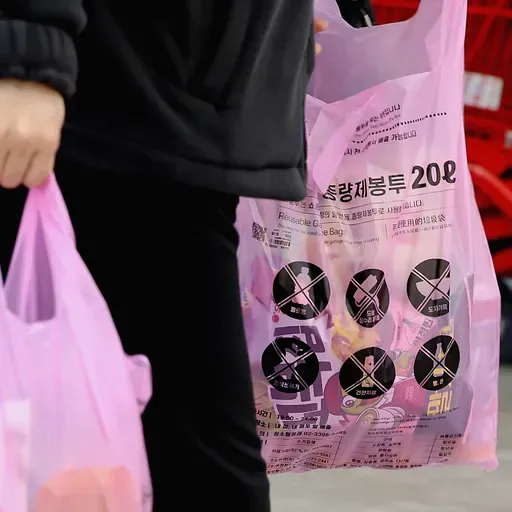
While much of the world reacts to the ongoing conflict between the U.S., Israel and Iran by stockpiling bottled water or canned goods, Koreans have turned their attention to a more domestic essential: plastic garbage bags.
"I visited four different convenience stores this week and kept coming up empty. I finally managed to find one at the fifth location," said Lee Sang-hwa, living in Gwacheon, Gyeonggi. "With a baby at home, we go through a 20-liter bag every two to three days just for diapers. [As I couldn't find my usual size,] I secured a 50-liter bag."
Lee is far from alone.
Hyper-local community platforms like Karrot were flooded with posts from anxious residents sharing inventory sightings at specific retail outlets or offering to share their remaining stash with neighbors in need.
Since the onset of the U.S.-Israeli air strikes on Iran on Feb. 28, the protracted war in the Middle East has sent shockwaves through global energy markets. For Korea, the instability has led to a supply crunch of naphtha — a key feedstock for petrochemical products — with the ripples now reaching the very bottom of the household waste bin.
Public anxiety reached a tipping point following recent news reports that raw material inventories for garbage bags had dwindled to just a one-month supply. The revelation triggered a sense of déjà vu, drawing comparisons to the 2020 Covid-19 mask shortage, which saw citizens braving long lines at pharmacies for rationed supplies.
Adding to the tension was a moment of policy whiplash on Wednesday.
Minister of Climate, Energy and Environment Kim Sung-hwan initially suggested the government might implement "mask-like" rationing to curb hoarding. However, the Blue House overruled the proposal later in the day, saying that direct regulation is not under consideration.
The current trash bag panic in Korea boils down to a fundamental and fragile link in the global supply chain: the petrochemical industry.
The core material for Korea's standard garbage bags is polyethylene (PE), a versatile plastic derived from naphtha. Crude oil is refined to produce naphtha at temperatures between 75 and 150 degrees Celsius (167 and 302 Fahrenheit). This naphtha is then cracked to produce ethylene, which finally undergoes polymerization to become the PE film we recognize as a trash bag.
Because naphtha is a refined product of crude oil, any instability in the Middle East — the world's primary oil tap — vibrates directly through the supply chain.
As international oil prices soar due to the ongoing conflict, the cost of these raw materials has followed suit.
According to the Korea Federation of Plastics Industry Cooperatives, the supply price of PE jumped by approximately 200,000 won ($138) per ton in March alone. The outlook for April is even grimmer, with manufacturers having already received notices of impending hikes ranging from 400,000 to 800,000 won per ton.
When the Korea JoongAng Daily surveyed several convenience stores and retail outlets across western and central Seoul on Wednesday and Thursday, the experience varied wildly by neighborhood.
In Yeongdeungpo District, household-sized bags were still largely available. Moving toward the center of the city in Yongsan District, however, the most common 10-liter and 20-liter bags were almost entirely sold out across multiple locations.
"Some people seem to wait for the exact moment I step out and only the part-time worker is behind the counter to sweep up the bags in a single go," said one convenience store owner in Yongsan, surnamed Seo.
Seo recounted instances where customers accused her of hiding stock for herself, even threatening to report her to the district office.
To protect herself, Seo has posted an official notice from the Yongsan District Office next to the cash register and implemented a self-imposed limit of one bundle, or 10 bags, per customer.
In a nearby store, t...
[EXPLAINER]
While much of the world reacts to the ongoing conflict between the U.S., Israel and Iran by stockpiling bottled water or canned goods, Koreans have turned their attention to a more domestic essential: plastic garbage bags.
"I visited four different convenience stores this week and kept coming up empty. I finally managed to find one at the fifth location," said Lee Sang-hwa, living in Gwacheon, Gyeonggi. "With a baby at home, we go through a 20-liter bag every two to three days just for diapers. [As I couldn't find my usual size,] I secured a 50-liter bag."
Lee is far from alone.
Hyper-local community platforms like Karrot were flooded with posts from anxious residents sharing inventory sightings at specific retail outlets or offering to share their remaining stash with neighbors in need.
Since the onset of the U.S.-Israeli air strikes on Iran on Feb. 28, the protracted war in the Middle East has sent shockwaves through global energy markets. For Korea, the instability has led to a supply crunch of naphtha — a key feedstock for petrochemical products — with the ripples now reaching the very bottom of the household waste bin.
Public anxiety reached a tipping point following recent news reports that raw material inventories for garbage bags had dwindled to just a one-month supply. The revelation triggered a sense of déjà vu, drawing comparisons to the 2020 Covid-19 mask shortage, which saw citizens braving long lines at pharmacies for rationed supplies.
Adding to the tension was a moment of policy whiplash on Wednesday.
Minister of Climate, Energy and Environment Kim Sung-hwan initially suggested the government might implement "mask-like" rationing to curb hoarding. However, the Blue House overruled the proposal later in the day, saying that direct regulation is not under consideration.
The current trash bag panic in Korea boils down to a fundamental and fragile link in the global supply chain: the petrochemical industry.
The core material for Korea's standard garbage bags is polyethylene (PE), a versatile plastic derived from naphtha. Crude oil is refined to produce naphtha at temperatures between 75 and 150 degrees Celsius (167 and 302 Fahrenheit). This naphtha is then cracked to produce ethylene, which finally undergoes polymerization to become the PE film we recognize as a trash bag.
Because naphtha is a refined product of crude oil, any instability in the Middle East — the world's primary oil tap — vibrates directly through the supply chain.
As international oil prices soar due to the ongoing conflict, the cost of these raw materials has followed suit.
According to the Korea Federation of Plastics Industry Cooperatives, the supply price of PE jumped by approximately 200,000 won ($138) per ton in March alone. The outlook for April is even grimmer, with manufacturers having already received notices of impending hikes ranging from 400,000 to 800,000 won per ton.
When the Korea JoongAng Daily surveyed several convenience stores and retail outlets across western and central Seoul on Wednesday and Thursday, the experience varied wildly by neighborhood.
In Yeongdeungpo District, household-sized bags were still largely available. Moving toward the center of the city in Yongsan District, however, the most common 10-liter and 20-liter bags were almost entirely sold out across multiple locations.
"Some people seem to wait for the exact moment I step out and only the part-time worker is behind the counter to sweep up the bags in a single go," said one convenience store owner in Yongsan, surnamed Seo.
Seo recounted instances where customers accused her of hiding stock for herself, even threatening to report her to the district office.
To protect herself, Seo has posted an official notice from the Yongsan District Office next to the cash register and implemented a self-imposed limit of one bundle, or 10 bags, per customer.
In a nearby store, t...