01 June 2026
First follow-up meeting comes eight months after summit agreement
Korea JoongAng Daily - Daily News from Korea
About
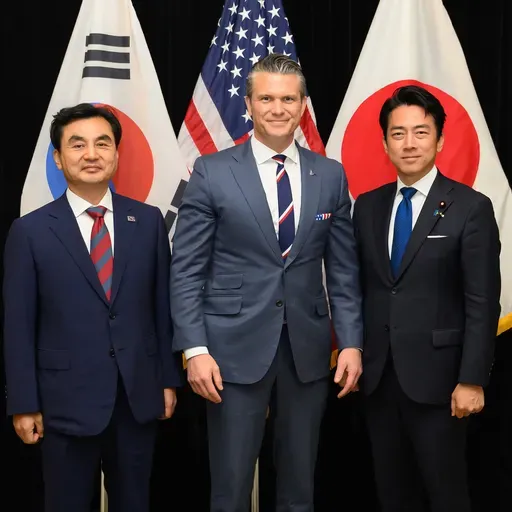
A bilateral meeting aimed at implementing South Korea-U.S. security agreements on nuclear-powered submarines, uranium enrichment and the reprocessing of spent nuclear fuel is set to take place on Tuesday. The gathering comes eight months after the leaders of the two countries reached their agreement in October of last year, highlighting the uneasy state of relations between the allies.
The delay in follow-up consultations reflects several factors, including U.S. dissatisfaction over delays in Korean investment commitments and the fallout from the controversy over Seoul's efforts to investigate Coupang, a U.S.-based company, over a massive data breach, as well as geopolitical disruptions such as the war with Iran. During that period, cooperation among China, Russia and North Korea has continued to deepen. Russian President Vladimir Putin's visit to China in May and speculation about Chinese President Xi Jinping's impending trip to North Korea underscore the growing alignment among the three countries.
Although the process started later than expected for Seoul and Washington, this meeting should serve as an opportunity for the allies to accelerate the implementation of their agreements and ease concerns about growing mistrust within the alliance.
Most importantly, trade issues should not again obstruct the execution of security agreements. Seoul should move ahead with investment commitments in the United States following the enactment of a special law on June 18. In return, Washington should seriously consider a currency swap arrangement to alleviate South Korea's concerns over exchange-rate instability resulting from large-scale investments in the United States.
The government and ruling party should also remember that handling sensitive issues through a domestic political lens rather than according to global standards can damage national interests. The repercussions of the Coupang dispute illustrate that risk.
The security agreement offers a direct path toward significantly strengthening South Korea's independent defense capabilities. At the recent Shangri-La Dialogue, U.S. Defense Secretary Pete Hegseth said expanding allies' share of security responsibilities is one of the core objectives of the U.S. National Defense Strategy.
The United States has already agreed to provide Australia with three operational secondhand nuclear-powered submarines. Faced with difficulties in constructing new vessels quickly enough, Washington chose an alternative solution to reinforce burden-sharing among allies.
Seoul, meanwhile, possesses one of the world's most advanced shipbuilding industries and has the capacity to build such submarines domestically. Whether the goal of acquiring nuclear-powered submarines can ultimately be achieved depends largely on the level of trust between Seoul and Washington.
Continued friction over the Lee Jae Myung administration's push to complete the transfer of wartime operational control (Opcon) during the president's term is also a cause for concern. Differences over timing should not become an obstacle in the current security consultations.
The public's objective is not merely the transfer itself but stronger security. Without U.S. cooperation, Opcon cannot be transferred successfully, nor would such a move strengthen national defense. The greatest risk is allowing disagreements and deadlines to generate further mistrust between the allies, making cooperation more difficult when closer coordination is needed most.
This article was originally written in Korean and translated by a bilingual reporter with the help of generative AI tools. It was then edited by a native English-speaking editor. All AI-assisted translations are reviewed and refined by our newsroom.