09 May 2026
Fear of rising prices fuels 'gas pilgrims' to seek cheapest stations, fill up more
Korea JoongAng Daily - Daily News from Korea
About
This article is by Oh Hyo-jeong and read by an artificial voice.
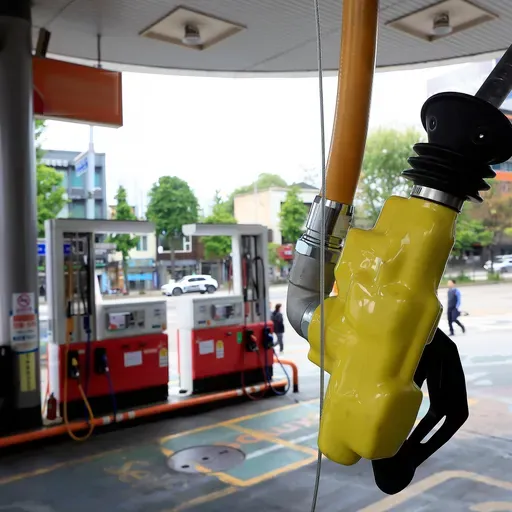
In an era of high fuel prices, even a small discount goes a long way — enough to keep some gas stations overflowing with cars.
On May 7, a typical Thursday afternoon, cars streamed in and out of a self-service gas station in Sindaebang-dong in southern Seoul — the spot known to be the cheapest in the city.
The gasoline price per liter was 1,969 won ($5.14 per gallon). Its price was about 50 won lower than that at nearby stations.
Even during a typically slower time of day, more than half the station's 12 pumps were in constant use. Those who balked at prices from nearby stations turned around and headed to the spot.
"I used to fill up once every three days, but with prices rising almost daily, I now come every two days," said a driver surnamed Kim. "These days, I keep an eye out for cheaper stations when I'm on the road and go out of my way to find them."
At another self-service station in Singil-dong of Yeongdeungpo District in western Seoul, cars line up during the weekday evening rush. On the same day, gasoline at the station was priced at 1,997 won per liter, below the district's average of 2,049 won.
More customers have been searching for cheaper options and end up here.
"Many customers are topping off their tanks in preparation for further increases," said the manager of the Singil gas station.
"It's hard to believe those numbers anymore," said a woman who had stopped by the station, shaking her head as she pointed to the price board.
Consumers' fueling habits have changed as fuel prices have climbed since the outbreak of the Iran war in late February.
More drivers are filling up their tanks at once, believing that today's price is the lowest they will see. So-called fuel pilgrimage, in which drivers travel farther to find cheaper gas, is also becoming more common.
"Last week, I drove all the way to Gyeonggi's Goyang to find gas under 2,000 won per liter," said a person surnamed Choi, who lives in western Seoul's Gangseo District. "I filled up the tank to the full and paid about 100,000 won."
This pattern is also evident in consumer credit card data.
The ratio of customers filling their tanks to capacity rose 25.1 percent on year, according to BC Card data on gas station transactions nationwide in March. Given that total gas station transactions rose 8.7 percent over the same period, the increase in full-tank purchases appears to be notable.
As drivers increasingly fully fill their tanks, the average transaction size has grown.
Transactions in the 100,000 to 150,000 won range jumped 84 percent on year, while those between 70,000 and 100,000 won rose 28.4 percent. In contrast, transactions below 30,000 won and those between 30,000 and 50,000 won fell by 31.5 percent and 25.7 percent, respectively.
As expectations of further price hikes take hold, drivers are increasingly filling up more generously each time they stop for fuel.
In April, the nationwide average price of regular gasoline reached 1,986 won per liter, up 150 won from 1,836 won in March. In May, prices have already climbed past 2,010 won per liter.
That marks a sharp contrast with the same period last year, when prices hovered in the mid-1,600 won range from March through May.
The rise of fuel pilgrimage is also evident in the data.
Transactions made outside customers' residential areas increased 34 percent over a year, while transactions within residential areas rose by just 21 percent.
For purchases in the 100,000 to 150,000 won range, the transaction figure of "gas pilgrims" more than doubled.
The data is based on an analysis of gas stations nationwide that recorded at least 1,000 monthly transactions across 226 cities, counties and districts.
Some of the sharpest increases in full-tank purchases by nonresidents were seen in Gyeonggi's Hanam, which logged an increase of 86.5 percent over a year. The runner-up region was Gyeonggi's Gwacheon, followed by Seoul's Dobong District.
Drivers fl...
In an era of high fuel prices, even a small discount goes a long way — enough to keep some gas stations overflowing with cars.
On May 7, a typical Thursday afternoon, cars streamed in and out of a self-service gas station in Sindaebang-dong in southern Seoul — the spot known to be the cheapest in the city.
The gasoline price per liter was 1,969 won ($5.14 per gallon). Its price was about 50 won lower than that at nearby stations.
Even during a typically slower time of day, more than half the station's 12 pumps were in constant use. Those who balked at prices from nearby stations turned around and headed to the spot.
"I used to fill up once every three days, but with prices rising almost daily, I now come every two days," said a driver surnamed Kim. "These days, I keep an eye out for cheaper stations when I'm on the road and go out of my way to find them."
At another self-service station in Singil-dong of Yeongdeungpo District in western Seoul, cars line up during the weekday evening rush. On the same day, gasoline at the station was priced at 1,997 won per liter, below the district's average of 2,049 won.
More customers have been searching for cheaper options and end up here.
"Many customers are topping off their tanks in preparation for further increases," said the manager of the Singil gas station.
"It's hard to believe those numbers anymore," said a woman who had stopped by the station, shaking her head as she pointed to the price board.
Consumers' fueling habits have changed as fuel prices have climbed since the outbreak of the Iran war in late February.
More drivers are filling up their tanks at once, believing that today's price is the lowest they will see. So-called fuel pilgrimage, in which drivers travel farther to find cheaper gas, is also becoming more common.
"Last week, I drove all the way to Gyeonggi's Goyang to find gas under 2,000 won per liter," said a person surnamed Choi, who lives in western Seoul's Gangseo District. "I filled up the tank to the full and paid about 100,000 won."
This pattern is also evident in consumer credit card data.
The ratio of customers filling their tanks to capacity rose 25.1 percent on year, according to BC Card data on gas station transactions nationwide in March. Given that total gas station transactions rose 8.7 percent over the same period, the increase in full-tank purchases appears to be notable.
As drivers increasingly fully fill their tanks, the average transaction size has grown.
Transactions in the 100,000 to 150,000 won range jumped 84 percent on year, while those between 70,000 and 100,000 won rose 28.4 percent. In contrast, transactions below 30,000 won and those between 30,000 and 50,000 won fell by 31.5 percent and 25.7 percent, respectively.
As expectations of further price hikes take hold, drivers are increasingly filling up more generously each time they stop for fuel.
In April, the nationwide average price of regular gasoline reached 1,986 won per liter, up 150 won from 1,836 won in March. In May, prices have already climbed past 2,010 won per liter.
That marks a sharp contrast with the same period last year, when prices hovered in the mid-1,600 won range from March through May.
The rise of fuel pilgrimage is also evident in the data.
Transactions made outside customers' residential areas increased 34 percent over a year, while transactions within residential areas rose by just 21 percent.
For purchases in the 100,000 to 150,000 won range, the transaction figure of "gas pilgrims" more than doubled.
The data is based on an analysis of gas stations nationwide that recorded at least 1,000 monthly transactions across 226 cities, counties and districts.
Some of the sharpest increases in full-tank purchases by nonresidents were seen in Gyeonggi's Hanam, which logged an increase of 86.5 percent over a year. The runner-up region was Gyeonggi's Gwacheon, followed by Seoul's Dobong District.
Drivers fl...