17 August 2026
As dog meat ban nears in Korea, canines still require rescue Related Article Dog meat soup alley quiet during final boknal season before government ban takes effect Let them eat goat: Gov't to boost local production with dog meat ban Villagers seek apology over false dog slaughter claims The lucky 3 percent The law, and its ticking clock What the closure numbers hide The farmers' catch-22 Bridging gaps From panic selling to $1,000 per dog Blind spots in enforcement Shift to black goat
Korea JoongAng Daily - Daily News from Korea
About
Government closure data show that while most dog farms have shut down, an estimated 97 percent of their dogs were sold or distributed rather than rescued.
GANGJIN COUNTY, South Jeolla —Inside a cramped, rust-stained farm in rural Gangjin County in South Jeolla, the air was thick with the mid-August heat and filled with the odor of dog feces and urine. It is one of the few dog farms still operating in Korea as the country counts down to a February 2027 ban on breeding, slaughtering and selling dogs for meat.
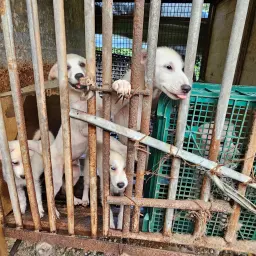
Dozens of dogs were kept in cages lined up like prison cells at the farm. Each cage was barely large enough for one dog to move around. And what space they did have was devoid of comfort, composed of ruddy metal bars, soiled wooden flooring and the occasional plastic crate. Some dogs stayed quiet as people approached, while others barked constantly, wary of human presence.
On Thursday, a Korea JoongAng Daily reporter joined a team from Humane World for Animals Korea — a nonprofit animal protection organization that works to end animal cruelty and improve animal welfare — as they moved through the farm, checking on the dogs' condition a day before they were scheduled to receive vaccinations. The vaccinations are the mandatory first step before the animals can clear Korea's 30-day quarantine and, by mid-September, be flown to the United States for adoption.
That makes them lucky.
Friday was malbok, the last of this year's boknal — the traditional calendar's three days that marked the beginning, apex and end of the summer's peak heat season. Many diners used to mark those days with a hot bowl of bosintang (dog meat soup), and this was likely the last malbok before the practice becomes fully illegal.
Interviews with animal welfare workers, farmers and officials, along with a review of government data, show that the law meant to end dog meat has not settled the question it was written to answer: What happens to the dogs?
The dogs' cages at the farm in Gangjin County were in poor condition, with rust covering much of the metal. Even the dogs' water bowls were covered in rust. Some dogs stayed together in one tiny cage, leaving them barely any space to move around.
Having spent months in such unsanitary surroundings, many of the dogs also appeared to suffer from skin conditions.
One white dog had visible red sores on his legs.
"You can see how his skin has become like this, right? All of this is from skin disease," Lee Hae-won, a leader from the media and communications department from Humane World for Animals said.
The white dog was among dozens living in poor conditions, waiting for a chance at adoption following the government's move to end the dog meat trade.
Many dogs from these kinds of farms are underweight — not simply because of neglect, but because buyers often reject animals with visible fat.
"[Dogs] have to be sent out as lean as possible for the slaughterhouses to accept them," said Lee Sang-kyung, the group's campaign team lead, as buyers view fat as detrimental to meat quality.
Many rescued dogs also show signs of chronic stress, skin disease and, in some cases, injuries from fighting in overcrowded cages.
Lee said 90 to 95 percent of dogs find permanent homes overseas, while the rest stay in foster care rather than being euthanized.
Domestic adoption remains rare — fewer than a dozen cases total, mostly puppies too young to fly — which Lee attributed largely to Korean law that classifies large mixed-breed dogs as "dangerous," restricting their adoption, along with lingering stigma toward farm-raised dogs.
Korea's Special Act on the Prohibition of Dog Meat took effect Aug. 7, 2024, seven months after the National Assembly passed it unanimously.
It carries a three-year grace period, meaning the full ban — covering the breeding, slaughtering, distribution and sale of dogs for human consumption — does not take hold until Feb. 7, 2027. Under the law, 5,625 businesses — farms, slaughterhouses, distributors and res...
GANGJIN COUNTY, South Jeolla —Inside a cramped, rust-stained farm in rural Gangjin County in South Jeolla, the air was thick with the mid-August heat and filled with the odor of dog feces and urine. It is one of the few dog farms still operating in Korea as the country counts down to a February 2027 ban on breeding, slaughtering and selling dogs for meat.
Dozens of dogs were kept in cages lined up like prison cells at the farm. Each cage was barely large enough for one dog to move around. And what space they did have was devoid of comfort, composed of ruddy metal bars, soiled wooden flooring and the occasional plastic crate. Some dogs stayed quiet as people approached, while others barked constantly, wary of human presence.
On Thursday, a Korea JoongAng Daily reporter joined a team from Humane World for Animals Korea — a nonprofit animal protection organization that works to end animal cruelty and improve animal welfare — as they moved through the farm, checking on the dogs' condition a day before they were scheduled to receive vaccinations. The vaccinations are the mandatory first step before the animals can clear Korea's 30-day quarantine and, by mid-September, be flown to the United States for adoption.
That makes them lucky.
Friday was malbok, the last of this year's boknal — the traditional calendar's three days that marked the beginning, apex and end of the summer's peak heat season. Many diners used to mark those days with a hot bowl of bosintang (dog meat soup), and this was likely the last malbok before the practice becomes fully illegal.
Interviews with animal welfare workers, farmers and officials, along with a review of government data, show that the law meant to end dog meat has not settled the question it was written to answer: What happens to the dogs?
The dogs' cages at the farm in Gangjin County were in poor condition, with rust covering much of the metal. Even the dogs' water bowls were covered in rust. Some dogs stayed together in one tiny cage, leaving them barely any space to move around.
Having spent months in such unsanitary surroundings, many of the dogs also appeared to suffer from skin conditions.
One white dog had visible red sores on his legs.
"You can see how his skin has become like this, right? All of this is from skin disease," Lee Hae-won, a leader from the media and communications department from Humane World for Animals said.
The white dog was among dozens living in poor conditions, waiting for a chance at adoption following the government's move to end the dog meat trade.
Many dogs from these kinds of farms are underweight — not simply because of neglect, but because buyers often reject animals with visible fat.
"[Dogs] have to be sent out as lean as possible for the slaughterhouses to accept them," said Lee Sang-kyung, the group's campaign team lead, as buyers view fat as detrimental to meat quality.
Many rescued dogs also show signs of chronic stress, skin disease and, in some cases, injuries from fighting in overcrowded cages.
Lee said 90 to 95 percent of dogs find permanent homes overseas, while the rest stay in foster care rather than being euthanized.
Domestic adoption remains rare — fewer than a dozen cases total, mostly puppies too young to fly — which Lee attributed largely to Korean law that classifies large mixed-breed dogs as "dangerous," restricting their adoption, along with lingering stigma toward farm-raised dogs.
Korea's Special Act on the Prohibition of Dog Meat took effect Aug. 7, 2024, seven months after the National Assembly passed it unanimously.
It carries a three-year grace period, meaning the full ban — covering the breeding, slaughtering, distribution and sale of dogs for human consumption — does not take hold until Feb. 7, 2027. Under the law, 5,625 businesses — farms, slaughterhouses, distributors and res...