01 September 2026
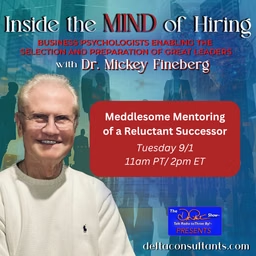
Meddlesome Mentoring of a Reluctant Successor
Inside the Mind of Hiring with Dr. Mickey Fineberg: Business Psychologists Enabling the Selection and Preparation of Great Leaders
About
I’ve had numerous experiences in my career as a business psychologist with multi-generational companies. Not too long ago, I encountered Dan, a Gen Z, third generation family member who was contributing in a line-leadership job within the fulfillment operation for a regional bricks and mortar retailer who also has a significant on-line business. He currently manages 30 people. He is considered a potential successor to his father, the second-generation CEO, in 10 to 15 years. Prior to his present role, he worked in department and store management, and as a buyer for 6 years. Before joining the family business, he was employed by a major on-line retailer out of college for 4 years. His last job was distribution center manager supervising about 100 people.
Dan is perceived as a nice guy and bright manager, and as developing a solid,
well-rounded knowledge of the business. However, his performance is considered adequate at best, but not impressive, and he appears to have gotten bored relatively quickly in his various placements. He has been quick to identify problems, but unwilling to suggest and implement solutions.
He has put in the essential time, but not much more. His Dad, the CEO, is a successful entrepreneur in the way he has significantly grown the company. He is considered a good leader who effectively blends a results and humanistic focus. He regularly carves out time each month to mentor Dan. He views his son as a bit of an enigma, and is not sure Dan truly wants to be in the business.
He has asked Dan often about what he wants to do, but doesn’t get a definitive answer. As an heir, with another sibling in the financial department, Dan has participated in an equity sharing program beyond his salary and is viewed as wealthy enough not to work. Apparently, that arrangement cannot changed if he continues to work at the company.
Dad engaged me to help him gain insight and a developmental strategy.
Dan is perceived as a nice guy and bright manager, and as developing a solid,
well-rounded knowledge of the business. However, his performance is considered adequate at best, but not impressive, and he appears to have gotten bored relatively quickly in his various placements. He has been quick to identify problems, but unwilling to suggest and implement solutions.
He has put in the essential time, but not much more. His Dad, the CEO, is a successful entrepreneur in the way he has significantly grown the company. He is considered a good leader who effectively blends a results and humanistic focus. He regularly carves out time each month to mentor Dan. He views his son as a bit of an enigma, and is not sure Dan truly wants to be in the business.
He has asked Dan often about what he wants to do, but doesn’t get a definitive answer. As an heir, with another sibling in the financial department, Dan has participated in an equity sharing program beyond his salary and is viewed as wealthy enough not to work. Apparently, that arrangement cannot changed if he continues to work at the company.
Dad engaged me to help him gain insight and a developmental strategy.