About
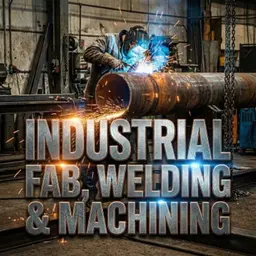
Industrial extraction, heavy aggregate, and petrochemical refining systems operate under intense physical stress. On this double-feature episode of Industrial Fab, Welding & Machining, the engineering team at LTJ Industrial Services addresses two vital manufacturing topics: the strict maintenance and regulatory codes protecting high-pressure vessels, and the complete design-to-installation lifecycle of custom industrial machinery. We break down non-destructive testing (NDT) protocols, analyze specialized multi-axis CNC fabrication, and detail how predictive telemetry maximizes the lifespan of heavy field assets.
Chapter Sections
Relying on low-capacity, unvetted equipment or skipping vital code inspections in high-pressure environments causes rapid part failure and expensive plant shutdowns. Operating out of our heavy manufacturing command center at 22505 US-6, Rifle, Colorado, LTJ Industrial Services provides the heavy design capabilities, certified machining, and ASME-code welding needed to build and repair critical machinery in-house.Our modern facility manages your entire project lifecycle—from digital CAD modeling and non-destructive pressure container testing to heavy multi-axis precision turning and protective alloy coatings. Additionally, our specialized mobile field fleet brings line-boring, on-site machining, and high-pressure welding directly to your remote site to fix issues fast.Stop letting equipment limits throttle your daily production goals. Call our regional estimating division today at (970) 625-9353 or visit LTJIndustrial.com to upload your design specs and lock in an accurate, data-backed project estimate.
Click here to read more
Learn more about LTJ Industrial Services at www.ltjindustrial.com/
Chapter Sections
- 00:00 – The Pressure Vessel Back-Bone: Why tiny micro-defects in high-pressure containment tanks risk catastrophic plant failures.02:15 – Silent Structural Threats: Identifying pitting corrosion, stress cracking, high-temperature creep deformation, and hydrogen embrittlement.04:30 – Advanced Non-Destructive Testing: Deploying phased array ultrasonics and digital radiography to inspect heavy subsurface weld seams.06:45 – Compliance and Material Repairs: Navigating the strict ASME Boiler and Pressure Vessel Code alongside specialized post-weld heat treatment (PWHT).08:30 – Sourcing Non-Existent Machinery: Why harsh fields demand custom-engineered, one-of-a-kind industrial machinery.10:45 – High-Precision Toolpath Execution: Utilizing multi-axis CNC machines, EDM, and abrasive waterjet profiling to shape hardened alloy parts.12:30 – Industry 4.0 Telemetry & Mobile Support: Integrating smart sensors for automated maintenance while bringing shop capabilities to remote fields.14:00 – Closing: Eliminating operational downtime and preserving capital with LTJ Industrial Services.
- The Physics of Ultrasonic Crack Subsurface Profiling: Visualizing inner metal flaws through a thick pressure vessel wall requires specialized engineering tools. Advanced phased-array ultrasonic testing sends high-frequency sound waves straight through welded steel joints, capturing bouncing echo reflections to reveal hidden cracks, micro-voids, or wall thinning without damaging the container.The High-Stakes Complexity of ASME Code Welds: Patching an active industrial pressure tank is drastically different from basic structural welding. To stay fully compliant with the ASME Boiler and Pressure Vessel Code, fabricators must carefully prepare surfaces, follow precise thermal pre-heating steps, use matching filler metals, and carry out post-weld heat treatment (PWHT) to relieve internal molecular stress and prevent dangerous micro-cracking.Parametric CAD Simulations Save Development Capital: Guessing when building heavy custom equipment guarantees mechanical failure. Modern parametric modeling software serves as a digital test arena, simulating real-world twisting, crushing, and high-pressure hydraulic stresses before tools cut into physical alloy plates.Smart Tech Shakes Up Sourcing Logistics: The line separating raw metal fabrication from digital telemetry has completely vanished. Modern industrial systems utilize embedded thermal and vibration sensors to beam real-time health data back to operators, catching mechanical wear early to optimize lifecycle costs and prevent sudden operational stoppages.
- High-Pressure Containment & ASME Integrity
- Core Challenges: Managing stress corrosion, internal erosion, and micro-weld tracking under severe operating conditions.Diagnostic & Execution Methods: Phased array ultrasonics, digital X-rays, risk-based inspection routines, and PWHT thermal relief.Asset Protection Result: Complete safety compliance, extended tank operational life, and total protection against catastrophic failures.
- Core Challenges: Building unique machinery from scratch to withstand highly abrasive aggregate and corrosive oil fields.Diagnostic & Execution Methods: Digital parametric CAD modeling, multi-axis CNC cutting, EDM, and hydraulic line optimization.Asset Protection Result: Maximum equipment efficiency, optimized small-batch production, and smart predictive maintenance warnings.
Relying on low-capacity, unvetted equipment or skipping vital code inspections in high-pressure environments causes rapid part failure and expensive plant shutdowns. Operating out of our heavy manufacturing command center at 22505 US-6, Rifle, Colorado, LTJ Industrial Services provides the heavy design capabilities, certified machining, and ASME-code welding needed to build and repair critical machinery in-house.Our modern facility manages your entire project lifecycle—from digital CAD modeling and non-destructive pressure container testing to heavy multi-axis precision turning and protective alloy coatings. Additionally, our specialized mobile field fleet brings line-boring, on-site machining, and high-pressure welding directly to your remote site to fix issues fast.Stop letting equipment limits throttle your daily production goals. Call our regional estimating division today at (970) 625-9353 or visit LTJIndustrial.com to upload your design specs and lock in an accurate, data-backed project estimate.
Click here to read more
Learn more about LTJ Industrial Services at www.ltjindustrial.com/