Today we circle around to neuroaesthetics, a relatively new discipline in neuroscience that is developing new understanding about how humans gravitate overwhelmingly to facial beauty, but also have threat responses to and biases against those with facial anomalies or scars.
Anjan Chatterjee is Professor of Neurology, Psychology and Architecture at the University of Pennsylvania. Questions that his laboratory 's work is frontloading include how people experience architectural spaces, and which components of architecture seem to align with our neural processing.
As a line of research that is new, neuroaesthetics fronts controversies about science and a reluctance to rely on subjective experience. It also is pushing the frontiers of inquiry forward by questioning how the immobility of lying inside fMRI machines does not in any way mimic the sensorium at work and life in the world.
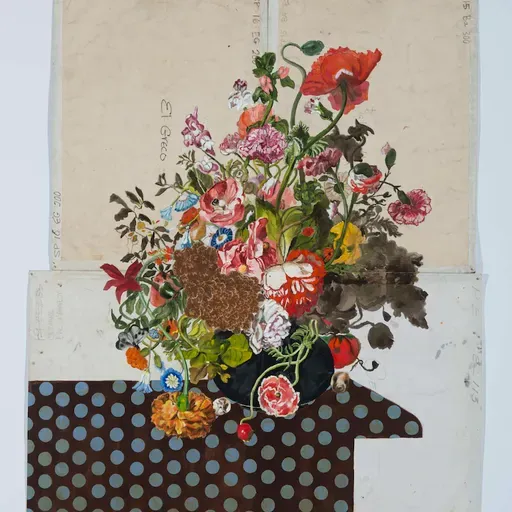
Katherine Sherwood is a visual artist and professor emerita at the University of California at Berkeley. After suffering a massive cerebral hemorrhage more than two decades ago, Sherwood had to re-learn a new way of painting, and in so doing has explored the landscape of her own brain imaging and the history of brain depictions in work that flaunts pattern and proposes the beauty of disability.