About
Policy responds to privacy concerns
Putnam Sheriff Brian Hess on Wednesday (Nov. 18) unveiled an updated list of privacy safeguards as his department prepares to launch a new drone program for police, fire and medical emergencies.
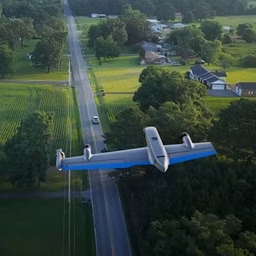
The Sheriff's Office plans in April to join the Dutchess County Sheriff's Office and more than 90 other agencies in New York with Drone as First Responder programs. Unlike portable drones that deputies launch from their cars and guide with a handheld controller, the first-responder drones are docked at remote locations and guided by a pilot at the Sheriff's Office in Carmel.
The drones can provide a faster response to 911 calls for incidents such as bomb threats, missing people and major fires and transmit video to emergency personnel en route. Hess told the Legislature's Protective Services Committee on Wednesday that he has yet to settle on a model but has been eyeing a fixed-wing version from Axon that has a 30-mile range and a top speed of 100 mph.
Hess said he expects to spend $1.3 million over five years, but the outlay could increase if his office receives federal grants. "I'm hoping we'll have some successes because I think we'll prove to the public what a great service this is," he said. "And then, for next year's budget, I might come to you and say I'd like to put an additional dock in Patterson; I'd like to put an additional dock in Philipstown."
Axon, which built its business on police body cameras, distributes drones made by Skydio. Dutchess County is buying drones made by the company, which helped Putnam develop its draft policy by providing a list of best practices adopted by other police agencies, said Hess.
Putnam's policy provides that its drones will not be used for routine patrols or surveillance, but for Priority 1 and Priority 2 calls, when requested by responding deputies or 911 dispatchers or, with a supervisor's approval, for operations such as hostage situations, missing people and vehicle pursuits.
A public dashboard will chronicle the date, time, path and reason for each flight, along with where the drones are docked and the area they are authorized by the Federal Aviation Administration to cover, according to the policy.
The information will be hidden if it could identify the location of victims of domestic violence or sexual abuse; people experiencing mental-health or medical emergencies; juveniles; an active investigation or police operation; or endanger an officer or members of the public.
"If it was a narcotics investigation, you might withhold that information until you make the arrest, and I don't see why you wouldn't release that later," said Hess.
While airborne, the cameras would not be aimed at or zoomed in on people, private property or vehicles unconnected to the call, and unnecessary flights over hospitals, schools and gatherings would be prohibited, according to the policy.
Other police agencies can receive video with approval of the Sheriff's Office Bureau of Criminal Investigation, but Putnam would not share data with Immigration and Customs Enforcement without a judicial warrant. Recordings would be purged after 180 days, unless required as evidence.
Concerns about ICE prompted Nancy Montgomery, whose legislative district includes Philipstown and part of Putnam Valley, to ask Hess to address the Drone as First Responder program in a public meeting. She said she was satisfied the draft policy had "meaningful safeguards," especially concerning ICE.
"I've seen how it can be used, and seen how it could potentially save lives, find people and prevent crime," she said. "But I also, at the same time, understand the public concern, and that's a tough thing for me to balance."
As of February, 1,005 emergency-management agencies, including police and fire departments, had received waivers from the Federal Aviation Administration for Drone as First Responder programs, according to the Electronic Frontier Foundation, which received a list from the agency through ...