About
Composer blends theatrical and classical
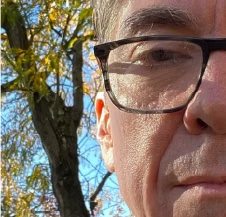
If a distinguished-looking gentleman in the corner of a Beacon coffee shop is poring over sheet music, it's probably Timothy Brown, who bounces around geographically and musically.
The composer will showcase several selections from his classical repertoire at the Howland Cultural Center on Sunday (Nov. 22). "I'm known more for my choral work and my theater side [he is a regular at the Broadway in Beacon open mic], but this is something that people are less familiar with."
Brown is unabashed about calling the concert a vanity presentation. "I rented a hall and invited some friends," he says. "No one else is going to do it, so I had to make it happen."
In the early 1990s, he scored a hit, writing music for Curious George, which toured nationally for many years. He is revisiting and revising the score with new orchestrations.
But his bread and butter is being a copyist, who transcribes sound files — ranging from piano parts, guitar and vocal demos to lush orchestrations created on keyboards that mimic hundreds of instruments — into musical notation.
One Broadway composer "could still fill out a score by hand, but he didn't want to do it for the umpteenth time, so I did the laborious part," Brown says. Sometimes, he delivers what is known as a lead sheet that maps lyrics and chords. "Then there are the songwriters who don't read or notate music on paper and need to give parts to accompanists."
Brown writes in many styles, including a choral work that called for voices to sound like flowing water. Lyrics are not his thing, but he will be presenting two piano and voice compositions set to poetry written by his father, Fred Brown.
"Life Lessons," what he calls a "crossover piece," began as a musical theater song. Carl Gutowski, who asked Brown to transcribe it for the flute, will perform with pianist Alexandra Beliakovich and cellist Raman Ramakrishnan.
"People say that my theater writing is classical-informed and then, on the flip side, claim that my classical is too influenced by theater; from where I sit, it's unavoidable that they bleed into each other."
It's also arguable whether the three solo piano parts of Incidental Dance Suite — "Tango," "Waltz" and "Swing" — fall into the classical realm. Brown has fun with each genre and, like other pieces on the program, ends them with harmonic resolutions.
The concert's showpiece, "Vesalius's Body," an ode to the father of modern anatomy, began as a commission from a dance ensemble that never got produced, though Brown completed the minimalist score. "Nothing is static for too long, and segments are designed to be repeated if the choreographer wanted to extend a movement," he says.
The piano (Yalin Chi) takes control in the prelude and first main movement, getting a workout with creepy, yet playful descending crescendos. A violin (Amy Schroeder), viola (Eva Gerard) and cello (Felix Umansky) add tension. Then, the action passes to slashing, cutting strings (as if sawing through bones), adding contrast and letting the pianist recover.
Only music nerds would notice that the third main movement's 1 and 1/8 time signature adds a hitch to the beat as the piano navigates the upper register with near-discordant chords. The piece balances melody with an edgy, contemporary classical approach.
"I never cross over into atonal sounds," Brown says. "People need something to latch on to."
The Howland Cultural Center is located at 477 Main St. in Beacon. Tickets for the performance, which begins at 4 p.m. and will be followed by a reception, are $35 or $65 (or pay what you wish) at dub.sh/timothy-brown-HCC.