22 March 2026
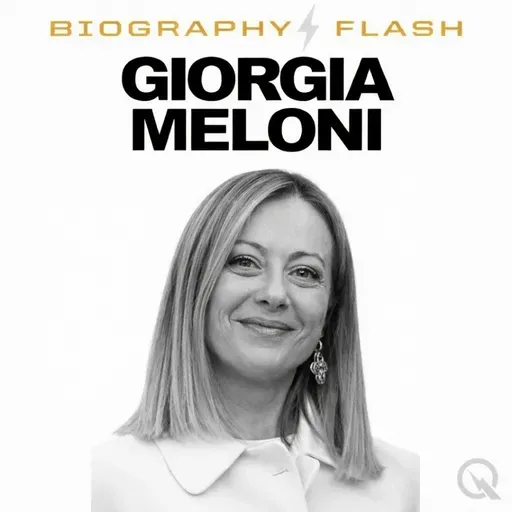
Biography Flash - Giorgia Meloni Navigates Referendums Nuclear Energy and Europes Biggest Crises
Giorgia Meloni - Biography Flash
About
🛒 Distil Union - Problem-Solving Men's Accessories
💰 Get 20% OFF | Promo Code: POINT
https://distilunion.com/discount/POINT
# Giorgia Meloni Biography Flash Podcast Script
Giorgia Meloni has been in the spotlight this past week with several major developments that could reshape her political future. The Italian Prime Minister just wrapped up a significant European Council summit in Brussels on March 19th and 20th, where she addressed critical issues including the escalating Middle East tensions and Europe's energy crisis. During her press briefing, Meloni emphasized the need for de-escalation and discussed concerns about attacks on energy infrastructure, which she views as a major security threat for the continent.
Back home, Meloni's government has taken swift action on the cost of living crisis. According to her recent interview on TG1, her administration unveiled a decree targeting fuel prices, cutting 25 cents per liter while introducing tax credits for transport workers. She's been defending this measure against opposition claims that it's merely electoral maneuvering, pointing out that the opposition itself had requested the mobile excise tax mechanism now included in the decree.
On the nuclear front, according to reporting from the Japan Times, Meloni's government is quietly exploring Italy's return to nuclear energy after nearly 40 years. Italian officials have been consulting with Canada, France, South Korea, and the United States about restarting atomic power production, signaling a major pivot in her economic strategy to combat rising energy costs.
Perhaps most significantly, Italy is heading toward a high-stakes constitutional referendum on March 22nd and 23rd regarding judicial reforms. This vote represents a major political test for Meloni's government, with thousands protesting in Rome against both the judicial changes and ongoing Middle East conflicts. Meloni has personally campaigned for the yes vote, arguing that the reforms are essential to tackle chronic court delays and restore public confidence in the legal system. She's stated unequivocally that she will not resign if the referendum fails, insisting her government maintains solid parliamentary support.
In a somewhat somber note from December, Meloni warned her staff that 2026 would be much worse than 2025, citing continuous wars and Italy's high public debt of around 137 percent of GDP. Yet she continues positioning herself as a pragmatic bridge between Washington and Brussels while navigating these turbulent international and domestic waters.
Thanks for listening. This has been a Quiet Please production.
This content was created in partnership and with the help of Artificial Intelligence AI.
💰 Get 20% OFF | Promo Code: POINT
https://distilunion.com/discount/POINT
# Giorgia Meloni Biography Flash Podcast Script
Giorgia Meloni has been in the spotlight this past week with several major developments that could reshape her political future. The Italian Prime Minister just wrapped up a significant European Council summit in Brussels on March 19th and 20th, where she addressed critical issues including the escalating Middle East tensions and Europe's energy crisis. During her press briefing, Meloni emphasized the need for de-escalation and discussed concerns about attacks on energy infrastructure, which she views as a major security threat for the continent.
Back home, Meloni's government has taken swift action on the cost of living crisis. According to her recent interview on TG1, her administration unveiled a decree targeting fuel prices, cutting 25 cents per liter while introducing tax credits for transport workers. She's been defending this measure against opposition claims that it's merely electoral maneuvering, pointing out that the opposition itself had requested the mobile excise tax mechanism now included in the decree.
On the nuclear front, according to reporting from the Japan Times, Meloni's government is quietly exploring Italy's return to nuclear energy after nearly 40 years. Italian officials have been consulting with Canada, France, South Korea, and the United States about restarting atomic power production, signaling a major pivot in her economic strategy to combat rising energy costs.
Perhaps most significantly, Italy is heading toward a high-stakes constitutional referendum on March 22nd and 23rd regarding judicial reforms. This vote represents a major political test for Meloni's government, with thousands protesting in Rome against both the judicial changes and ongoing Middle East conflicts. Meloni has personally campaigned for the yes vote, arguing that the reforms are essential to tackle chronic court delays and restore public confidence in the legal system. She's stated unequivocally that she will not resign if the referendum fails, insisting her government maintains solid parliamentary support.
In a somewhat somber note from December, Meloni warned her staff that 2026 would be much worse than 2025, citing continuous wars and Italy's high public debt of around 137 percent of GDP. Yet she continues positioning herself as a pragmatic bridge between Washington and Brussels while navigating these turbulent international and domestic waters.
Thanks for listening. This has been a Quiet Please production.
This content was created in partnership and with the help of Artificial Intelligence AI.