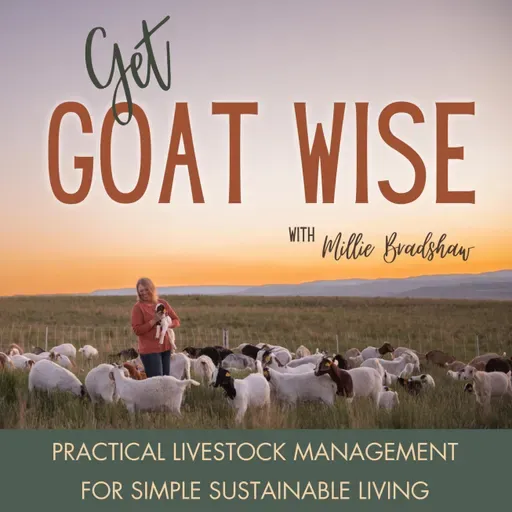
96 | Commercial Meat Goats, Pet Goats and the Management Mistakes That Cause Burnout
Get Goat Wise | Meat Goats, Dairy Goats, Self-Sufficiency, Sustainable Farm, Homesteading, Off-Grid, Livestock
Raising goats successfully isn’t about having more animals or fewer animals — it’s about having management that matches your goal. Too many people jump into goats with good intentions, only to feel overwhelmed, frustrated, and eventually sell out because their goats, systems, and goals were never aligned.
In this episode, I break down a pattern I see over and over: people either start with too many goats before they’ve learned how goats behave as a herd, or they start with just a couple of goats that function more like pets and never teach real herd management. Both extremes create problems — just in different ways.
We talk honestly about why goats magnify mistakes, how scale multiplies management challenges, and why learning at the right herd size matters. I also share how and why we intentionally scaled our own herd back last year to protect animal health, forage, and infrastructure — not as a failure, but as good management under real-world constraints.
We’ll dig into the difference between pet goats and commercial goats, including a candid discussion about bottle babies, learned behavior, and why management sometimes has to change to keep animals safe — even when that management isn’t ideal. Throughout the episode, everything comes back to one central truth: management depends on your goal.
If goats have ever felt harder than you expected, this episode will help you step back, clarify what you’re actually trying to build, and make decisions that lead to healthier goats and a more sustainable operation.
In This Episode, I Cover:
Why people often quit goats within the first year or two
How scale magnifies mistakes in fencing, grazing, nutrition, and parasite management
Why starting with just two or three goats teaches pet management, not herd management
The risks of scaling too fast before understanding goat behavior and systems
Our experience selling goats to let infrastructure and management catch up
The difference between pet goats and commercial goats — and why neither is “wrong”
How bottle baby behavior affects herd flow, boundaries, and daily management
Why goat management should work with goat nature, not against it
What “enough goats to be a herd, but not a crisis” actually looks like
Practical starting numbers for building a commercial meat goat herd based on experience
Key Takeaways:
Goat management must match your end goal to be sustainable
Too few goats can teach the wrong lessons for commercial herd management
Too many goats magnify mistakes and accelerate burnout
Bottle babies are not bad goats, but they require different management considerations
Healthy goat systems guide behavior while protecting animal welfare
Clear goals lead to calmer goats and better long-term decisions
Related Episodes:
71 | Livestock Management Decisions and Why We Are Selling Part of Our Goat Herd
68 | New to Raising Livestock? Risk Management Strategies When the Learning Curve is Steep
24 | What Is That Smell? The Bucks are In Rut! Should You Buy a Buck to Breed Your Does or Is Leasing a Better Option?
03 | Ready for Goats! 4 Steps to Help You Confidently Shop for and Purchase Your First Goats
All the Best,
Millie
Resources & Links:
Leave a review on Apple Podcasts + grab the free Kidding Due Date Chart:
https://www.getgoatwise.com/kidding-chart
Get Dry Creek meat:
https://drycreekheritagemeats.com
Join my insider email list:
https://www.getgoatwise.com/insider
Join the free community:
https://www.getgoatwise.com/community
Email me:
millie@drycreekpastures.com
See ranch life on Instagram:
https://www.instagram.com/drycreekpastures/
Disclaimer:
The information shared in this episode is for educational purposes only and should not be considered veterinary advice. Always consult a licensed veterinarian for animal health guidance.