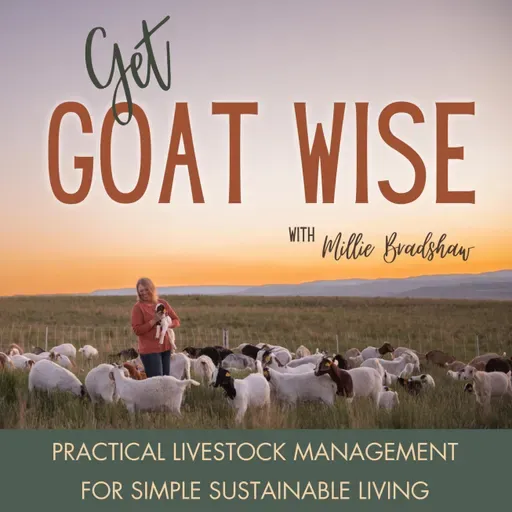
92 | Breeding Goats with the Long Game in Mind: How We’re Making Herd Decisions This Season
Get Goat Wise | Meat Goats, Dairy Goats, Self-Sufficiency, Sustainable Farm, Homesteading, Off-Grid, Livestock
Breeding season is underway on the ranch, and this year our breeding decisions look a little different than they have in the past. In this episode, I’m sharing what’s happening right now at Dry Creek and walking you through how we’re thinking about herd genetics, maternal traits, and long-term direction—not from a textbook perspective, but from real-world experience.
I talk through why we sold our longtime Boer buck, how that decision reshaped this year’s breeding plan, and why we’re intentionally slowing down instead of rushing to replace him. We dig into how past experience with show goats changed the way I think about first kiddings, mothering ability, and how breeding decisions can either set does up for success—or make their job harder from the start.
You’ll hear how and why we’re using Spanish bucks across the Boer herd this year, what we’re watching for in the resulting kids, and how data collection—not trends or pressure—is guiding our next steps. I also share some of the longer-term options we’re considering, including terminal crossing, maintaining two distinct herds, and what market demand may influence moving forward.
This episode isn’t about having the perfect breeding plan. It’s about making thoughtful decisions that keep options open, protect herd function, and align with the season of ranching and life you’re actually in.
If you’re raising goats, planning future breeding decisions, or trying to balance improvement with practicality, this episode will help you think more clearly and move forward with confidence—even if you don’t have every answer yet.
In This Episode, I Cover:
A quick ranch update and what winter conditions mean for daily management
Why we sold our Boer buck and how genetic concentration affects breeding decisions
How past show goat experience reshaped our approach to first kidding does
Using Spanish bucks to improve mothering and functional traits
The pros and tradeoffs of slowing genetic progress for long-term herd success
What a terminal cross is and why we’re considering it
How market demand, data, and personal goals influence herd direction
Key Takeaways:
Breeding decisions should support function, not just appearance or speed
A doe’s first kidding experience is important for long-term doe success
Slowing down can preserve options and prevent genetic dead ends
Data collection beats trend-chasing every time
It’s okay to move forward without having every future decision locked in
Related Episodes:
22 | What Is the Perfect Meat Goat? How to Choose the Right Breed for Your Farm or Homestead PART 1
23 | Boer vs Kiko, What Meat Goat Breed is the Best Fit for Your Farm or Homestead? PART 2
27 | Which Goats Should I Keep to Breed? How to Select Replacement Does and Plan Your Goat Breeding Season
37 | Replacement Doe Management: Later Selection to Choose the Best Does for Your Herd
76 | How to Choose Future Breeding Bucks for Your Goat Herd
All the Best,
Millie
Resources & Links:
Leave a review on Apple Podcasts + grab the free Kidding Due Date Chart:
https://www.getgoatwise.com/kidding-chart
Get Dry Creek meat:
https://drycreekheritagemeats.com
Join my insider email list:
https://www.getgoatwise.com/insider
Join the free community:
https://www.getgoatwise.com/community
Email me:
millie@drycreekpastures.com
See ranch life on Instagram:
https://www.instagram.com/drycreekpastures/
Disclaimer:
The information shared in this episode is for educational purposes only and should not be considered veterinary advice. Always consult a licensed veterinarian for animal health guidance.