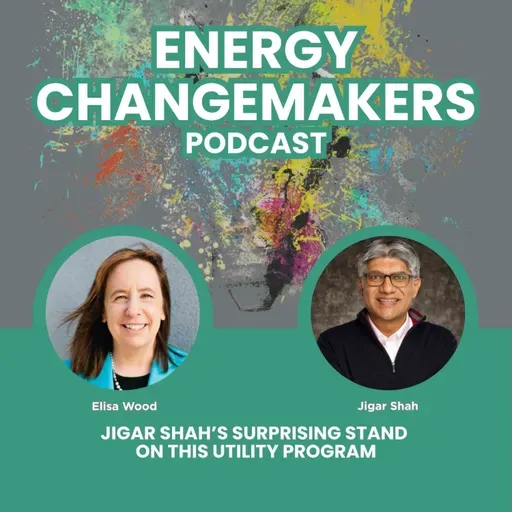
Jigar Shah is one of clean energy's most influential — and outspoken — figures. In this episode, he takes a surprising stand on a utility battery program that has the distributed energy world divided, makes the case that the solar industry is now the battery industry, and lays out a policy blueprint for new governors that starts with one bold number: cut electricity bills 20% by 2030.
In this episode:
Why Shah is defending Xcel Energy's controversial utility-owned battery program in Minnesota — and why he thinks the critics are fighting the wrong battle
The $50 billion math: how strategically placed batteries could meet all U.S. load growth through 2030 at a fraction of the cost of new utility infrastructure
His blunt advice for half the clean energy industry: adapt your cost structure or shut your doors
The "controlled experiment" between Xcel Minnesota and Xcel Colorado that could settle the utility ownership debate
A three-point energy platform for governors, anchored in grid-enhancing technologies and massive battery deployment
Shah's personal journey from a village in India with barely any electricity to overseeing the largest clean energy lending program in U.S. history
Key quote: "This solution is 90% cheaper than upgrading all the wires in Minnesota. Now we're arguing about whether this could have been 10% cheaper than the private sector solution."
People and organizations discussed: Sparkfund, Xcel Energy, Generate Capital, SunEdison, Common Charge, Institute for Local Self-Reliance, Tesla, Atmos Financial, DOE Loan Programs Office
Resources: DOE VPP Liftoff Report (January 2025) · DOE Grid-Enhancing Technologies Liftoff Report · IEA World Energy Outlook · commoncharge.org · energychangemakers.com