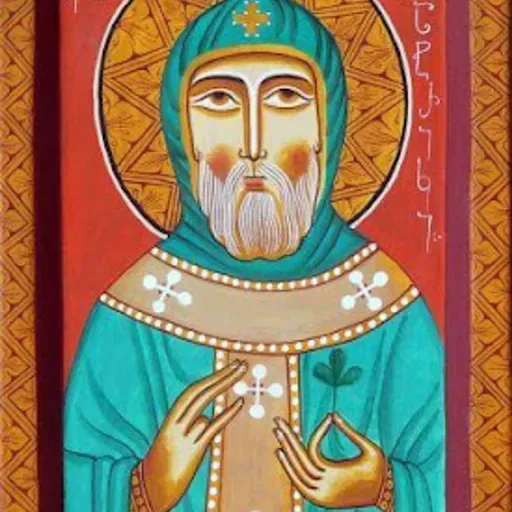
C&SI - Who was the real St Patrick? with Michael Keating - 15 March 2026 (S06E17b) (podcast excerpt)
Come & See Inspirations (C&SI)
On this weeks podcast excerpt we are sharing a reflection with Michael Keating from the archive where Michael joined us to reflect on the celebration of our national day and ask the question who was St Patrick? Like so many Christian feasts and festivals, St Patrick’s Day has been somewhat hijacked - St Patrick has about as much to do with a pint of Guinness as St Valentine has to do with a box of chocolates. But what does this saint, so strong in missionary zeal and about whom we know very little, have to do with our modern day celebrations? While we have many legends about St Patrick, it is makes sense to look to see what writings the saint himself has left us which are regarded as some of the earliest literature from Ireland to discover who he was. The answer to the question comes from his Confessio itself.
"My name is Patrick. I am a sinner, a simple country person, and the least of all believers. I am looked down upon by many. My father was Calpornius. He was a deacon; his father was Potitus, a priest, who lived at Bannavem Taburniae. His home was near there, and that is where I was taken prisoner. I was about sixteen at the time. At that time, I did not know the true God. I was taken into captivity in Ireland,along with thousands of others. We deserved this, because we had gone away from God,and did not keep his commandments. We would not listen to our priests, who advised us about how we could be saved. We have gone aside from your commandments … we have not listened to your servants the prophets".The Lord brought his strong anger upon us, and scattered us among many nations even to the ends of the earth. It was among foreigners that it was seen how little I was."
In the very opening paragraphs of the autobiography, St Patrick offers a meditation on the gift of faith and the praise that we owe in return to God for such a gift. Perhaps this is St Patrick’s greatest relevance, particularly in a culture that seems increasingly hostile to declarations of faith. He refuses to stay quiet; his evangelising zeal comes from knowing that he must speak to others of Christ:
We should enjoy the celebrations of St Patrick’s Day, but also remember Christ’s call to conversion in our lives; a call to conversion and change that St Patrick felt so strongly that he left behind everything he had and followed Jesus so that he might bring the gospel to others.
The Royal Irish Academy published a booklet of the Confessio by Padraig McCarthy which is freely available online HERE. The other writing of St Patrick that comes down to us in the Book of Armagh is his Letter to Coroticus, appealing for the return of Irish Christians who had been taken in a slave raid.
Text us at +353 874668950 or email at comeandseeinspirtaions@gmail.com