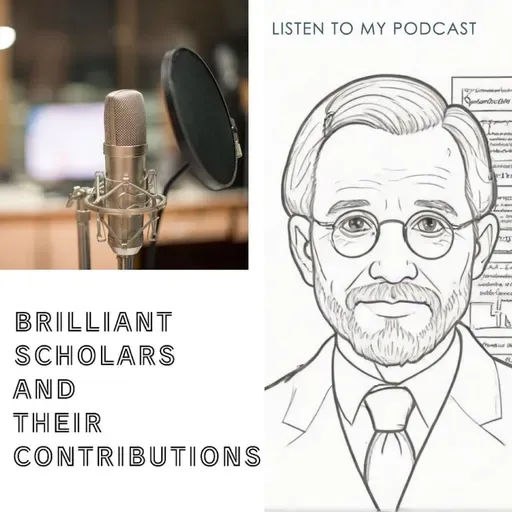
Grace Hopper – Computer Pioneer Who Taught Machines to Speak Human Language
Brilliant Scholars And Their Contributio
This episode explores the life and legacy of Grace Hopper, one of the most influential pioneers in computer science. Born in 1906, Hopper was driven by curiosity from a young age and went on to earn a doctorate in mathematics from Yale University. During World War II, she joined the U.S. Navy and worked on the Harvard Mark I, one of the earliest computers, where she recognized the limitations of programming machines using only numerical code.
Hopper challenged conventional thinking by proposing that computers could be programmed using human-readable language. Her work led to the creation of the first compiler, which translated English-like instructions into machine code. This breakthrough made programming more accessible and paved the way for modern software development. She later played a key role in developing COBOL, a high-level programming language that still powers critical financial and governmental systems today.
Beyond her technical achievements, Hopper was a gifted teacher and communicator who believed technology should serve people. She popularized the term "debugging", encouraged innovation, and famously warned against rigid thinking. Rising to the rank of Rear Admiral, she remained active and influential well into her later years.
Grace Hopper passed away in 1992, but her vision lives on in every line of readable code and every system designed to make technology more human-centered. Her legacy proves that true innovation comes from challenging assumptions and making complex ideas accessible.