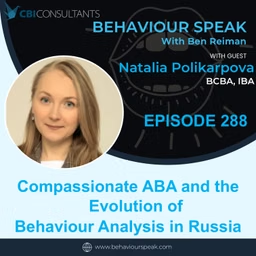
Behaviour Analysis in Russia: Natalia Polikarpova on Compassionate ABA, PFA/SBT, and Building a Profession
Behaviour Speak with Ben Reiman
What does behaviour analysis look like in Russia today?
In this episode of Behaviour Speak, Ben welcomes Natalia Polikarpova, behaviour analyst, educator, supervisor, and leader in the Russian-speaking ABA community.
Natalia shares her journey from engineering to behaviour analysis, discusses the early development of ABA in Russia, and reflects on the growth of professional training, supervision, and certification opportunities across Russian-speaking countries. She also explores the impact of the BACB's withdrawal from Russia, the emergence of local credentialing systems, and the importance of developing professional organizations that reflect local cultural and educational realities.
The conversation also examines autism services across Russia and neighbouring countries, including parent involvement, educational options, government-supported initiatives, and ongoing efforts to improve diagnostic pathways for families. Natalia highlights the growing influence of Practical Functional Assessment (PFA) and Skills-Based Treatment (SBT), as well as the broader movement toward compassionate, trauma-informed care.
Most importantly, Natalia challenges listeners to remember that every learner is first and foremost a child, deserving of dignity, flexibility, and compassionate support.
In this episode, we discuss:
How ABA first emerged in Russia
Early misconceptions about ABA
The growth of Russian-language BCBA training
Certification changes following BACB withdrawal
Development of local professional standards and ethics
PFA and SBT implementation across Russia
Autism services and school placement options
Parent involvement in intervention
Challenges facing adult autism services
Compassionate and trauma-informed behavior analysis
The future of ABA in Russian-speaking communities
Watch on YouTube: https://youtu.be/tV9Ja9ziEZ8
Continuing Education Credits
IBAO: 1.0 Cultural
QABA: 1.0 Ethics
CBA/CPD: 1.0 Cultural Diversity
Complete The Behaviour Speak CE Knowledge Check To Earn Your CEUs
Enter your answers here: (https://www.cbiconsultants.com/shop)
Question 1
Natalia discussed one challenge with importing educational models into Russia. What concern did she raise?
A. Teachers refused to use behaviour analysis
B. Imported models sometimes require adaptation to local educational and cultural realities
C. Families preferred residential treatment
D. Universities prohibited ABA training
Question 2
A. Government-funded universal ABA services
B. Large numbers of university-based ABA doctoral programs
C. Strong interest in learning new practices and professional development
D. National licensing requirements for all therapists
Question 3
Which statement best reflects Natalia's philosophy of practice?
A. Compliance should always be prioritized before teaching anything else
B. Standardized intervention plans are more effective than individualized approaches
C. Every child should receive the same educational placement
D. Practitioners should remember they are working with a child first and build interventions compassionately
Contact
Азбука АВА
https://azbukaaba.com/
FTF Behavioral Consulting
https://ftfbc.com/our-team/natalia-polikarpova/
https://ftfbc.com/natalia-polikarpova/
Explore More Global Perspectives on Behaviour Analysis
Natalia's story is part of a broader series of conversations on Behaviour Speak that examines how behaviour analysis is developing across Eastern Europe and Central Asia. While each country faces unique cultural, educational, regulatory, and service-delivery challenges, a common theme emerges: dedicated professionals are building behaviour analytic communities, expanding access to services, and adapting evidence-based practices to meet local needs.
Episode 184: Behaviour Analysis in Ukraine with Alla Moskalets
Learn how behaviour analysis developed in Ukraine, the challenges of expanding autism services, and the efforts of practitioners working to increase professional training, family support, and awareness of evidence-based practices.
Episode 191: Behaviour Analysis in Belarus with Hanna Kalinouskaya, BCBA, IBA
Explore the growth of behaviour analysis in Belarus, including the development of professional communities, service delivery models, and the ongoing work of creating accessible supports for autistic individuals and their families.
Episode 229: Behaviour Analysis in Kyrgyzstan with Dr. Anastasiia Iun
Discover how ABA is emerging in Kyrgyzstan, the barriers faced by families and professionals, and the innovative approaches being used to build capacity and expand access to quality services.
Episode 251: Behaviour Analysis in Georgia with Madonna Bonny, MS, BCBA
Hear about the evolution of behaviour analysis in Georgia, including workforce development, educational initiatives, and efforts to establish sustainable systems of support for autistic individuals and their caregivers.
Together with Natalia Polikarpova's insights into Russia and Russian-speaking communities, these episodes provide a unique international perspective on the growth of behaviour analysis around the world. They highlight the importance of cultural responsiveness, collaboration, parent engagement, and the shared commitment of practitioners working to improve outcomes for individuals and families across diverse settings.
Listen to the full international series at Behaviour Speak and discover how behaviour analysis is taking shape across different regions, cultures, and systems of care.